
24/7 全天候客户支持

免费退货

当日/次日达

品质保障

开启新人专享福利: 全场免邮 | 低至 2 折 | 免费试用 30 天 JoyPlus 会员
下载 Joybuy
A kids sandpit can turn a garden, patio or shared outdoor space into a creative play area. However, an attractive photograph does not always reveal whether a product will suit your garden, your child’s age or the British weather.
Parents, grandparents and carers should look beyond colour and accessories. A sandpit that lacks a proper cover may collect leaves and animal mess, while a model with limited drainage can leave damp sand and muddy ground. Some products also appear spacious online but offer little usable room once seats, liners or raised edges are taken into account.
Before choosing a wooden sandpit, children’s sandbox or sand and water play table, check these common buying pitfalls.
A sandpit with canopy can provide shade, but a canopy alone may not protect the sand when the play area is not being used. Look for a design where the canopy or backrest can cover the sand, or where a separate weather-resistant cover is supplied.
A cover helps reduce the amount of leaves, rain and garden debris entering the sand. It does not remove the need to inspect the sand before play.
A sealed base may retain water after rain. A bottomless design with a non-woven liner can support drainage and ventilation, but the ground beneath still matters. A level, well-drained surface is generally more practical than a low area of lawn where rain gathers.
Also check the internal dimensions rather than relying only on the overall footprint. Raised edges, benches and storage sections can reduce the available digging space.
A larger garden sandpit is not automatically suitable for every child. Check the stated age range, seat load, small-part warnings and assembly requirements. Children aged 3–7 should be supervised during outdoor play, particularly around sand, water and removable accessories.
Product standards such as EN71-1, EN71-2 and EN71-3, where listed, relate to specified toy safety requirements. They should be read alongside the manufacturer’s instructions, local conditions and appropriate adult supervision.
Measure the intended area before ordering. Leave enough space for children to move around the sandpit and for an adult to supervise comfortably. Remember to account for the canopy when raised and for access to any storage compartments.
A high-capacity wooden model can be useful for two children, but the amount of sand required may affect both purchase cost and lifting effort. Check the stated capacity and buy suitable play sand rather than building sand, which may contain unsuitable particles or additives. You can browse the play sand range to compare options.
Fir wood is commonly used for a garden sandpit because it provides a solid frame and natural appearance. Outdoor timber still needs sensible care: place it on a stable surface, follow the assembly instructions and inspect joints, edges and painted areas regularly.
A smooth, finished surface is preferable to visibly rough timber. Check for exposed fasteners, splinters or damaged paint before use and after periods of wet weather. A fabric liner can help contain sand while supporting drainage, but it should remain securely attached.
A height-adjustable canopy lets you alter the shade position as the sun moves. A foldable backrest or convertible lid can make covering the sand easier at the end of the day.
Storage trays or plastic basins are useful for scoops, moulds and small buckets, but they should not be confused with a sealed storage box. Remove wet toys and allow them to dry where possible to reduce lingering moisture and odours.
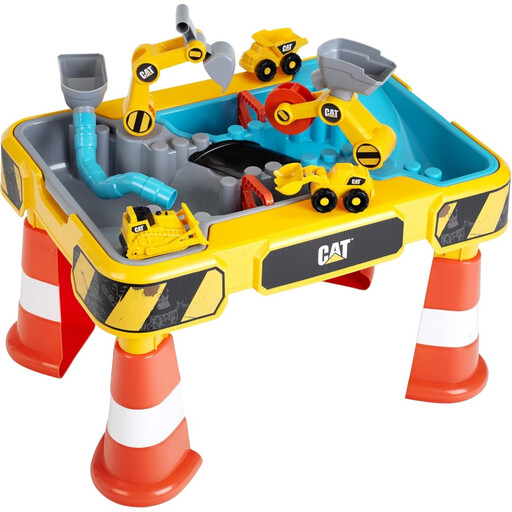
Why This Fits Their Persona: A compact option for families with a patio, small garden or limited storage space who want sensory play without installing a full-size sandbox. It is specified for children aged 5 and over.
Its stated small-part warning and age guidance make suitability easier to assess. The table format also avoids buying a large sandpit when garden space is limited.
Dual compartments allow sand and water play at the same time. Its standing height is designed for children aged 5 and over.
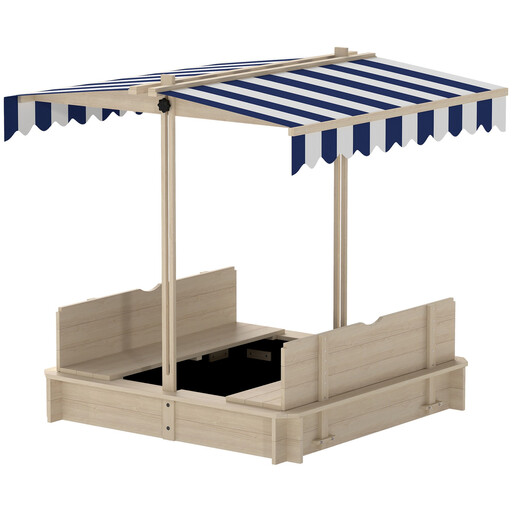
Why This Fits Their Persona: Suitable for households wanting a substantial wooden play feature with built-in seating and an adjustable shade canopy for garden use.
The foldable backrests cover the sand when not in use, while the attached liner is designed to contain sand and support drainage and ventilation.
The frame measures 106L x 106W x 115H cm and is specified to hold up to 90 kg of sand. Removable seats can expand the play area.
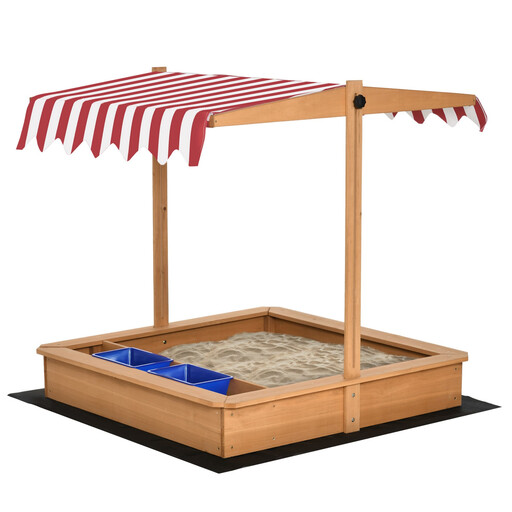
Why This Fits Their Persona: A practical match for families expecting frequent garden use, two children playing together or a greater quantity of sand for digging and building.
The adjustable canopy can also act as a lid, and the bottomless liner design is intended to help with drainage, ventilation and sand-depth adjustment.
The product is specified for up to 160 kg of sand and includes two plastic basins. Overall dimensions are 107.5L x 107.5W x 110H cm.
We have compiled a complete, real-time list of products that fully satisfy these strict selection criteria and UK safety regulations.
Use a level, firm surface and avoid placing the sandpit directly beneath branches where falling debris can enter. A location with partial shade may reduce heat build-up, although an adjustable canopy can provide additional cover during sunny periods.
Assemble the unit according to the supplied manual and check that all fixings are tight. Do not exceed the stated bench or frame load. For a sand and water play table, empty water after each session and store it in a way that allows the compartments to dry.
Keep a small selection of age-appropriate buckets, scoops and moulds rather than filling the sandpit with too many loose accessories. Inspect play sand for contamination, damp clumps or unwanted objects before use.
The correct amount depends on the internal length, width and recommended depth. Avoid filling above the usable edge, as this can increase spillage and reduce the effectiveness of a cover. Always follow the product instructions and use play-grade sand.
There is no fixed lifespan because exposure, assembly quality and maintenance vary. Keep timber raised and stable, inspect it regularly and follow any care guidance supplied with the product. Replace damaged liners, covers or fixings when required.
A covered sandpit can reduce exposure to rain and debris, but it is not necessarily waterproof when fully assembled. Allow wet sand to drain and dry where practical, check the interior before play and avoid leaving standing water inside the unit.