
24/7 Customer Support

Free returns

Same-day & Next-day Delivery

Quality Guaranteed

Unlock Your Welcome Offers: FREE Delivery | Up to 80% OFF | Free 30-day JoyPlus trial
Download the APP
Choosing a kids scooter can feel like navigating a maze of different styles, features and safety considerations. You want something that will bring a smile to your child's face, but you also need it to be safe, durable and a sensible purchase. As parents and guardians, we're all looking for that perfect balance between fun and function.
This guide is designed to help you understand the key features to look for in a kids scooter. We will walk you through what makes a great ride, from safety systems to wheel types and present a few of our top recommendations to help you make an informed choice for your child.
Before diving into specific models, it's helpful to know what to look for. Focusing on a few core aspects will ensure you select a scooter that is not only enjoyable but also practical for your family's needs.
A scooter's safety features are paramount. Look for models with reliable braking systems. Many modern scooters for older children feature a dual brake system, often combining a handlebar brake with a rear-fender foot brake for responsive stopping. The deck, or footplate, should be wide enough for stability and feature a non-slip surface to prevent feet from sliding, especially in damp British weather. The frame material—typically steel or aluminium—will determine the scooter's durability and weight.
Children grow quickly, and an adjustable kids scooter offers excellent long-term value. Models with adjustable handlebars can be modified to suit your child's height, ensuring they maintain a comfortable and safe riding posture as they get older. This feature means a single scooter can last for several years, making it a more sustainable and cost-effective choice for a scooter for 5-12 year olds.
The wheels have a significant impact on the riding experience. A big wheel scooter, often equipped with larger rubber or PU wheels (200mm or more), provides a smoother, more stable ride over uneven pavements and park paths. For an extra element of excitement and visibility, a light up scooter with LED wheels is a popular choice. These wheels illuminate as they spin, which not only looks great but also helps make your child more visible during evening play.
Here are a few standout options that cater to different needs, from electric-powered fun to practical, foldable designs.
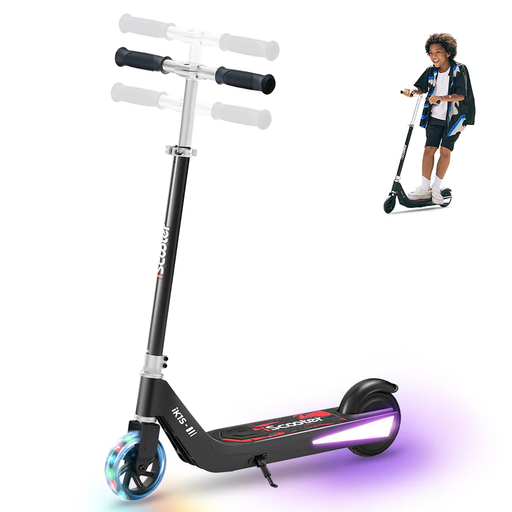
Why It Stands Out: This kids electric scooter is designed for pure fun. The combination of a gentle 100W motor and vibrant LED lights in the wheels and body creates an exciting ride. It offers two speed modes (6 mph and 9 mph), allowing parents to set a safe pace for their child. The adjustable handlebar makes it suitable for a wide age range.
Pros:
Who is it for? This is an excellent choice for parents looking to introduce a younger child (ages 4+) to the excitement of an electric scooter in a controlled way. It’s ideal for play in the garden or park.
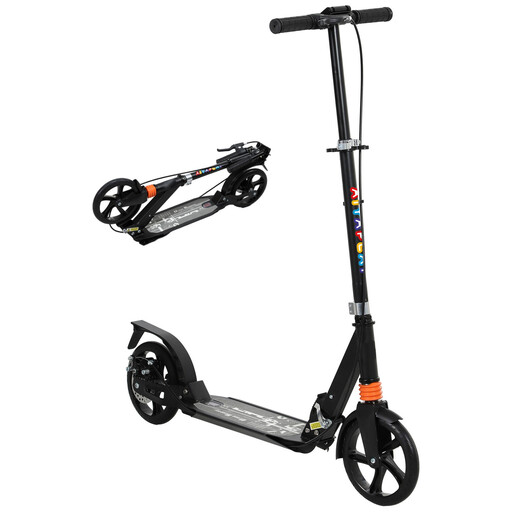
Why It Stands Out: This foldable scooter for kids is built for practicality and a smooth ride. Its key feature is the dual shock absorption system, which, combined with 200mm PU wheels, minimises bumps on uneven surfaces. The dual brake system provides confident stopping power, and its foldable design makes it easy to store or carry on public transport.
Pros:
Who is it for? This is a great all-round kick scooter for children who need a reliable ride for the school run or weekend outings. Its portability is a major plus for families with limited storage space.
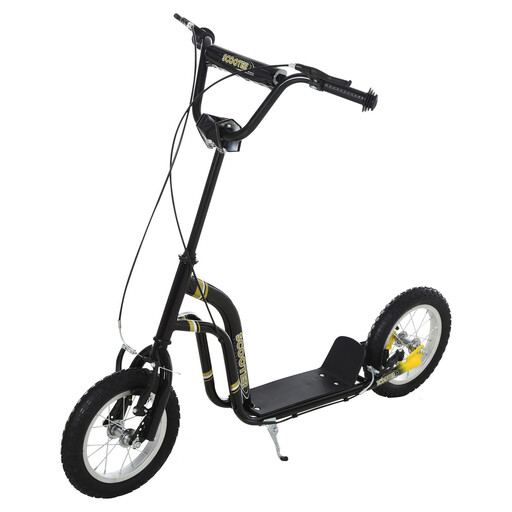
Why It Stands Out: Built more like a miniature bicycle without pedals, this big wheel scooter is designed for stability and control. Its large, air-filled 12-inch rubber wheels handle bumps and rough terrain with ease, providing a much smoother glide than smaller, solid wheels. The steel frame and dual brakes make it a robust choice for active kids.
Pros:
Who is it for? This scooter is perfect for children who will be riding on park paths, gravel trails or older pavements. It’s a solid option for those who have mastered a basic scooter and are ready for something more substantial.
If our recommendations aren't quite what you're looking for, or if you need specific parts like replacement wheels, there are many other styles and components available. You can explore a wider selection of black scooter wheels and other accessories to find the perfect match for your child's scooter.
Most children can start with a three-wheeled scooter around age three to develop balance. By age four or five, many are ready for a two-wheeled kick scooter, depending on their coordination. Always check the manufacturer's recommended age and height range, as models like the ones above are designed for specific age groups (e.g., 4+ or 6-12 years).
When used correctly, they can be. Look for models with safety-focused features, such as limited maximum speeds, reliable brakes and a sturdy frame. The iScooter iK1S, for example, has modest speed settings of 6 and 9 mph. It is essential that children always wear a helmet and other protective gear and that they are supervised by an adult, especially when first learning.
The most important factor is the handlebar height. The handlebars should be somewhere between the child's waist and lower chest. This allows them to stand upright comfortably without hunching over or reaching up too high. An adjustable kids scooter is the ideal solution, as you can set the handlebars to the perfect height and adjust them as your child grows.