
24/7 Customer Support

Free returns

Same-day & Next-day Delivery

Quality Guaranteed

Unlock Your Welcome Offers: FREE Delivery | Up to 80% OFF | Free 30-day JoyPlus trial
Download the APP
Choosing a kids scooter involves more than picking a colour or a light-up wheel design. Parents and gift buyers need to consider age suitability, steering style, handlebar adjustment, weight limits and where the scooter will be used. A model for a three-year-old learning balance will feel very different from a lightweight scooter for a 10-year-old, teenager or adult.
The following guide highlights common buying traps and explains the practical specifications worth checking before ordering.
An age range is a useful starting point, but it does not show whether the handlebar height, deck size or maximum load suits the individual rider. Children of the same age can have very different heights and riding confidence.
Check the product dimensions and adjustment range where available. A toddler scooter with three wheels may suit a younger beginner, while a 2 wheel scooter for kids usually requires better balance and coordination.
A light-up scooter can make outdoor play more appealing, but flashing wheels do not automatically indicate stronger construction or easier handling. Review the deck width, wheel arrangement, steering system and brake design separately.
Light-up wheels are often powered by movement, so they generally do not require regular battery replacement. However, they should still be checked for secure attachment and smooth rotation.
A scooter may look compact online but be awkward to carry or store at home. A foldable kids scooter can be useful for flats, car journeys and public transport, but the folding mechanism needs to lock securely before riding.
Regularly inspect the wheels, handlebar clamp, frame, grips and brake. Loose bolts or worn wheels can affect control, regardless of the scooter’s advertised features.
A 3 wheel scooter for kids normally offers a wider platform and a more stable base for younger riders. Many use a lean-to-steer mechanism, where the child shifts their weight to turn rather than rotating the handlebar sharply. This can be suitable for beginners aged around 3–10, although adult supervision remains important.
A 2 wheel scooter for kids is generally more responsive and often lighter to manoeuvre once the rider has developed balance. It may suit children aged 6–12, teenagers and adults, depending on the handlebar range and maximum load.
An adjustable height scooter can remain useful for longer as a child grows. The handlebar should be set around a comfortable height that allows the rider to maintain a relaxed posture without leaning excessively.
Also examine the deck. An anti-slip surface and enough standing space can make starting, pushing and braking easier. Extra-wide decks may offer more room for a child’s feet, but can add to the overall size.
Do not confuse the scooter’s own weight with its rider weight limit. For example, the LEEYV RV205 models list a 220 lb maximum load, equivalent to approximately 100 kg. This makes them suitable for a wider user range, subject to the rider’s height and the manufacturer’s instructions.
The RV205 and LY205 models use 205 mm polyurethane wheels, a rigid suspension system and a rear brake. Larger wheels can be useful for rolling over ordinary pavements, but scooters should still be used on suitable, reasonably even surfaces.
For younger riders, a foot-activated brake can be straightforward to understand. A kids scooter with brake should be practised at low speed in a clear area before being used near paths, parks or shared spaces.
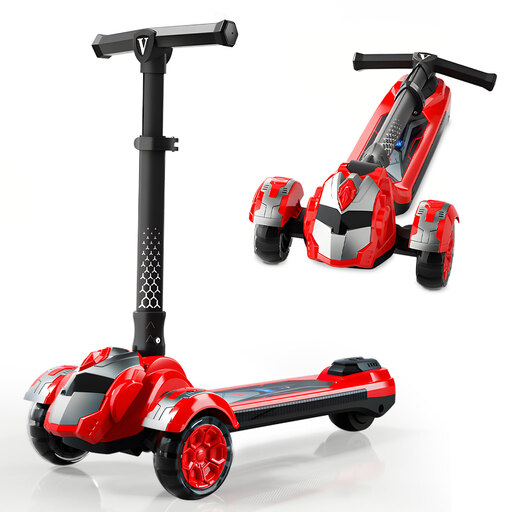
Why This Fits Their Persona: A practical starting point for younger children learning to steer and balance during outdoor play in parks, gardens or quiet paths.
Its three-wheel lean-to-steer layout provides a broader platform than a conventional two-wheel design, while the adjustable handlebar helps accommodate growth.
Three wheels, light-up flashing wheels, an anti-slip deck and three adjustable handlebar positions.
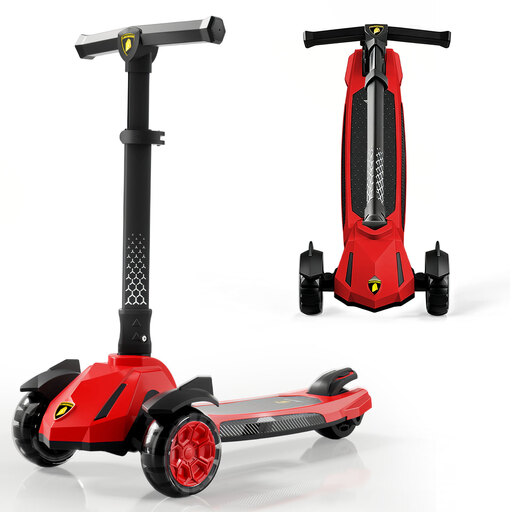
Why This Fits Their Persona: Suitable for families that want a feature-rich outdoor ride-on toy with convenient storage between trips.
The foldable handlebar addresses storage concerns, while the extra-wide deck gives the rider more standing space than a narrow platform.
Adjustable and foldable handlebar, three flashing wheels, extra-wide deckplate and a brake.
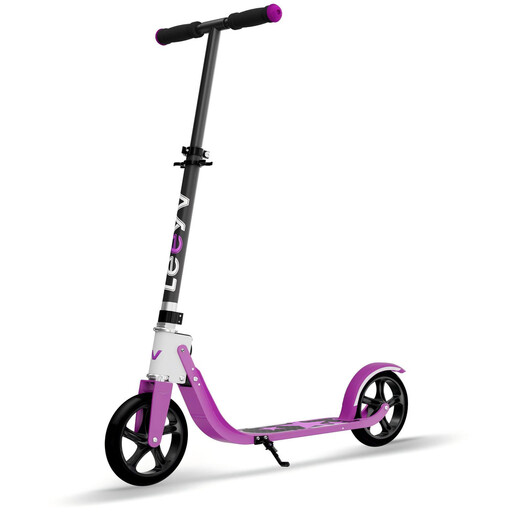
Why This Fits Their Persona: A family-oriented option for riders aged 6 and above, teens or adults who need a portable scooter for leisure, commuting or short trips.
The stated 220 lb maximum load, adjustable handlebar and foldable frame make the specification easier to match to a growing rider or adult user.
Two 205 mm polyurethane wheels, aluminium and steel frame, non-slip grips, rigid suspension and rear braking.
We have compiled a complete, real-time list of products that fully satisfy these strict selection criteria and UK safety regulations.
Before the first ride:
For UK purchases, look for clear manufacturer or importer information and relevant safety instructions. Product markings and documentation should be checked on the individual listing rather than assumed from a marketing description.
Neither configuration suits every rider. A three-wheel scooter generally offers a broader base for younger beginners, while a two-wheel scooter is more responsive and can suit older children or adults with stronger balance. Match the design to the rider’s ability, height and intended location.
Lifespan depends on rider weight, frequency of use, storage and surface conditions. Keeping the scooter dry, cleaning it with a damp cloth and tightening loose fittings can help maintain it. Replace damaged wheels, grips or brake components rather than continuing to ride with a visible fault.
Most manual scooters have no fuel or charging costs. Light-up wheels are commonly movement-powered, although the exact mechanism varies by model. Ongoing costs may include replacement wheels, bearings, grips or protective equipment, so check availability and care instructions before buying.