
24/7 Customer Support

Free returns

Same-day & Next-day Delivery

Quality Guaranteed

Unlock Your Welcome Offers: FREE Delivery | Up to 80% OFF | Free 30-day JoyPlus trial
Download the APP
Choosing between children’s scooters, kick scooters for children and kids electric scooters can be more complicated than it first appears. Product listings often highlight speed, bright colours or large wheels while leaving out details that affect everyday use.
Three common buying traps deserve attention:
The right choice depends on your child’s height, riding confidence, intended surface and whether they want relaxed cruising or stunt practice.
An adjustable kids scooter can remain suitable for longer as a child grows, but only if the adjustment range matches their height. Check the full height range rather than relying on “ages 5–12” or “ages 6+”.
Weight capacity is equally important. Some scooters support 30kg or 50kg, while larger models list capacities of 100kg or 220lb. Do not use the maximum load as a target; allow room for clothing, a backpack and natural growth.
For scooters for ages 5–12, look for:
Wheel size affects how the scooter feels on ordinary UK pavements and park paths. Larger wheels can roll over minor surface changes more smoothly, although they may make the scooter longer and heavier. Foam or solid wheels avoid punctures, while inflatable wheels may provide a softer ride but require pressure checks.
A wide, non-slip deck is useful for beginners because it gives the standing foot more room. Three-wheel scooters for toddlers and younger children generally prioritise balance and predictable steering, whereas two-wheel scooters require more developed coordination.
For regular pavements, inspect:
A rear foot brake is common on kick scooters. Some larger scooters also provide handlebar-controlled front and rear brakes. The child should be able to reach and operate the brake without losing balance.
Product listings may reference standards such as EN71-1-2-3, EN14619 or EN62115. These references should be read alongside the product’s age guidance, warnings and instructions. They do not remove the need for pre-ride checks or adult supervision.
For kids electric scooters, UK use restrictions are particularly important. Privately owned e-scooters are illegal to ride in public places, including roads, pavements, cycle paths, parks and other public open spaces. They are intended only for use on private land with the landowner’s permission. A helmet and suitable protective equipment should still be used, and charging should take place on a hard, flat surface away from flammable materials.
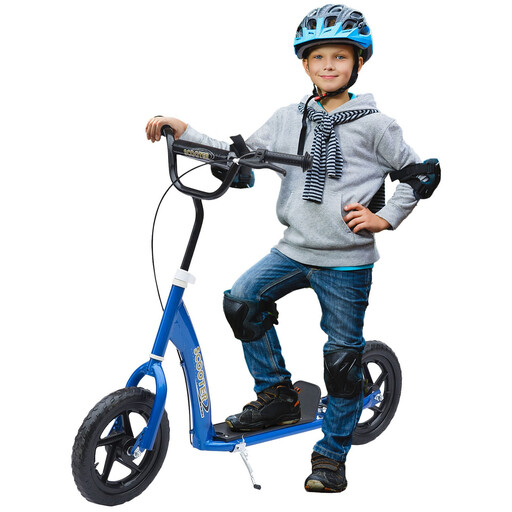
Why This Fits Their Persona: A straightforward option for families seeking a conventional scooter for school-run alternatives, park rides and everyday play. Its stated suitable age is 5–12 years.
The listing specifies an 80–88cm adjustable handlebar, a wide non-slip deck and a 50kg maximum load rather than relying only on an age label.
Steel frame, 12-inch foam wheels, rear brake and EN71-1-2-3 safety standard information.
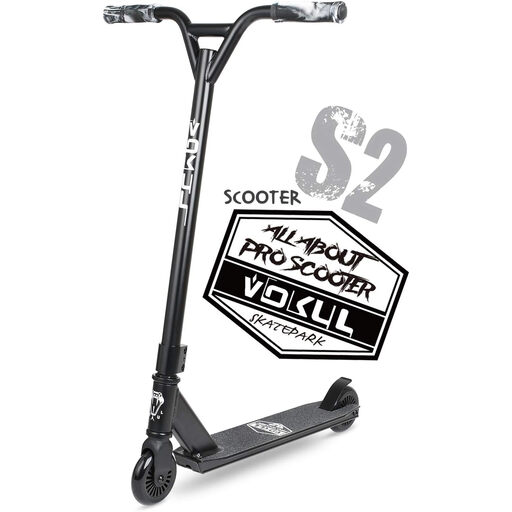
Why This Fits Their Persona: Suits children aged 7–14 who have moved beyond basic cruising and want a fixed-handlebar design for beginner freestyle practice.
It is described as a fixed freestyle scooter, so buyers are less likely to mistake a folding commuting model for a stunt scooter.
6061 aluminium alloy frame, reinforced deck, 4130 chromoly steel handlebar and triple clamp.
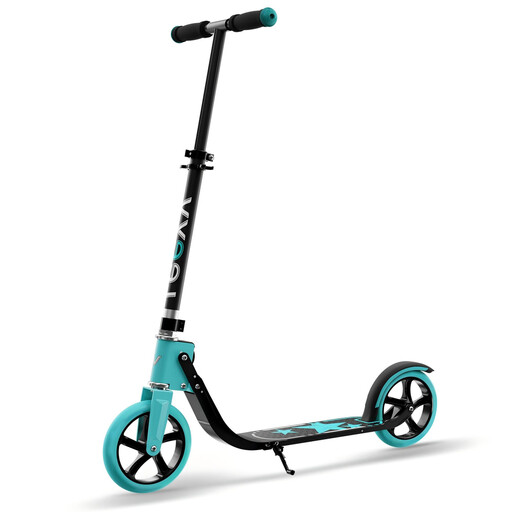
Why This Fits Their Persona: A practical fit for older children, teenagers and adults who need a folding scooter for storage, leisure rides or short private-site journeys.
The specification makes the portability features clear: folding construction, adjustable handlebar and rear braking.
205mm polyurethane wheels, aluminium-and-steel frame and stated 220lb weight limit.
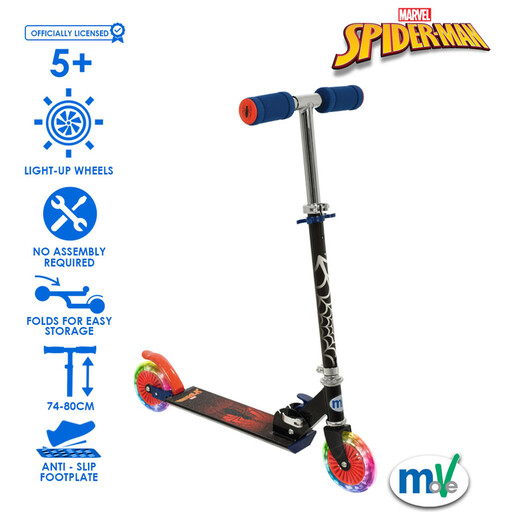
Why This Fits Their Persona: Suitable for children aged 5 and above who value compact storage, character styling and motion-activated lighting.
The product description separates entertainment features from practical details, including a reactive rear brake, anti-slip deck and folding lock.
Three-stage 74–80cm handlebar, puncture-proof tyres, 50kg maximum user weight and no assembly required.
We have compiled a complete, real-time list of products that fully satisfy these strict selection criteria and UK safety regulations.
Before the first ride, an adult should:
Inspect the scooter before each use. Stop using it if the frame is damaged, the brake response changes, bolts loosen repeatedly or wheels develop excessive play.
Some three-wheel scooters for toddlers are designed for children from around age 3, but suitability depends on balance, coordination and the manufacturer’s guidance. Younger riders need direct adult supervision and protective equipment.
No. Privately owned electric scooters cannot legally be ridden on UK pavements, roads, cycle paths, parks or other public places. They may be used only on private land with the landowner’s permission.
Lifespan depends on rider weight, riding surface, storage and maintenance. A scooter with an appropriate load rating, secure frame, protected bearings and regularly checked brakes is less likely to develop avoidable faults. Keep it dry, clean and stored away from damp conditions when not in use.