
24/7 Customer Support

Free returns

Same-day & Next-day Delivery

Quality Guaranteed

Unlock Your Welcome Offers: FREE Delivery | Up to 80% OFF | Free 30-day JoyPlus trial
Download the APP
Buying kids skating protective gear is not simply a case of choosing a bright colour and the lowest price. A helmet or pad set must fit correctly, suit the activity and remain comfortable enough for a child to wear throughout a ride.
This guide helps UK parents compare kids skate helmets, knee and elbow pads and wrist guards for children without being distracted by vague marketing claims. It also highlights practical options for cycling, inline skating, rollerblading, skateboarding and scootering.
Age ranges are useful as a starting point, but they cannot replace measurements. Children of the same age can have noticeably different head sizes, limb proportions and body shapes. A helmet labelled “youth” may still move around if the head circumference is unsuitable.
Check the seller’s size guidance and measure the child’s head before ordering. For pads, look for adjustable hook-and-loop or elastic straps that allow a close fit without restricting movement.
A helmet designed for cycling and skate sports is not intended for motor vehicles, climbing or activities involving a risk of hanging or entrapment. Similarly, skating pads are not motorcycle protection and may not be suitable for high-speed sports outside their stated use.
Look for a clearly described activity range, such as cycling, skating and scootering. An inline skating helmet may also suit roller skating, but the product description and certification should be checked rather than assumed.
Animal designs, printed shells and vivid colours can make children more willing to wear protective equipment, but appearance does not compensate for a loose helmet or badly positioned pads. A product with several adjustment points and breathable padding may be more useful than one with decorative features but limited adjustability.
Before buying, check the closure type, strap adjustment, ventilation and removable or washable padding. These details affect whether the gear is used consistently.
A suitable kids skate helmet should sit level on the head, with the front positioned above the eyebrows. The chin strap should be secure without being uncomfortable, and the helmet should not rock noticeably when the child gently shakes their head.
Common construction materials include:
The ACTION PW-905 helmets use a PVC outer shell, EPS inner liner, foam padding and an adjuster. They are described as EN1078 tested and CE certified for cycling, skating and other wheeled sports. The ACTION PW-903-PG helmets use a PC shell, EPS liner, seven air vents, a quick buckle and a head circumference adjuster.
EN1078 is a European standard covering helmets for cyclists and users of skateboards and roller skates. A product described as EN1078 tested should still be fitted and used according to the manufacturer’s instructions.
Some products use the phrase CPSC certified protective pads or state compliance with US CPSC safety standards. CPSC is a United States safety framework, not a substitute for checking UK suitability, product instructions and seller information. For UK purchases, also look for clear manufacturer details, warnings, age guidance and applicable CE or UKCA information where relevant.
A practical set of kids knee and elbow pads should include protection for both knees and elbows. For skating and scootering, wrist protection is also worth considering because children may instinctively put their hands out during a fall.
Look for:
The OutdoorMaster children’s sets include all six pads and a mesh carry bag. The supplied specifications describe PP shells, PE foam, breathable material and adjustable Velcro straps. Size and colour options include S and M in black, blue, pink and purple.
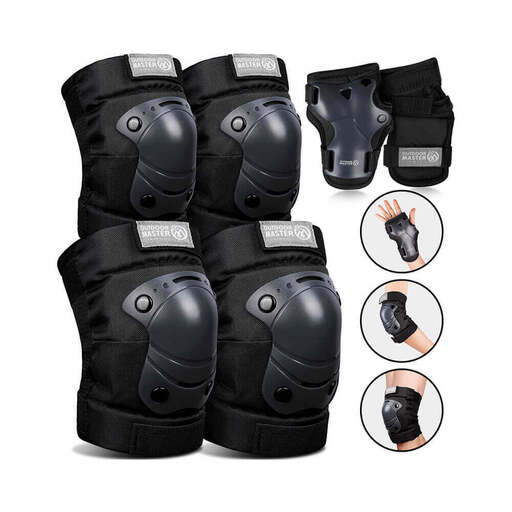
Why This Fits Their Persona: A six-piece set gives a child starting out with skating, cycling or scootering coverage for knees, elbows and wrists in one purchase.
It avoids buying separate wrist guards later by including two knee pads, two elbow pads and two wrist guards from the outset.
PP shells, PE foam, adjustable Velcro straps and a mesh storage bag; listed for children and youth aged 3–15.
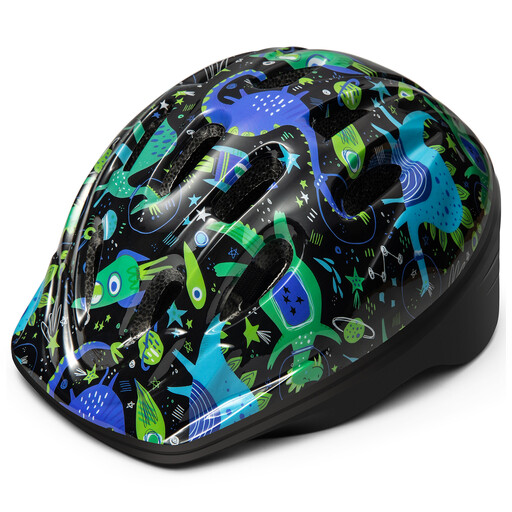
Why This Fits Their Persona: It suits parents prioritising a more customisable fit for balance-bike, cycling, skateboard and toddler scooter use.
The adjustable dial and two removable liners address the common problem of a helmet becoming uncomfortable as head size or padding needs change.
ABS shell, EPS core, ventilation and removable liners; the product description states compliance with US CPSC safety standards for ages 5 and older.
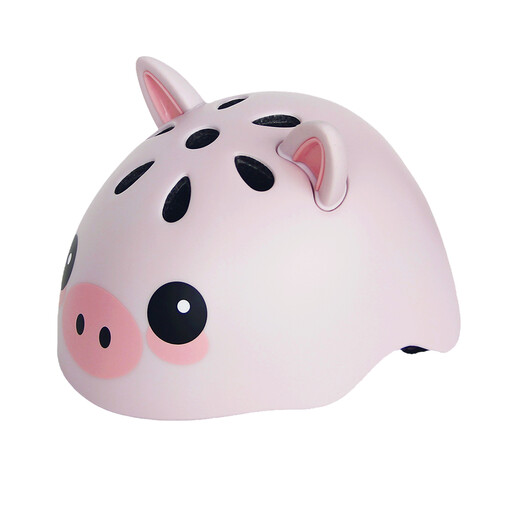
Why This Fits Their Persona: A practical choice for younger children who may be more willing to wear a helmet with a playful pink pig design and soft 3D ears.
The seven vents, soft liner foam, quick buckle and adjuster help address heat, discomfort and difficult fastening.
PC outer shell, EPS liner, seven air vents and EN1078 testing with CE certification as listed by the product description.
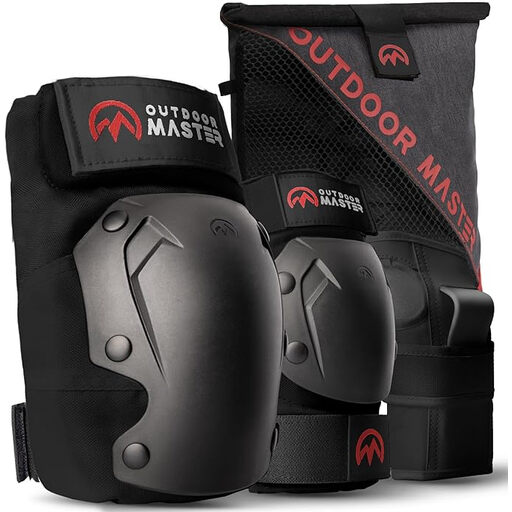
Why This Fits Their Persona: The M/L option is aimed at adults and youth, making it suitable when a teenager has outgrown smaller children’s protection.
Its adjustable nylon straps and extra-long hook-and-loop closures help reduce shifting, a common issue during longer skating or scootering sessions.
ABS shells, high-density EVA foam, wrist guards with thumb holes and a portable carry bag; sizes include M, M/L and L.
We have compiled a complete, real-time list of products that fully satisfy these strict selection criteria and UK safety regulations.
Before each session:
A helmet should be replaced after a significant impact or when damage is visible, even if the exterior appears acceptable. Pads should also be replaced if cracked, torn or excessively worn. Do not machine-wash the supplied children’s pad sets unless the product instructions specifically permit it.
For most beginner sessions, choose a suitable helmet, two knee pads, two elbow pads and wrist guards for children. A helmet alone does not cover the most common contact points during a fall. Add reflective clothing or lights when riding in low-light conditions, following UK road-safety guidance.
Some children’s cycling helmets are also listed for skating and other non-motorised wheeled sports. Check the product description for the intended activities and relevant marking, such as EN1078 tested. Do not assume that every cycling helmet is suitable for inline skating or skateboarding.
There is no universal replacement timetable. Lifespan depends on frequency of use, storage, fit and impacts. Check equipment before every use, clean it as instructed and replace a helmet after a significant impact. Replace pads when shells, foam, straps or fasteners become damaged or when the gear no longer stays securely positioned.