
24/7 Customer Support

Free returns

Same-day & Next-day Delivery

Quality Guaranteed
Download the APP
Categories
A family trip to the slopes or a simple afternoon building a snowman can be quickly cut short by one thing: cold, wet hands. Finding the right pair of kids' ski gloves can feel like a challenge, with so many options on the market. The goal is to find handwear that keeps your child warm, dry and comfortable, without you having to worry about durability or lost mittens.
As a Joybuy Product Recommendation Officer, my role is to help you navigate these choices. This guide offers practical advice on what to look for and presents some carefully considered recommendations to help you find a reliable pair of kids' snow gloves for your child's winter adventures.
Before jumping into specific products, it helps to understand the key features that separate a great pair of winter gloves from a disappointing one.
There is a significant difference between "water-resistant" and "waterproof". A water-resistant fabric might handle a light dusting of snow, but it will likely become saturated during prolonged play or in wet, slushy conditions.
For true protection, look for gloves constructed with a TPU waterproof insert. This is a membrane layer sandwiched between the outer shell and the inner insulation. It acts as a barrier, preventing water from seeping through to your child's hands while still allowing moisture (sweat) to escape. This is a critical feature for any pair of waterproof kids' gloves intended for skiing or serious snow play.
The primary job of any winter glove is to keep hands warm. The effectiveness of the insulation determines how well it traps heat. Many warm winter gloves for kids use a synthetic fill, often measured in grams. A higher gram count generally means more insulation.
Some gloves feature branded insulation like 3M Thinsulate, which is known for providing excellent warmth with less bulk compared to standard polyester fill. This can be a great feature for active children, as it allows for better dexterity without sacrificing warmth.
Beyond warmth and waterproofing, several design elements can make a huge difference in daily use:
Based on features that deliver on warmth, durability and convenience, here are our recommendations for the winter season.
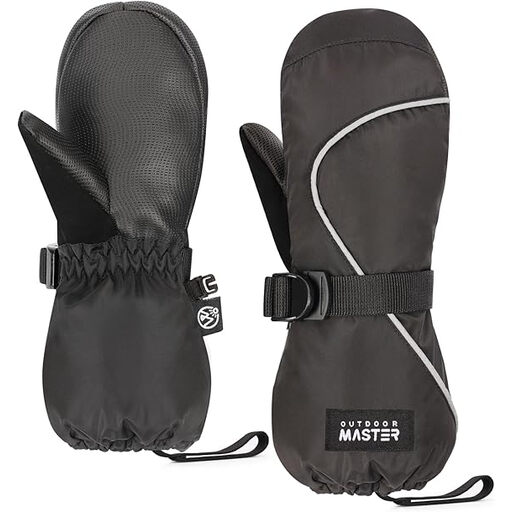
Why It Stands Out These kids' ski mittens are a practical choice, especially for younger children. The mitten design keeps fingers together, which naturally generates more warmth than individual finger slots in a glove. They are built with a durable polyester shell and a reliable TPU waterproof insert, ensuring hands stay dry. The generous 120g thickening cotton lining provides substantial insulation for cold days.
Pros
Who is it for? These mittens are ideal for children aged 7-9 who prioritise maximum warmth and comfort. They are perfect for skiing, snowboarding and general winter activities like sledding, where finger dexterity is less of a concern.
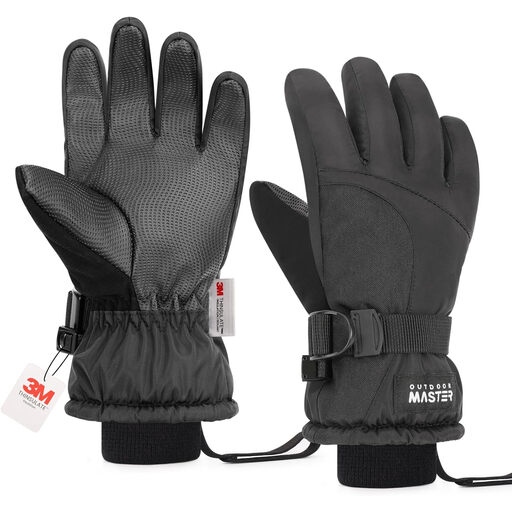
Why It Stands Out For children who need more finger dexterity, these youth snowboard gloves are an excellent option. They incorporate premium 3M Thinsulate insulation, which offers a high degree of warmth without the bulkiness of traditional fills. This, combined with the full-finger glove design, allows for a better grip on ski poles or snowboard bindings. Like the mittens, they feature a robust waterproof and windproof system with a TPU insert.
Pros
Who is it for? These gloves are well-suited for active kids aged 6-7 participating in winter sports that require a secure grip and finger movement, such as skiing and snowboarding. They offer a great balance of technical performance and warmth.
Every child has different needs, and sometimes the perfect fit might be a different style or size. Whether you are looking for specific boys' ski gloves, girls' ski gloves in different colours, or other types of winter handwear, there are many more choices available.
If these recommendations aren't quite what you're looking for, you can explore our full range of sports gloves to find the ideal pair for your child's next winter adventure.
This often comes down to age and activity. Kids' ski mittens are generally warmer because the fingers share a single compartment, generating and retaining more collective heat. They are often easier for younger children to put on. Gloves, on the other hand, offer superior dexterity, making it easier to grip poles, adjust boots or zip up jackets. For very cold conditions or for younger kids, mittens are a strong choice. For more active, older kids, gloves may be preferable.
An ill-fitting glove can be cold and cumbersome. To find the right size, it's always advisable to consult the manufacturer's sizing chart, which is usually based on age or hand measurements. If possible, measure the circumference of your child's hand around the knuckles (excluding the thumb) and the length from the base of the palm to the tip of the middle finger. When in doubt, a slightly larger size is better than one that is too snug, as it allows for a layer of insulating air, but avoid gloves that are so large they might slip off or hinder grip.
Not necessarily. Price often reflects the cost of materials (like branded insulation or advanced waterproof membranes) and construction quality. For a child who skis frequently or in very harsh conditions, investing in a higher-end glove with premium features can be worthwhile for its enhanced performance and durability. However, for general snow play or occasional ski trips, a well-made, mid-range glove that has the key features—solid waterproofing, decent insulation and a secure fit—can provide excellent value and keep your child perfectly warm and dry.