
24/7 Customer Support

Free returns

Same-day & Next-day Delivery

Quality Guaranteed

Unlock Your Welcome Offers: FREE Delivery | Up to 80% OFF | Free 30-day JoyPlus trial
Download the APP
As a Joybuy Product Recommendation Officer, I see a common pattern: parents invest in a kids toy storage organiser, only to find it becomes wobbly, impractical or even unsafe within months. The endless sea of toys is a familiar challenge in any family home, but the solution shouldn't create new problems.
This guide cuts through the marketing clutter. We'll highlight the critical design flaws that lead to buyer's remorse and break down the essential features you must check before adding any toy storage unit to your basket. Our goal is to help you find a solution that not only tidies the playroom but also fosters your child's independence and stands up to daily use.
Many organisers look appealing online but fail in practice. Here are the three most common issues that UK parents encounter:
To avoid these pitfalls, focus on a few key specifications. Getting these right is the difference between a short-term fix and a long-term piece of functional nursery furniture.
The foundation of any good toy storage unit is its construction. Look for units made from robust materials like medium-density fibreboard (MDF) or solid wood, often supported by a metal frame for added rigidity.
Crucially, for any toy storage cabinet or bookshelf taller than 60cm, UK safety guidance strongly recommends it be secured to a wall. Always check that an anti-toppling device or wall anchor kit is included. This is a non-negotiable feature for preventing tip-over accidents in a kids bedroom storage setup.
Before you buy, measure your space. But just as important, consider the unit's accessibility from a child's point of view. A good toy organiser with bins will often feature lightweight, removable plastic bins, sometimes angled forward to make it easier for a child to see the contents and retrieve what they want. For a kids bookshelf, check the height of the shelves to ensure they can accommodate taller books. The goal is to empower your child to manage their own belongings.
Children's needs change quickly. A storage system that works for a three-year-old's building blocks might not be suitable for an eight-year-old's craft supplies and books. Consider a multi-functional or modular system. A unit that combines open shelves, removable bins and a small cabinet offers flexibility. Likewise, modular cube storage can be reconfigured or expanded over time, making it an excellent investment for long-term playroom storage.
We've matched some practical storage solutions to different household needs, focusing on products that directly address the common pitfalls.
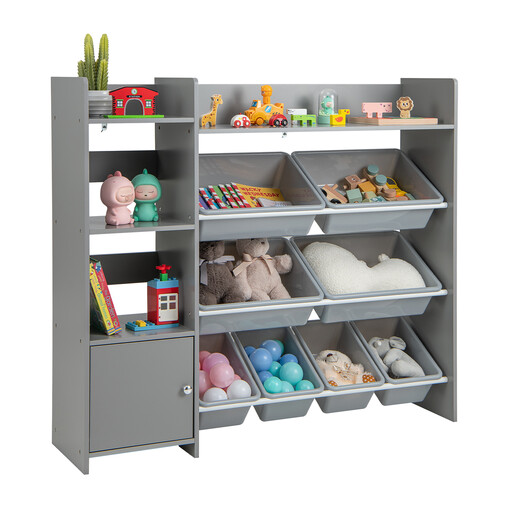
Why This Fits Their Persona: This is for the parent seeking a single, comprehensive solution for a playroom or bedroom. It's designed to hold everything from small toys and books to bulkier items, growing with the child from toddler to school age.
It includes an anti-toppling device to counter the stability trap. The combination of shelves, a cabinet and eight removable bins of two different sizes directly solves the impractical design issue by offering classified storage.
Features a multi-functional design combining a bookshelf, toy bins and a cabinet. The rounded corners and soft-close hinges are key child safety considerations.
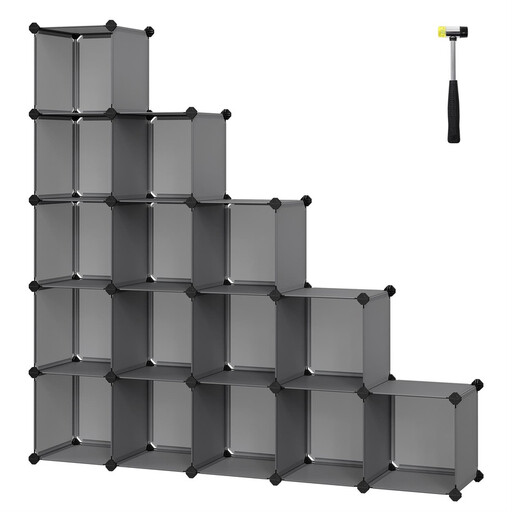
Why This Fits Their Persona: Ideal for those in smaller homes, rental properties or anyone who loves a DIY approach. This modular system can be adapted to fit awkward spaces like under the stairs or can be built as a traditional square unit.
Its customisable nature prevents the "impractical design" flaw, as you build it to your exact needs. The robust plastic panels with metal frames and an included anti-tip kit address stability concerns for taller configurations.
Extremely versatile and expandable. The clever plug-in system allows it to be built in various shapes and the waterproof panels are very easy to clean.
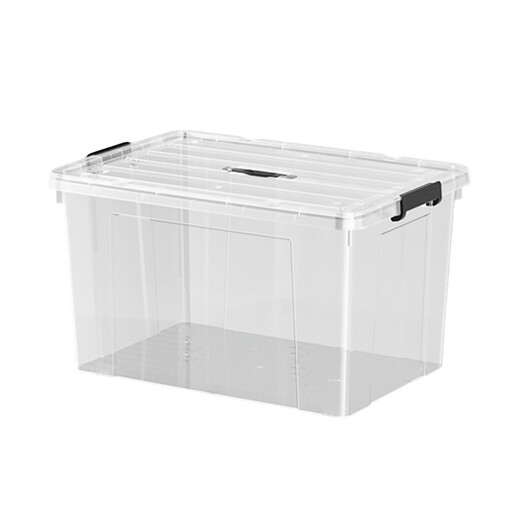
Why This Fits Their Persona: This is for the person who needs an immediate, no-fuss way to contain toy chaos in a living room or bedroom. It's not furniture, but a highly effective containment system that can be stacked or placed inside existing shelving units.
These boxes are made from thickened PP plastic with reinforcing ribs, avoiding the flimsy material trap. The design is inherently practical, with secure lids, carry handles and a transparent body so kids can see their toys.
Durable, stackable and requires no assembly. The clear design helps children find toys without emptying every box, which can help encourage tidiness.
We have compiled a complete, real-time list of products that fully satisfy these strict selection criteria and UK safety regulations.
For toddlers, safety is paramount. Opt for units that are low to the ground (under 60cm) to minimise tipping risks. If you choose a taller unit, ensure it comes with an anti-toppling kit and that you use it. Look for designs with rounded corners and avoid heavy lids or drawers that could trap small fingers; lightweight, removable fabric or plastic bins are a much safer alternative.
The key is accessibility and routine. Choose a kids toy storage organiser that is at their height. Use simple, clear labels—pictures work well for pre-readers—on each bin or drawer. Finally, make "tidy-up time" a short, positive and consistent part of the daily routine, like just before bedtime.
Costs can vary widely. A set of simple fabric storage cubes or plastic boxes can be very affordable. For a more permanent piece of nursery furniture, such as a sturdy toy storage cabinet or a multi-functional kids bookshelf made from durable MDF, you should expect to make a larger investment. These more substantial units often provide better long-term value through enhanced safety features and durability.