
24/7 Customer Support

Free returns

Same-day & Next-day Delivery

Quality Guaranteed

Unlock Your Welcome Offers: FREE Delivery | Up to 80% OFF | Free 30-day JoyPlus trial
Download the APP
Choosing kids toy vehicles can seem straightforward until you compare battery types, age labels, remote controls, dimensions and safety warnings. A small push-along car may suit a pre-schooler, while an older child may need a more capable RC vehicle or building set.
The main risk is paying for features that do not match how the toy will actually be used. Before buying, consider these common pitfalls.
Lights, music, spray effects and multiple driving modes can attract attention, but they may add little value if the toy is intended for quiet indoor play. Conversely, a basic friction-powered vehicle may disappoint a child expecting remote-control stunts.
Match features to the child’s interests and play space. A garden-friendly RC monster truck needs suitable tyres and ground clearance, whereas a LEGO vehicle set is more appropriate for creative building and display.
Battery-powered vehicles can involve lengthy initial charging, regular charging between sessions and replacement batteries for the controller. Check:
For example, some ride-on cars provide around 45–60 minutes of stated driving time but require approximately 8–12 hours for charging.
Age suitability is not simply a marketing label. Small parts, vehicle speed, weight capacity and remote-control complexity all matter. A toy marked 3+ may still require close adult supervision, particularly when used outdoors or around steps, roads, ponds and other children.
Always read the individual product warning, recommended age, maximum load and assembly instructions before purchase.
For kids ride-on cars, compare the seat dimensions, maximum load and number of riders with the child’s size. A two-seater may allow siblings or friends to ride together, but it also needs enough space for safe steering and seatbelt use.
The AIYAPLAY two-seater ride-on trucks listed below are recommended for children aged 3–8 years, with maximum loads of 50kg or 60kg depending on the model. These figures should not be exceeded.
For smaller children, a one-seat 12V ride-on with a maximum load of 25kg may be easier to control. For older children, a LEGO vehicle set or advanced RC car can offer longer-term interest without requiring a large storage area.
Remote control cars for kids vary considerably. A 2.4GHz controller generally allows several compatible vehicles to operate together with less signal conflict, but control range and terrain performance still differ.
For outdoor toys for kids, look for:
Do not assume that an “all-terrain” description means a vehicle can be used in deep water, heavy mud or unsafe conditions. Follow the manufacturer’s instructions.
Look for clear manufacturer details, assembly guidance and applicable toy safety information. Product listings may refer to EN71 for toy safety or EN62115 for electrically operated toys. These references should be checked against the product packaging and instructions rather than treated as a substitute for supervision.
For ride-on cars, seatbelts, slow-start functions, parental remote control and adjustable speed can help adults manage play. They do not remove the need for direct observation.
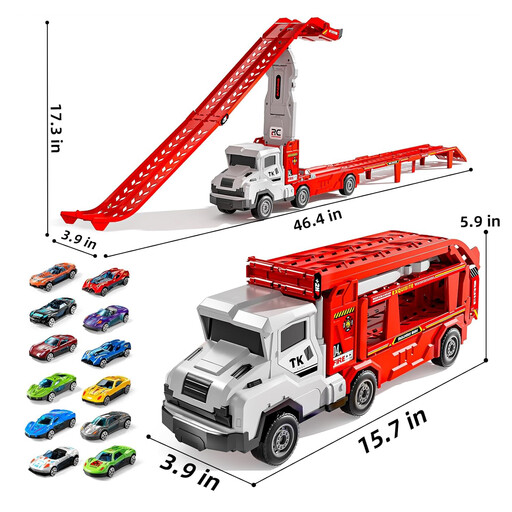
Why This Fits Their Persona: A practical choice for younger children who enjoy racing, collecting and sharing playtime at home or during visits to family.
It uses push-along play rather than a rechargeable motor, so there is no charging schedule or controller battery to manage.
Includes 12 die-cast cars and a foldable dual racing track for two- or four-player play.
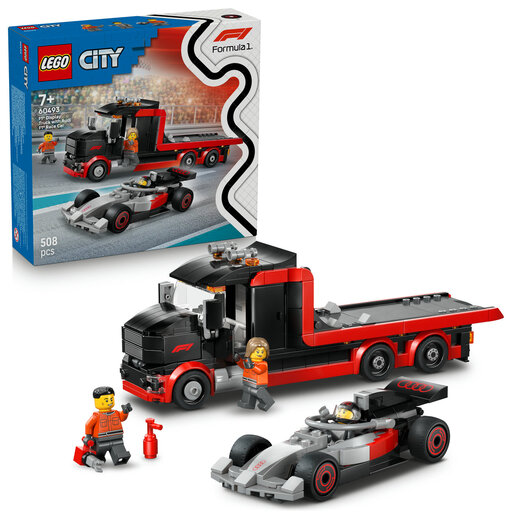
Why This Fits Their Persona: Suits children aged 7+ who prefer a structured building project, racing themes and a model that can remain on display.
The appeal is based on building and interactive loading rather than battery-powered effects that can become repetitive.
The 508-piece set includes an F1 display truck, Audi race car and three minifigures.
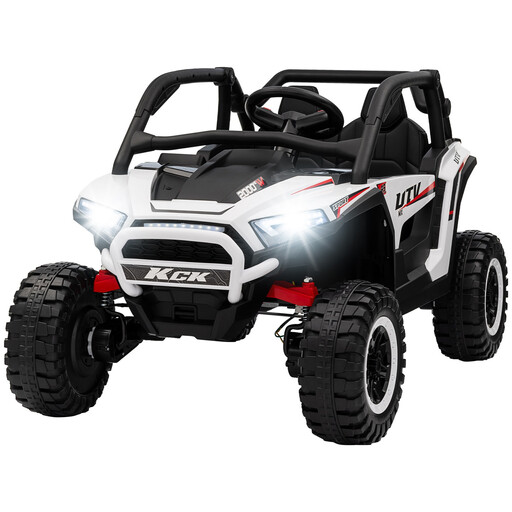
Why This Fits Their Persona: Designed for families with outdoor space who want a two-child ride-on vehicle for garden paths, grass, gravel or hard surfaces.
It states the speed range, load limit, charging time and parental remote-control distance clearly, making planning easier.
Two seats, four motors, spring suspension, seatbelts and adjustable 5–7km/h speed.
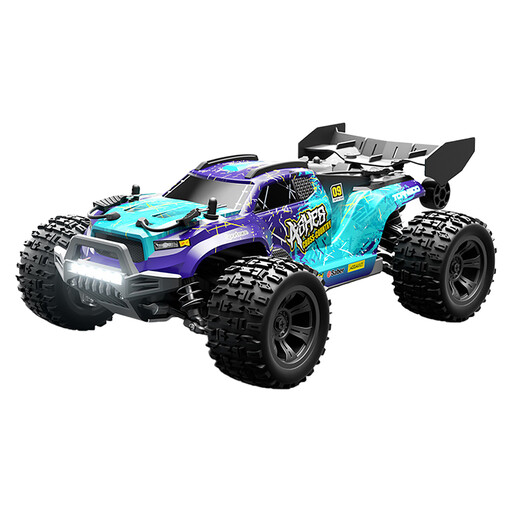
Why This Fits Their Persona: Suitable for teenagers and users aged 14+ who want a faster off-road vehicle for appropriate outdoor areas.
Its age guidance and control specifications make clear that this is not a pre-school toy or a small indoor car.
Features 4WD, a 7.4V rechargeable battery, 2.4GHz control and a stated speed of over 40km/h.
We have compiled a complete, real-time list of products that fully satisfy these strict selection criteria and UK safety regulations.
Run time varies by battery capacity, motor count, surface, rider weight and driving speed. The listed ride-on examples state approximately 45–60 minutes, while smaller RC vehicles may offer shorter sessions. Charging can take several hours, so a spare compatible battery may be useful for frequent outdoor play.
Small, slower vehicles can work indoors if there is enough clear floor space. Fast RC trucks, vehicles with large tyres and stunt models are generally more suitable for a garden or open outdoor area. Remove breakable objects and supervise children around furniture, pets and younger siblings.
Many ride-on cars are listed for children aged 3–8, but the correct choice depends on height, seating position, weight and coordination. Use the stated age and maximum load as starting points, then check that the child can sit securely and reach the controls. An adult should remain nearby whenever the vehicle is operating.