
24/7 Customer Support

Free returns

Same-day & Next-day Delivery

Quality Guaranteed

Unlock Your Welcome Offers: FREE Delivery | Up to 80% OFF | Free 30-day JoyPlus trial
Download the APP
A kids trampoline can be a fantastic addition to your home, encouraging active play and providing hours of entertainment. However, the market is filled with options that can be confusing. Many parents find themselves with a product that either doesn't fit their garden, doesn't withstand a British winter or, worse, presents unforeseen safety issues. Before you buy, it's crucial to understand what separates a worthwhile purchase from a short-lived one.
As the Joybuy Product Recommendation Officer, my role is to help you navigate these choices. Let's look at the most common traps and how to sidestep them.
trampoline with enclosure can create a false sense of security. Common flaws include large gaps between the mat and the net, weak zips that break and poles that are insufficiently padded, creating new impact hazards.10ft trampoline does not require just 10 feet of space. Manufacturers recommend a safety perimeter of at least 1.5-2.5 metres on all sides, free from fences, trees or sheds. Many buyers overlook this, only realising the trampoline won't fit safely in their garden upon assembly.To ensure you get a durable and suitable product, focus on these core parameters rather than marketing buzzwords.
For any outdoor trampoline, the frame is its backbone. Look for frames made from galvanised steel. This zinc coating process provides a crucial layer of protection against rust and corrosion, which is essential for any equipment left in a UK garden. The thickness of the steel also contributes to stability, so check the product's overall weight and leg structure; heavier, wider-set legs generally offer better stability.
A quality safety system is non-negotiable. Here’s what to check:
garden trampoline with net should ideally have an "inside net" design. This means the net attaches directly to the edge of the jumping mat, completely blocking access to the springs and frame. This significantly reduces the risk of limbs getting caught or landing on the hard springs.toddler trampoline or mini trampoline for kids, a springless design using elastic bands can be a good alternative. This type of children's rebounder often provides a gentler, quieter bounce and eliminates the risk of spring-related injuries.Finally, match the trampoline type to your specific needs. A large outdoor trampoline is great for older children and open spaces. For younger children or if you have limited room, a compact indoor trampoline is a more practical choice. For parties and maximum fun, a bouncy castle with slide offers multiple activities in one inflatable package, providing variety beyond just bouncing.
Based on these practical criteria, here are some options tailored to different family needs.
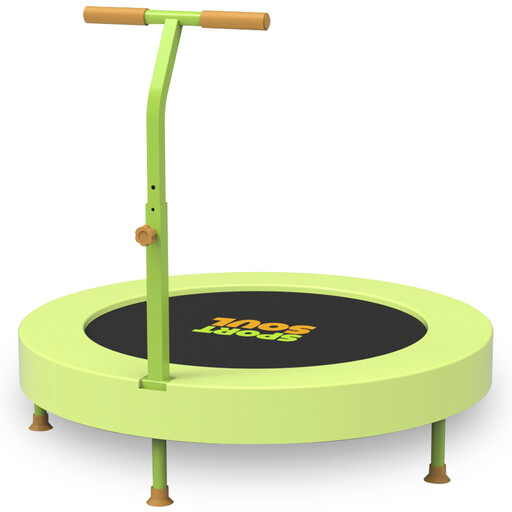
Why This Fits Their Persona: Ideal for parents of toddlers (3-6 years) looking for a safe, indoor introduction to bouncing. Its compact size fits easily in a playroom and the adjustable handlebar provides crucial stability for little ones finding their balance.
This model sidesteps the "Safety Illusion" pitfall by using elastic resistance bands instead of springs, eliminating gaps and hard surfaces. As an indoor trampoline, it also avoids the weather-related wear and tear trap.
The springless design offers a quieter, lower-impact bounce. It's also foldable, making it simple to store away when not in use, a key feature for smaller homes.
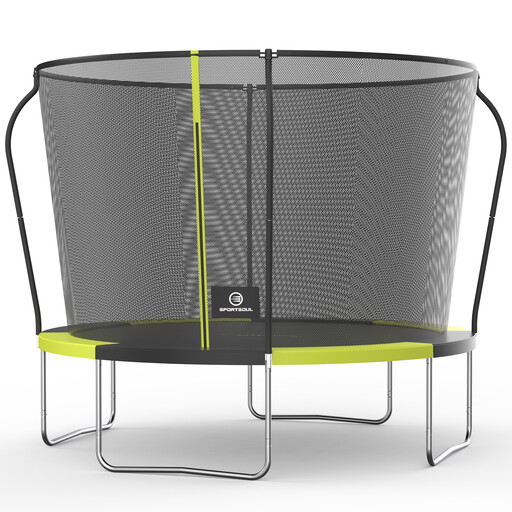
Why This Fits Their Persona: For families with a garden who want a durable, long-lasting outdoor trampoline. The 10ft size is a popular choice for UK gardens, offering ample space for energetic kids to burn off steam safely.
This model is built to meet ASTM safety standards and features an inside-net enclosure, directly addressing the "Safety Illusion" pitfall by preventing access to the 64 steel springs. The steel frame is designed for outdoor durability.
According to the brand, its patented T-Socket and buttonhole systems are designed to simplify and speed up assembly. The 4-leg configuration provides a stable base for a responsive bounce.
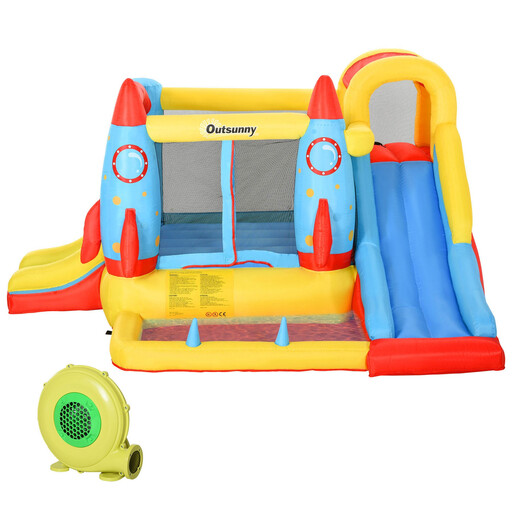
Why This Fits Their Persona: Perfect for parents who host playdates and birthday parties. This is more than a trampoline; it's a complete activity centre with a bounce area, dual slides, a climbing wall and a water pool, keeping multiple kids entertained at once.
This inflatable unit avoids the "One-Season Wonder" trap as it is not a permanent fixture. It can be packed away in the included carry bag, protecting it from constant weather exposure. Ground stakes are included for stability during use.
Its greatest strength is versatility. The included electric air blower inflates the entire structure in minutes, meaning less setup and more playtime. It accommodates up to four children, making it ideal for social play.
We have compiled a complete, real-time list of products that fully satisfy these strict selection criteria and UK safety regulations.
Always check the manufacturer's guidelines, but a good rule of thumb is to allow for at least 2 metres of clear, flat space around the entire perimeter of the trampoline. For a 10ft trampoline, this means you need a circular area of at least 14ft (approx. 4.3m) in diameter. This space must be free of hazards like walls, fences, garden furniture and overhanging branches.
Yes, a well-designed trampoline with enclosure is significantly safer than one without. The net's primary function is to prevent users from falling off the trampoline, which is a leading cause of injury. For maximum safety, choose a model where the net is installed inside the springs and ensure the entrance is always securely fastened during use.
The lifespan of an outdoor trampoline depends heavily on its material quality. A model with a galvanised steel frame, UV-resistant mat and padding and a durable net can last for many years. Cheaper models may only last one or two seasons before rust or sun damage renders them unsafe. To prolong its life, consider using a weather cover during winter months or when it's not in use for long periods.