
24/7 Customer Support

Free returns

Same-day & Next-day Delivery

Quality Guaranteed

Unlock Your Welcome Offers: FREE Delivery | Up to 80% OFF | Free 30-day JoyPlus trial
Download the APP
Watching a child discover the joy of bouncing is a wonderful experience. A kids trampoline can be a fantastic way to encourage active play, improve coordination and burn off endless energy. However, with so many options available, from a small indoor model to a large garden trampoline, choosing the right one can feel overwhelming. Safety, size and age-appropriateness are all key factors to consider.
This guide is designed to help you navigate the choices. We will walk through the essential features to look for and highlight some of our top recommendations to help you find a trampoline that brings safe, active fun to your family.
Before you start browsing, a little planning can ensure you make a purchase that fits your home and your child's needs. Here are a few key points to consider.
The first decision is where the trampoline will live. For younger children or homes without a garden, a mini trampoline for kids is an excellent choice. These are compact, often designed for indoor use and can be easily stored.
For those with outdoor space, a larger garden trampoline offers more room for energetic play. If you are considering a model like a 10ft trampoline with a safety net, it is crucial to measure your garden first. Ensure you have a flat, level surface with at least two metres of clear space around the entire perimeter, away from fences, trees and other obstructions.
When it comes to a kids trampoline, safety is paramount. A trampoline with a handle bar provides crucial stability for toddlers who are still developing their balance. For larger outdoor models, a safety net enclosure is non-negotiable. Look for nets that attach to the inside of the springs to prevent any contact with the frame.
Also, pay attention to the bounce mechanism. Traditional steel springs should be completely covered by a thick, durable pad. An alternative is a springless design that uses elastic resistance bands, which can offer a quieter, lower-impact bounce and eliminate the risk of fingers or toes getting caught in springs.
Trampolines are not one-size-fits-all. A toddler trampoline is specifically designed for the size and weight of very young children, typically with a maximum user weight of around 25 kg. As children grow, they will need a larger, more robust round trampoline designed for higher weight limits and more vigorous use. Always check the manufacturer's specifications for age and maximum weight capacity to ensure safe use.
Here are a few options that stand out for their design, features and suitability for different age groups and spaces.
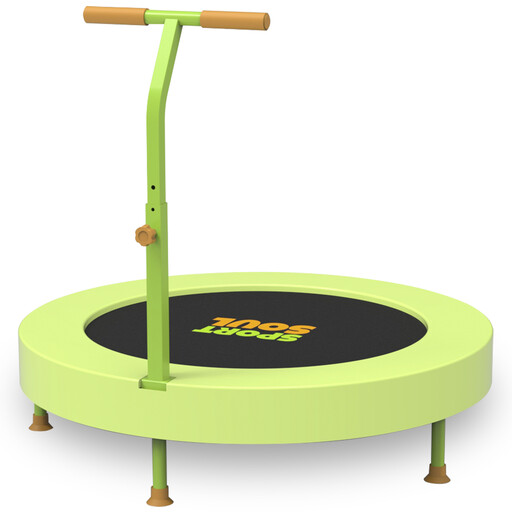
Why It Stands Out: This indoor trampoline uses 24 elastic resistance bands instead of steel springs. This springless design results in a significantly quieter bounce, making it ideal for use in flats or shared living spaces. Its foldable frame and pre-assembled components make it convenient for both setup and storage.
Pros:
Who is it for? This is a great first trampoline for toddlers and young children. It is particularly well-suited for indoor play in households where noise reduction is a priority.
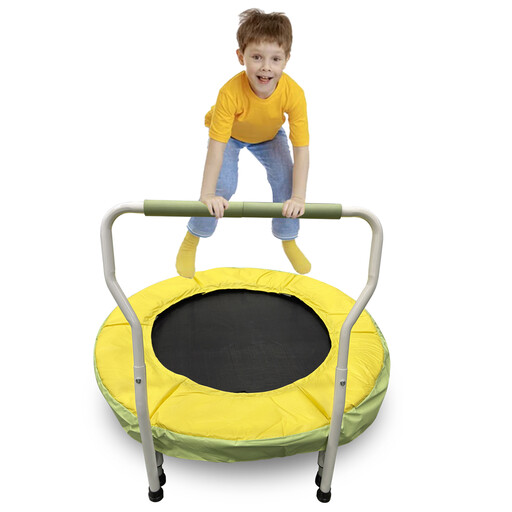
Why It Stands Out: For those who prefer the responsive bounce of traditional springs, this toddler trampoline offers a classic feel with enhanced safety. It features a full-coverage safety pad that completely conceals the 24 steel springs, protecting little feet. The adjustable foam-covered handlebar adds another layer of security.
Pros:
Who is it for? Ideal for children aged 3-6 who are ready for an energetic bounce. This model provides the classic trampoline experience with modern safety features for parental peace of mind.
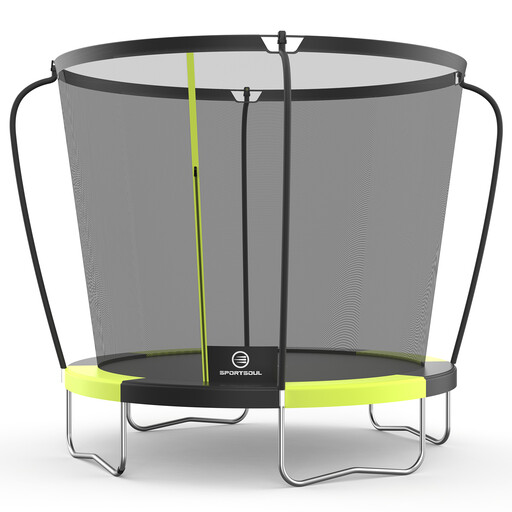
Why It Stands Out: This 10ft trampoline with safety net is built for serious garden fun. It complies with ASTM safety standards and incorporates several patented design features to simplify assembly. The T-Socket system allows two people to set it up in about an hour, while the inside-attachment net keeps users safely away from the frame and springs.
Pros:
Who is it for? A solid choice for families with a garden looking for a durable, safety-conscious round trampoline for older children and family recreation.
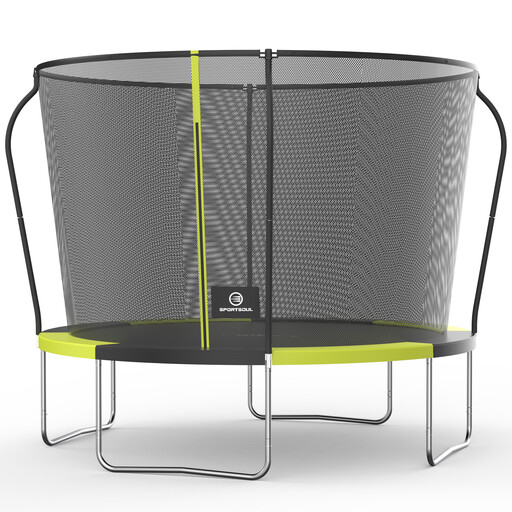
Why It Stands Out: This model shares the same excellent safety and assembly features as the other Crown Series trampoline but increases the spring count. With 64 steel springs, it is engineered to provide a more responsive and dynamic bouncing experience, catering to more active users.
Pros:
Who is it for? Families looking for a high-performance garden trampoline that delivers a superior bounce without compromising on the patented safety and convenience features of the Crown Series.
Our recommendations cover a range of needs, but every family is different. If you are specifically searching for a first trampoline for your youngest child, there are many more designs to consider.
Explore our full collection of trampolines designed with little ones in mind.
Discover More Toddler Trampolines
This depends entirely on the model. A toddler trampoline with a handle is generally suitable for children aged 3 to 6, under strict adult supervision. Larger garden trampolines are often recommended for ages 6 and up. Always refer to the manufacturer's specific age and weight guidelines for the product you are considering.
Both types can be safe when properly designed and used. Springless models, which use elastic bands, eliminate the risk of pinching from metal springs. However, high-quality spring-based trampolines are also very safe, provided they have a thick, durable safety pad that completely covers the springs and frame. The choice often comes down to personal preference regarding bounce feel and noise level.
For any outdoor trampoline, you must have a flat, level surface. Crucially, you should allow for a safety perimeter of at least 2 metres of clear space on all sides of the trampoline. This area should be free of any hazards like walls, fences, trees, sheds or play equipment. Also, ensure there is ample overhead clearance with no branches or wires above the jump zone.