
24/7 Customer Support

Free returns

Same-day & Next-day Delivery

Quality Guaranteed

Unlock Your Welcome Offers: FREE Delivery | Up to 80% OFF | Free 30-day JoyPlus trial
Download the APP
Finding engaging ways for children to stay active at home can be a challenge. A kids trampoline offers a fantastic solution, providing hours of entertainment while helping them burn off excess energy. However, with so many options available—from a compact toddler trampoline for the playroom to a large garden trampoline for the whole family—choosing the right one can feel overwhelming.
This guide is designed to cut through the clutter. We will walk you through the key factors to consider when making your choice and highlight a few different types of products to help you find a safe and suitable option for your family's needs, space and budget.
Before you start browsing, here are a few essential points to consider to ensure you make a well-informed decision.
When it comes to equipment for children, safety is the top priority. For a larger outdoor trampoline with a safety net, look for enclosures where the net attaches to the inside of the springs. This design prevents users from accidentally landing on the hard frame or springs. A thick, durable pad that covers the springs and frame is also crucial. For any trampoline, check that it is built with a sturdy, corrosion-resistant steel frame to ensure stability and longevity.
Whether you're considering an indoor or outdoor model, space is a key factor. For a garden trampoline, you need more than just the footprint of the trampoline itself. Safety guidelines recommend at least 2 metres of clear, level space around the entire perimeter, free from fences, walls, sheds or overhanging trees. For indoor use, a mini trampoline or children's rebounder is a great space-saving option, but you still need to ensure there is adequate clearance from furniture and walls.
Trampolines are not one-size-fits-all. A toddler trampoline is specifically designed for very young children, featuring a low height, a handlebar for stability and a low maximum user weight. As children grow, they can graduate to larger models. Always check the manufacturer's recommended age range and, more importantly, the maximum user weight. Overloading a trampoline is a significant safety risk and can damage the equipment. For parties or multiple young children, an inflatable bounce house can be a suitable alternative, as they are often designed to accommodate several users at once within a specified total weight limit.
Here are a few different types of trampolines and bouncers that cater to various ages, spaces and play styles.
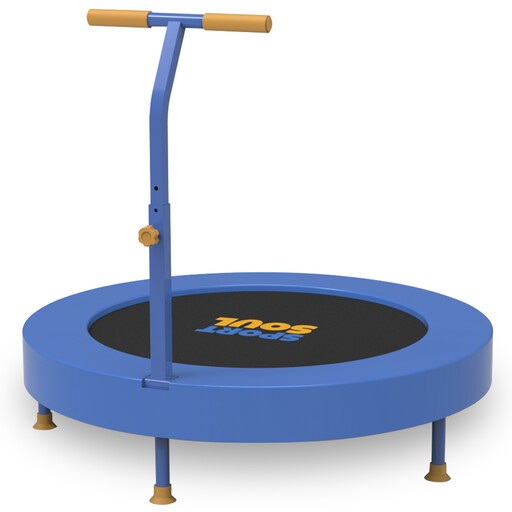
Why It Stands Out This compact rebounder is an excellent introduction to bouncing for the youngest members of the family. Instead of traditional steel springs, it uses 24 elastic resistance bands, which provide a quieter, lower-impact bounce that is ideal for indoor use. The T-shaped handlebar is adjustable, offering stability as your child grows, and the entire unit can be folded for convenient storage.
Pros
Who is it for? This is a great choice for parents of toddlers and small children (with a maximum user weight of 25kg) who want a safe and simple way to encourage active play indoors.
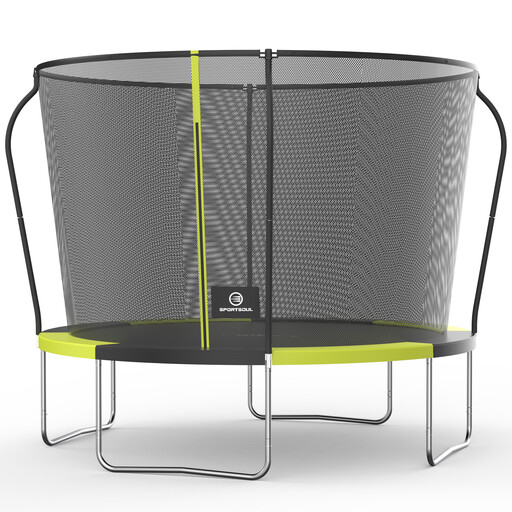
Why It Stands Out For classic garden fun, this 10-foot garden trampoline is built with both convenience and safety in mind. It features a durable steel frame and a responsive jumping mat supported by 64 steel springs. According to the brand, its patented T-Socket system is designed to reduce assembly time. The safety enclosure net attaches inside the springs, and its patented buttonhole attachment is intended to provide better protection and easier setup.
Pros
Who is it for? Families with a garden and children aged 6 and up who are looking for a durable, full-sized outdoor trampoline for recreation.
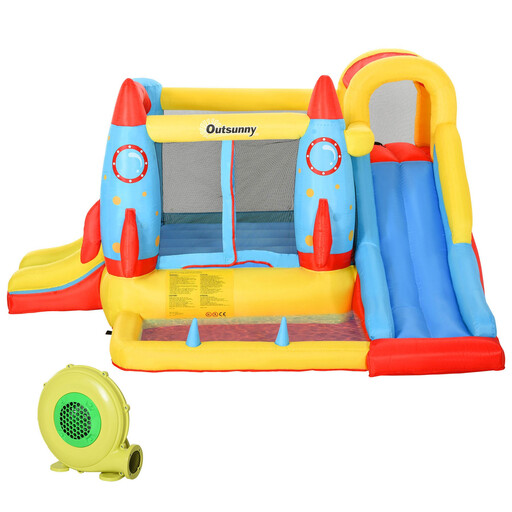
Why It Stands Out If you're looking for more than just bouncing, this inflatable bounce house is a multi-activity play centre. It combines a trampoline area, two slides, a climbing wall and a water pool, offering a variety of ways to play. It comes with an electric air blower that inflates the entire structure in minutes. Designed to accommodate up to four children at once (with a total maximum weight capacity of 120kg), it's a great option for playdates and parties.
Pros
Who is it for? Parents seeking a versatile bouncy castle for kids that provides a complete play experience, perfect for garden parties or for children who enjoy varied activities.
The products highlighted here represent just a few of the many styles available. If you're looking for a different size, feature set or design, there are many more to discover.
Explore our full range of trampolines to find the perfect match for your garden and family. Browse the Kids Outdoor Trampoline Category
This depends on the type of trampoline. Small, low-to-the-ground toddler trampolines with handlebars can be introduced to children from around 2 or 3 years old, always with close adult supervision. Larger garden trampolines are generally recommended for children aged 6 and over, as they require more coordination and spatial awareness. Always follow the manufacturer's specific age and weight guidelines for any product you choose.
Each system has its own advantages. Traditional steel springs, typically found on larger outdoor models, often provide a higher and more powerful bounce. Elastic bands, common on a mini trampoline or children's rebounder, tend to be much quieter and offer a softer, lower-impact bounce. This makes them well-suited for indoor use and for younger children whose joints are still developing.
Proper clearance is essential for safety. You should place your trampoline on a flat, level surface with at least 2 metres of clear space around the entire perimeter. This area should be free of any hazards like fences, sheds, trees or garden furniture. Additionally, ensure there is ample overhead clearance—at least 7 metres from the ground—with no tree branches, washing lines or electrical wires above.