
24/7 Customer Support

Free returns

Same-day & Next-day Delivery

Quality Guaranteed

Unlock Your Welcome Offers: FREE Delivery | Up to 80% OFF | Free 30-day JoyPlus trial
Download the APP
Kids walkie-talkies can turn a garden, park visit or sleepover into an imaginative mission. However, choosing a suitable pair involves more than picking a colourful character design. Parents and relatives should check the advertised range, age guidance, battery requirements and controls before buying.
The right children’s walkie-talkies should be comfortable for small hands, simple enough for independent use and appropriate for the intended setting. This guide explains the main buying traps and highlights suitable options for different types of play.
A product may state a range of 120, 200 or 500 metres, but this is generally an outdoor figure under favourable conditions. Walls, trees, hills, buildings and weather can reduce communication distance. A pair advertised as long-range walkie-talkies for children may therefore work differently in a terraced house, block of flats or busy public park.
For indoor games, communication across a house or garden is usually more relevant than the maximum figure on the box. Check whether the listing explains that range varies with terrain and weather.
Some kids two-way radios include several buttons, menus or extra functions. These may be useful for older children, but a three-year-old may prefer a large push-to-talk button and a clear listen-and-speak routine.
For walkie-talkies for ages 3+, look for simple controls, a manageable shape and a clear power switch. A belt clip or lanyard can also reduce the chance of the radio being dropped during active play.
Many walkie-talkie toys require disposable batteries, which are not always included. Battery type and quantity can affect the real cost of ownership, particularly if the radios are used frequently.
Always read the product warnings. Small parts can create a choking hazard, and button or other batteries must be kept away from young children. Remove packaging before use, supervise children according to the product guidance and dispose of used batteries promptly.
Compare the stated outdoor range with how the radios will actually be used. The Peppa Pig option lists up to 120 metres, while the Disney Frozen, Toy Story and Paw Patrol models list up to 500 metres outdoors. The Spider-Man models list up to 200 metres.
A pair with two communication channels can be useful when nearby radios cause interference or when children want a separate channel for another play group. For occasional hide-and-seek in the garden, a simpler model may be sufficient.
A product marked suitable from age 3 is not automatically suitable for every three-year-old. Consider whether the child can hold the unit securely, press the talk button and understand that releasing the button is needed to listen.
Compact designs made for small hands can be more practical than larger radios. Flexible antennas may be preferable for energetic outdoor play, whereas hard antennas can offer a more traditional radio design. Clips and lanyards are useful portability features, but check that children use them safely and do not place cords around the neck.
Check the exact battery requirement before ordering. Several models use three AAA/LR03 batteries per pair of radios, while the Peppa Pig model requires two 9V batteries and the VTech Spidey model requires six AAA batteries. The dinosaur product information refers to six AAA batteries in one section and size 7 batteries in another, so confirm the current listing details before purchase.
For regular use, rechargeable batteries may reduce replacement waste, but they still need to match the radio’s specified size and voltage. Never substitute an unsuitable battery type.
Look for clear manufacturer and responsible-person details, age warnings and relevant conformity markings such as CE or UKCA where applicable. These details do not replace adult judgement: inspect the units before use and stop using them if the casing, antenna or battery compartment becomes damaged.
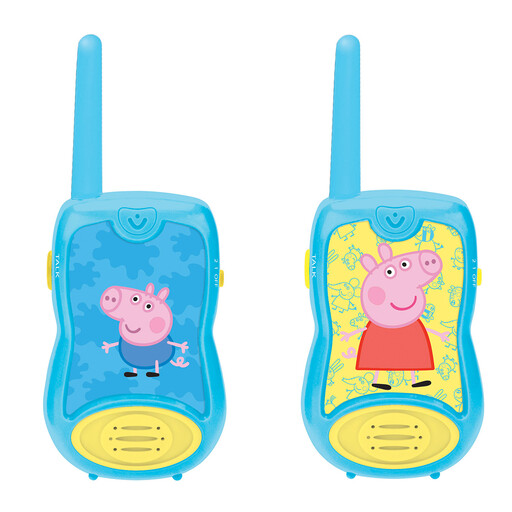
Why This Fits Their Persona: A straightforward choice for younger children using walkie-talkies at home, in the garden or during supervised playdates.
Its large push-to-talk button and 120-metre stated range make the intended short-distance use clearer than relying on an exaggerated maximum.
Designed for children aged 3–8, with compact bodies, flexible antennas and belt clips. Batteries are not included.

Why This Fits Their Persona: Suitable for a Frozen fan who values a themed gift with practical features for outdoor pretend play.
The listing states the outdoor range is up to 500 metres and notes that terrain and weather affect performance, giving a more realistic expectation.
Includes two channels, hard antennas and belt clips. The pair uses three AAA/LR03 batteries per unit, which are not included.
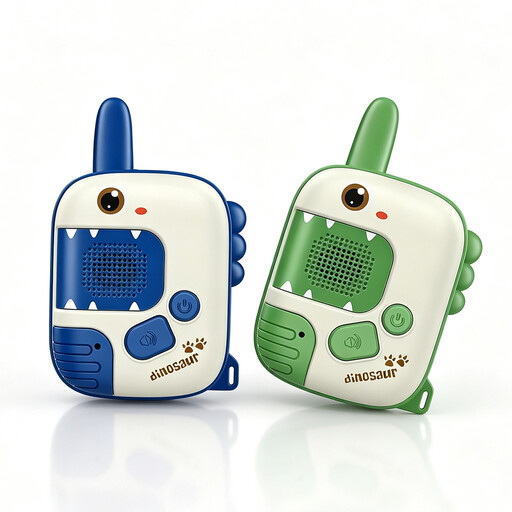
Why This Fits Their Persona: A dinosaur-themed option for families planning camping games, garden missions, hide-and-seek or parent-child outdoor activities.
The listing specifies push-to-talk operation, shock-resistant materials and a carry lanyard. Check the battery wording carefully because two battery descriptions are provided.
Supplied as a walkie-talkie 2-pack with back clips and a lanyard. It is listed for children aged 3 and over and requires batteries separately.
Other character walkie-talkies may suit different interests. Paw Patrol models feature Marshall and Chase with a stated outdoor range of up to 500 metres, while Toy Story and Star Wars options offer character-led pretend play. Spider-Man choices include a 200-metre model and a VTech version with built-in themed games and sound effects. Compare the features rather than paying only for the character packaging.
We have compiled a complete, real-time list of products that fully satisfy these strict selection criteria and UK safety regulations.
They can work through some internal walls, but distance and clarity vary according to construction, layout and interference. Product range figures usually refer to outdoor use with fewer obstructions. Test the pair in the intended rooms or garden before relying on it for a particular game.
The main ongoing cost is usually disposable batteries. Check whether each radio requires AAA, 9V or another battery format, and how many are needed. Rechargeable batteries can be considered if they match the product specification. Keep all batteries away from children and supervise replacement.
Lifespan depends on frequency of use, storage and how the radios are handled. A protective carry clip, a secure battery compartment and a design suited to small hands can help prevent avoidable damage. Store the units somewhere dry, remove batteries if the toys will not be used for an extended period and inspect the casing and antenna regularly.