
24/7 Customer Support

Free returns

Same-day & Next-day Delivery

Quality Guaranteed

Unlock Your Welcome Offers: FREE Delivery | Up to 80% OFF | Free 30-day JoyPlus trial
Download the APP
A kids wooden sand pit can transform a garden into a hub of creativity, providing hours of entertainment. However, not all sandpits are created equal. Many parents find their promising purchase becomes a soggy, splintered mess after just one British winter. Before you buy, it's crucial to understand the common design flaws that lead to disappointment and wasted money.
As the Joybuy Product Recommendation Officer, my role is to help you see past the marketing and focus on what truly matters for a safe, durable and engaging outdoor toy. Let's look at the pitfalls to avoid.
To ensure your investment provides lasting fun, focus on these key parameters. They are the difference between a garden highlight and a garden headache.
The foundation of a good kids wooden sand pit is the material itself. Look for products made from naturally durable timber like fir wood. Crucially, the wood must be treated for outdoor use to withstand moisture and prevent decay. Check for water-based, non-toxic finishes that are safe for children. The construction should be solid, with rounded edges and a sturdy frame that won't wobble or come apart during enthusiastic play.
A functional cover is non-negotiable. The most practical designs feature an integrated outdoor sandpit with lid. Some innovative models have foldable benches that flatten to form a solid, secure cover over the sand. This dual-purpose design not only protects the sand effectively but also saves space.
For sun protection, a sandpit with cover and canopy is an excellent choice. Look for a canopy made from UV-resistant fabric. An adjustable-height canopy is even better, as it allows you to angle the shade perfectly as the sun moves across the sky, ensuring your children can play safely and comfortably for longer.
Always check that the product complies with UK safety standards, such as EN71-1.2.3. Beyond certifications, look for thoughtful design elements. A wooden sand pit with seats provides a clean and comfortable place for children to sit. Another key feature is a non-woven fabric liner for the base. This liner serves two purposes: it keeps the sand contained within the pit while allowing water to drain away, preventing the sand from becoming waterlogged.
To help you find the right fit for your family's needs, we've matched some popular outdoor play options to different user profiles.
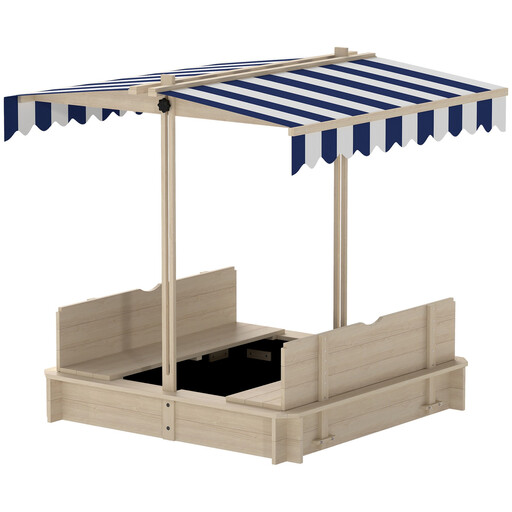
Why This Fits Their Persona: Ideal for children aged 3-7 who love sensory and construction play. The built-in benches and adjustable canopy support long, comfortable and imaginative sessions of digging and building in the garden.
The clever foldable backrests convert into a solid cover, directly solving the "useless cover" problem. It's made from fir wood with a water-based paint finish, addressing the "one-season wood" flaw.
The dual-function benches provide seating and a protective lid. The adjustable canopy offers excellent sun protection.
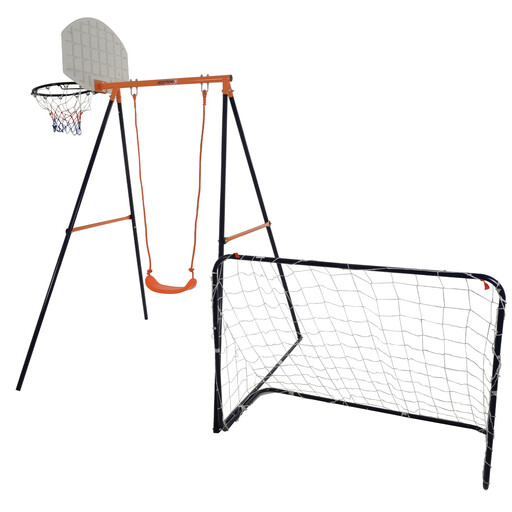
Why This Fits Their Persona: For families with children (3-10 years) who need more than just static play. This set encourages dynamic physical activity, combining a swing, basketball hoop and football goal to cater to varied interests and social play.
This addresses the broader goal of lasting outdoor fun. The powder-coated steel frame is built for durability and UV resistance, avoiding the "unusable after one season" trap common with lower-quality metal or plastic sets.
A multi-activity station in a single footprint that grows with your child and is perfect for entertaining multiple children at once.
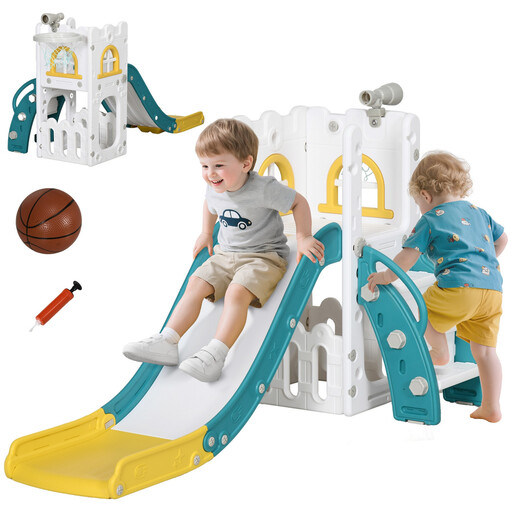
Why This Fits Their Persona: Perfect for toddlers aged 1-3 who are just starting to explore. It offers a safe, contained play environment that can be used indoors or on a patio, helping to develop crucial motor skills and confidence.
Made from durable, child-safe HDPE plastic, it won't rot or splinter like untreated wood. The design prioritises safety for the youngest users, with a gentle slide slope, buffer zone and non-slip steps.
A versatile 5-in-1 activity centre (slide, climber, hoop, telescope, storage) that provides year-round fun both indoors and out.
We have compiled a complete, real-time list of products that fully satisfy these strict selection criteria and UK safety regulations.
This depends on the internal dimensions of the sandpit. As a reference, a model with internal dimensions of 90cm x 90cm x 15.5cm like the Outsunny sandpit featured above, holds approximately 90kg of play sand. It's best to fill the sandpit to about two-thirds of its depth to minimise sand being kicked out during play. Always check the manufacturer's recommendation.
The most important step is to use a secure, well-fitting cover every time the sandpit is not in use. This prevents contamination from rain, leaves and animals. It's also good practice to regularly rake the sand to remove any small bits of debris and to aerate it. If the sand becomes heavily soiled, it is advisable to replace it entirely.
Both have their merits. A children's garden sand pit made from wood often provides a more permanent, sturdy structure with a natural aesthetic that blends well into a garden. They can also offer more features, like integrated benches and canopies. Plastic sandpits are typically lighter, more portable and require no maintenance. However, they are often smaller and can become brittle over time with sun exposure. The choice depends on your space, budget and desired longevity.