
24/7 Customer Support

Free returns

Same-day & Next-day Delivery

Quality Guaranteed

Unlock Your Welcome Offers: FREE Delivery | Up to 80% OFF | Free 30-day JoyPlus trial
Download the APP
Choosing a kids scooter can look straightforward until you compare wheel layouts, height ranges, weight limits and electric features. A colourful design may attract your child, but it does not necessarily suit their balance, height or usual riding surface.
The most common buying mistakes are easy to avoid:
The right choice should match the rider, intended location and level of experience rather than the packaging alone.
A 3-wheel scooter for toddlers usually offers a broader platform and lean-to-steer handling. This can be a practical starting point for children aged around three, particularly when they are developing balance and turning control. Look for a wide, anti-slip deck and a foot-activated rear brake.
A 2-wheel scooter for kids requires more independent balance. It is generally more suitable for confident children, teenagers or adults. Larger polyurethane wheels, such as the 205 mm wheels on selected LEEYV models, can provide a smoother rolling feel than small stunt-scooter wheels on suitable paved surfaces.
For children learning tricks, a stunt scooter for beginners should have a fixed handlebar, solid wheels and a frame intended for tricks. A standard foldable commuter scooter is not automatically suitable for jumps or skate-park use.
An adjustable-height scooter can remain useful as a child grows, but the adjustment range still needs to suit the rider. Check the manufacturer’s recommended rider height, not just the suggested age.
The handlebar should allow the rider to maintain a comfortable, slightly bent arm position without leaning heavily over the front wheel. A handlebar that is too low can make steering tiring, while one that is too high may reduce control.
For a scooter for ages 3-14, expect different designs within the range. A toddler model should prioritise stability, whereas an older child’s model may focus on speed, portability or responsive steering.
A rear foot brake or responsive handbrake helps the rider slow down in a controlled manner. Teach children to brake progressively and to keep both hands on the handlebar.
Always compare the rider’s weight with the stated maximum load. For example, the LEEYV RV205 lists a maximum load of 220 lb, while several electric models in this selection are rated at 50 kg or 70 kg. Do not treat the maximum figure as a recommendation for advanced riding or tricks.
Before the first outing, inspect the wheels, brake, bolts, folding mechanism and handlebar clamp. Use a helmet and consider knee and elbow pads, especially for beginners. Children should ride on a clear, suitable surface away from traffic.
A kids electric scooter has different legal considerations from a conventional kick scooter. Privately owned electric scooters cannot legally be ridden in public places in the UK, including roads, pavements, cycle paths, parks and other public open spaces. They are intended for use only on private land with the landowner’s permission.
Electric models should be used by one rider at a time, with appropriate protective equipment. Charge on a hard, flat surface away from flammable materials, use the supplied or approved charger and do not leave the scooter charging unattended or overnight. Check the product instructions for battery care and do not use a damaged charger, battery or scooter.
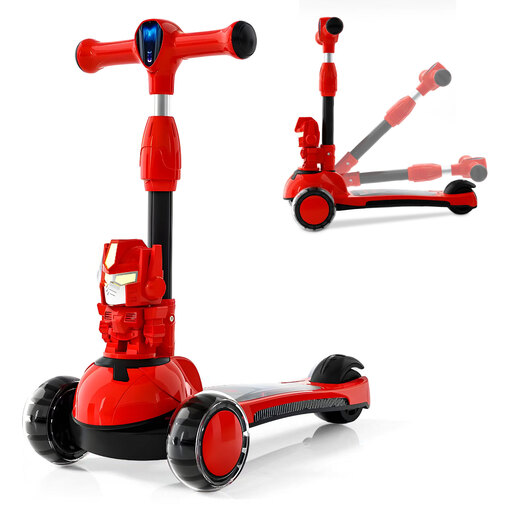
Why This Fits Their Persona: A three-wheel layout with lean-to-steer handling is suited to younger children beginning outdoor play and practising balance.
It prioritises a three-wheel platform and wide anti-slip deck instead of relying only on decorative features.
Adjustable handlebar, light-up wheels and rear braking are listed features.
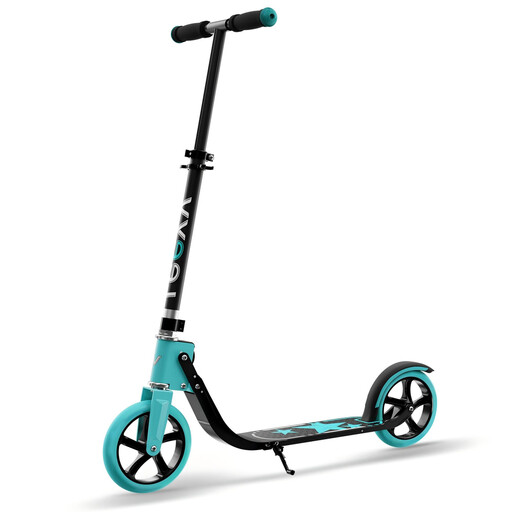
Why This Fits Their Persona: This foldable kids scooter is aimed at riders aged 6-12 and adults who need one adjustable model for leisure rides or short commutes on private or suitable routes.
The specification states the handlebar is adjustable, the frame combines aluminium and steel and the scooter has rear braking.
205 mm polyurethane wheels, non-slip grips, folding storage and a 220 lb maximum load.
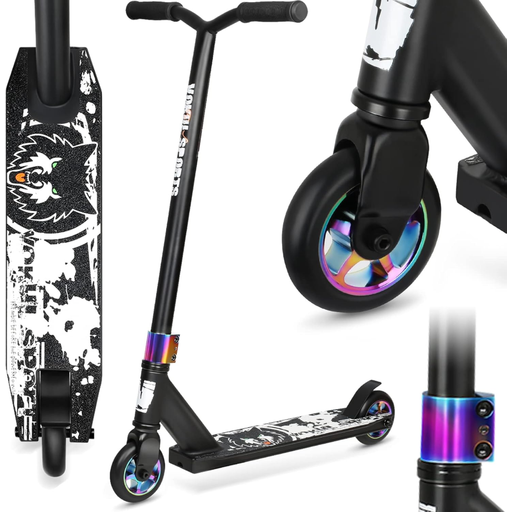
Why This Fits Their Persona: Intended for beginners aged 6 and above who want a fixed setup for learning tricks on an appropriate smooth surface.
It is presented as a trick scooter with a fixed handlebar, rather than a general commuter model being used for stunts.
The listed design includes a 7 lb frame, 100 mm solid polyurethane wheels with metal cores and a rear brake.
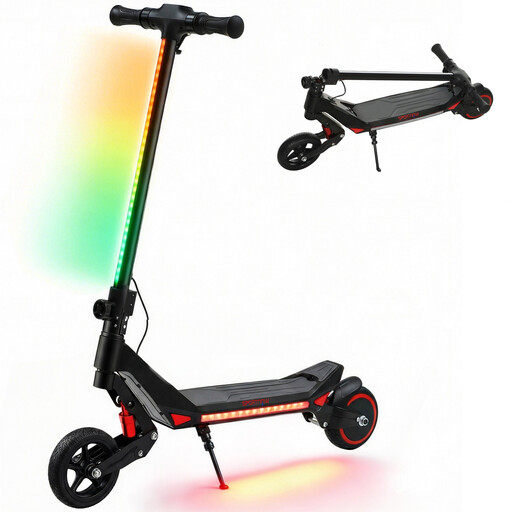
Why This Fits Their Persona: Suitable for families considering a feature-led electric model for children aged 6-14, used only on permitted private land.
The kick-to-start function avoids an immediate motor launch, while the product information clearly states the UK public-use restriction.
A 200 W motor, stated maximum speed of 16 km/h, up to 12 km range, front and rear suspension, LED display and foldable construction.
We have compiled a complete, real-time list of products that fully satisfy these strict selection criteria and UK safety regulations.
Before handing over the scooter:
A three-wheel model is commonly designed for children from around age three, while many two-wheel and electric scooters are listed for age six and above. The child’s height, weight, balance and ability to follow instructions matter as much as age.
Lifespan depends on rider weight, frequency of use, storage and surface conditions. Regularly checking brakes, bolts, wheels and folding parts can help identify wear early. A scooter should not be used if the frame is damaged or the steering and braking systems do not operate correctly.
No. Privately owned electric scooters are not legal on UK roads, pavements, cycle paths, parks or other public places. They may be used only on private land with the landowner’s permission. A conventional kick scooter is a more practical option for public recreational areas, subject to local rules and safe riding conditions.