
24/7 Customer Support

Free returns

Same-day & Next-day Delivery

Quality Guaranteed

Unlock Your Welcome Offers: FREE Delivery | Up to 80% OFF | Free 30-day JoyPlus trial
Download the APP
A kitchen bin might seem like a simple purchase, but choosing the wrong one can lead to daily frustration. From lids that slam shut to rubbish bags that constantly slip, a poorly designed waste bin can make a simple chore messy and unpleasant. As a Joybuy Product Recommendation Officer, my role is to help you see past the marketing claims and focus on the features that genuinely make a difference in a busy UK home.
Before you buy, let's look at the common pitfalls. Many rubbish bins look great on the shelf but fail in practice. Being aware of these issues is the first step to finding a kitchen bin that is a help, not a hindrance.
To avoid these issues, focus on a few core parameters. Getting these right will ensure your new waste bin serves you well for years.
The size of your bin should match your household's needs and the space you have available.
Before buying, always measure the height, width and depth of the space where the bin will go. Remember to account for the extra height needed when the lid is fully open.
The construction of a bin determines its longevity and ease of use.
With council recycling rules becoming more specific, a dedicated recycling bin is a necessity for many. A dual compartment bin offers a neat, all-in-one solution, allowing you to separate general waste from recyclables within a single unit. Some models even offer a third, smaller compartment for food waste.
Based on designs that address the common pitfalls, here are a few options matched to different household needs.
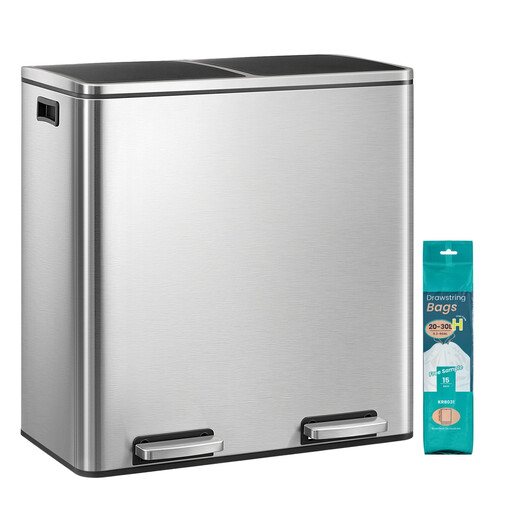
Why This Fits Their Persona: This dual compartment bin is ideal for households that take recycling seriously. It provides a streamlined system for separating general waste and recyclables in one sleek unit, eliminating the need for multiple separate bins cluttering the kitchen.
It features two independent, sturdy pedals for each compartment, reducing wear on a single mechanism. The removable inner buckets make securing and changing liners straightforward, preventing bag slippage.
Two generous 30L compartments provide a total 60L capacity. The soft-close lids ensure quiet operation and the stainless steel finish is easy to maintain.
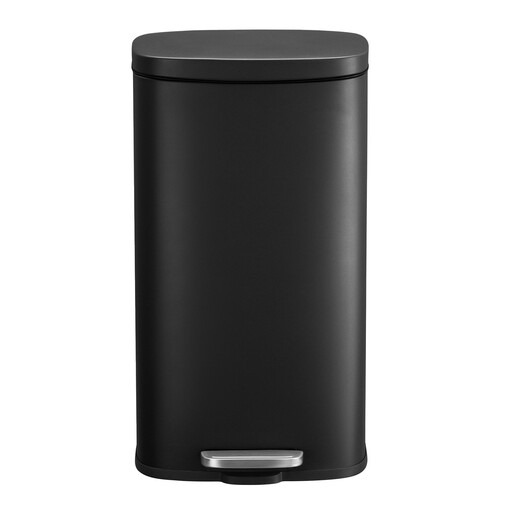
Why This Fits Their Persona: Perfect for smaller kitchens, flats or those who prefer a clean aesthetic. Its compact, rectangular form fits neatly against a wall or at the end of a counter, providing a practical 30L capacity without taking up excess floor space.
This model features a well-designed soft-close lid that shuts quietly and forms a tight seal, effectively trapping odours. The inner bucket design helps hold liners in place, preventing them from slipping.
The durable steel construction is easy to clean and rust-resistant. It offers both a hands-free pedal bin function and a manual lift option to keep the lid open when needed.
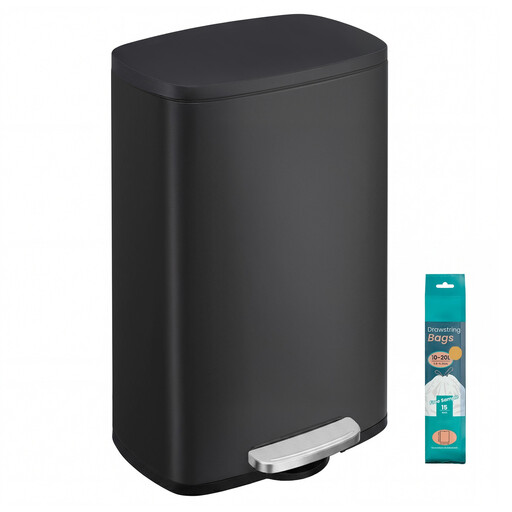
Why This Fits Their Persona: The generous 50L capacity is built to handle the higher volume of waste generated by a busy family. This means fewer trips to the wheelie bin and more time for everything else. Its slim profile still allows it to fit in most kitchens without being obtrusive.
It addresses the 'slipping liner' issue with a dedicated hole in the inner bucket to tuck the bag into, keeping it secure and hidden. The steel construction and robust pedal are designed for frequent daily use.
A large 50L capacity manages family waste efficiently. The combination of a soft-close lid and a strong pedal mechanism provides both quiet and hygienic operation.
We have compiled a complete, real-time list of products that fully satisfy these strict selection criteria and UK safety regulations.
What is the standard kitchen bin size in the UK? While there is no single "standard" size, the most common capacities for household kitchen bins in the UK are 30 litres and 50 litres. A 30L bin is generally sufficient for 1-2 people, while a 50L bin is better suited for a family of 3-4.
How can I stop my kitchen bin from smelling? Regular cleaning is key. Once a week, wash the inner bucket with hot, soapy water and allow it to dry completely. You can also sprinkle a small amount of bicarbonate of soda in the bottom of the bin to help absorb odours. Using correctly sized, good-quality bin liners and ensuring your bin has a well-sealed lid will also make a significant difference.
How often should I clean my kitchen bin? For hygiene, it is a good practice to give the inner bucket of your kitchen bin a thorough clean every time you change the bag or at least once a week. Wipe down the exterior and lid as needed. A full wash with a disinfectant or soapy water helps prevent the build-up of bacteria and odours.