
24/7 Customer Support

Free returns

Same-day & Next-day Delivery

Quality Guaranteed

Unlock Your Welcome Offers: FREE Delivery | Up to 80% OFF | Free 30-day JoyPlus trial
Download the APP
A kitchen bin might seem like a simple purchase, but choosing the wrong one can lead to daily frustration. From lids that break to designs that are impossible to clean, a poorly chosen bin can make managing household waste more difficult than it needs to be. As the Joybuy Product Recommendation Officer, my role is to help you navigate the options and find a practical solution that fits your home and lifestyle, without falling for common design flaws.
Before you buy, be aware of these common pitfalls that often go unnoticed until it's too late:
To avoid these issues, focus on a few core parameters. Getting these right will ensure your new kitchen bin is a help, not a hindrance.
The right size depends on your household and your kitchen layout. A large kitchen bin of 40-60 litres is often suitable for families, as it reduces the frequency of taking the rubbish out. For couples or individuals, a small kitchen bin of 20-30 litres is usually sufficient.
Beyond capacity, consider the bin's footprint. A tall, slim bin can fit into a narrow gap, while a wider, shorter model might tuck neatly under a worktop. For maximum space-saving, an under sink bin or a cupboard door bin keeps waste completely out of sight. Always measure your available space before purchasing.
With council recycling rules becoming more specific, an effective kitchen waste separation bin is essential. Look for models with two or three internal compartments to easily sort general waste, mixed recycling and glass.
For food scraps, a separate food waste caddy is often the most hygienic solution. These smaller containers can sit on your worktop during meal prep and be emptied daily into your main food waste collection bin. A dedicated compost bin kitchen caddy prevents odours from building up in your main bin and makes participating in local food waste schemes effortless.
How you open your bin affects hygiene and convenience.
Materials matter for longevity and cleanliness. Stainless steel is durable and easy to clean, especially models with a fingerprint-resistant coating. Plastic is lightweight, available in various colours and won't rust, making it a practical choice for many kitchens.
Instead of a one-size-fits-all approach, we match products to different household needs. Here are a few recommendations based on common UK lifestyles.
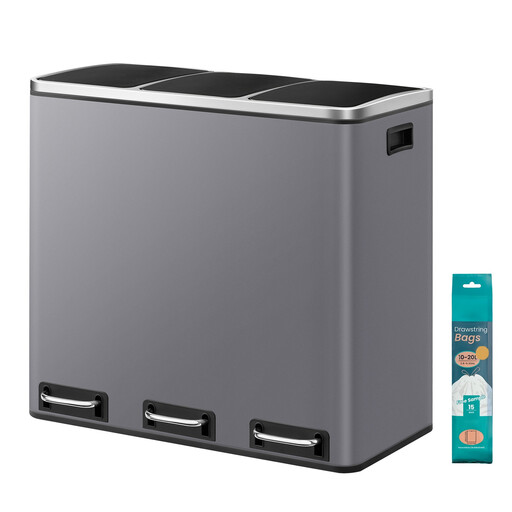
Why This Fits Their Persona: This is for the household that diligently separates waste for council collections. It consolidates recycling, food scraps and general waste into one sleek unit, eliminating the need for multiple messy bags and boxes in the kitchen.
It tackles the "awkward inner bucket" problem head-on. Each of the three compartments has its own removable inner bucket with a handle, making it simple to empty one section without disturbing the others.
Features robust steel pedals for hands-free operation and soft-close lids that prevent noise. The rust-resistant steel body is easy to wipe clean.
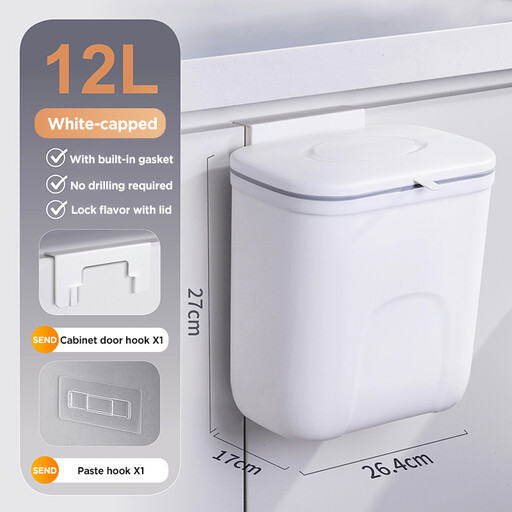
Why This Fits Their Persona: Perfect for those in flats, small houses or even motorhomes where floor space is precious. It hangs over a cupboard door or can be mounted under the sink, keeping waste contained and out of the way.
Its simple, manual design has no complex pedal or sensor mechanism to break. It focuses on one job—saving space—and does it well. The foldable feature means it can be collapsed when not in use.
Extremely versatile. Use it as a main bin in a tiny kitchen or as a dedicated food waste caddy during meal prep. It keeps scraps right where you need them, preventing mess on the floor.
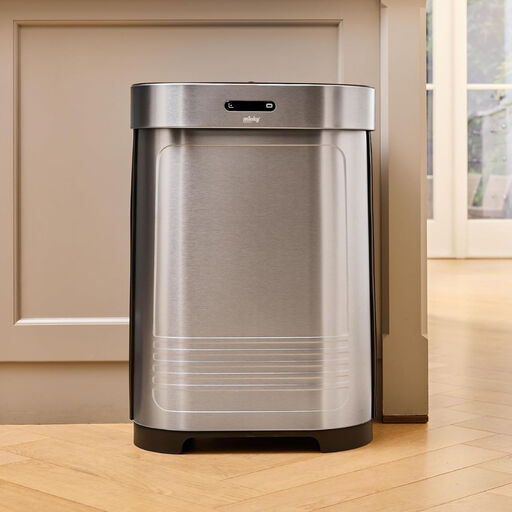
Why This Fits Their Persona: For families or shared houses that generate a lot of waste, this bin's large 55L capacity is a major benefit. The motion sensor is highly practical for hygienic, hands-free disposal when cooking or cleaning up after children.
It sidesteps the "fragile mechanism" pitfall by replacing a physical pedal with a responsive sensor. The fingerprint-resistant stainless steel finish also combats the "stain and odour magnet" issue, keeping it looking clean.
The combination of a large capacity and touch-free operation makes waste management more efficient and hygienic. It also includes a manual override to keep the lid open when needed.
We have compiled a complete, real-time list of products that fully satisfy these strict selection criteria and UK safety regulations.
Modern sensor bins are generally reliable and offer a significant hygiene advantage. Their main dependency is on batteries, which will need replacing periodically. A key feature to look for is a manual override function. This allows you to open the bin or keep the lid open for longer tasks, even if the batteries have run out, ensuring it remains functional at all times.
Using a dedicated food waste caddy is the most effective method. A small caddy with a 4-5 litre capacity is typically large enough for a day's worth of vegetable peelings, tea bags and plate scrapings. Keeping it on the worktop during food preparation is convenient. To prevent odours, empty it daily into your council food waste bin or home compost bin kitchen heap.
The first step is to choose a bin with a tight-fitting lid. Secondly, empty it frequently, particularly any contents that include food waste. It is also good practice to wipe the interior of the bin with a damp cloth and mild detergent each time you change the liner, allowing it to dry completely before putting a new bag in. Materials like stainless steel or high-grade, non-porous plastic are less likely to absorb and retain odours over time.