
24/7 Customer Support

Free returns

Same-day & Next-day Delivery

Quality Guaranteed

Unlock Your Welcome Offers: FREE Delivery | Up to 80% OFF | Free 30-day JoyPlus trial
Download the APP
A kitchen bin might seem like a simple purchase, but choosing the wrong one can lead to daily frustration. From lids that slam shut to finishes that look permanently smudged, a poorly chosen kitchen rubbish bin can be a source of annoyance. As a Joybuy Product Recommendation Officer, my role is to help you see past the marketing jargon and focus on the features that deliver genuine, long-term value for your home.
Before you buy, be aware of these common pitfalls that often lead to disappointment:
To avoid these issues, focus on a few core parameters. Getting these right will ensure your new bin is a help, not a hindrance.
The right size is crucial. A bin that's too small will need constant emptying, while one that's too large can lead to lingering odours. Here’s a simple guide for household sizes:
Before you decide, measure the intended space. If you have a narrow gap, a slim kitchen bin with a rectangular shape can offer a large capacity without a wide footprint. Always check the height with the lid fully open, especially if you plan to place it under a countertop.
The material affects both the look and longevity of your bin. Stainless steel is popular for its durability and hygienic properties, as it’s non-porous and easy to wipe clean. A quality steel bin will resist rust and dents. Plastic bins are lighter and often more affordable, making them a good choice for utility areas or as a dedicated recycling bin.
For the mechanism, consider these features:
Based on designs that address common user frustrations, here are a few options matched to different household needs.
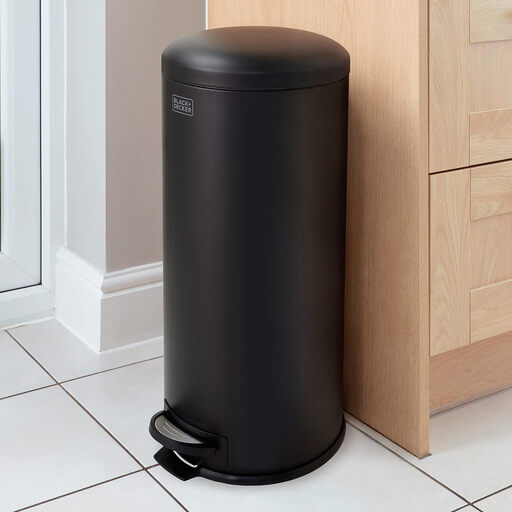
Why This Fits Their Persona: This black kitchen bin combines a sleek, modern aesthetic with a practical 30L capacity, making it ideal for smaller households or couples who value design. The matt black finish and dome lid offer a contemporary look that complements modern kitchen appliances and decor.
The matt, fingerprint-proof finish is more forgiving than polished steel, reducing the need for constant cleaning. Its removable inner bucket includes a carry handle, simplifying the process of emptying it.
Features a soft-closing lid for quiet operation and a foot pedal for hygienic, hands-free use. The durable stainless steel construction ensures longevity.

Why This Fits Their Persona: This dual compartment bin is designed for households that take recycling seriously. With two 30L sections, it provides a generous 60L total capacity to easily separate general waste from recyclables in one tidy unit, eliminating the need for multiple separate bins.
It features two independent, high-density steel pedals for durability. The inner buckets include a fixing ring to hold bin liners securely in place, preventing the common frustration of bags slipping down.
Each compartment has its own soft-closing lid to contain odours. The stainless steel exterior is easy to clean and resistant to fingerprints.
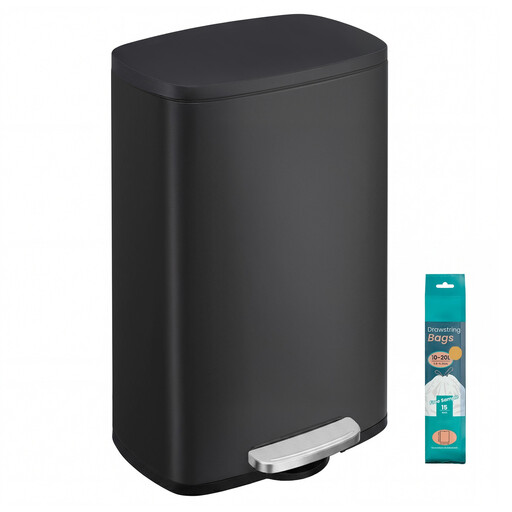
Why This Fits Their Persona: With a generous 50L kitchen bin capacity, this model is built for the demands of a busy family. It reduces the number of trips to the outside bin while maintaining a slim profile that saves valuable floor space in a high-traffic kitchen.
The inner bucket includes a bag hole on the back, a clever feature that lets you tuck away excess bin liner for a neat fit and prevents the bag from slipping or creating a vacuum when being removed.
It combines a sturdy foot pedal for hands-free use with a quiet, soft-closing lid. The premium steel construction is rust-resistant and easy to wipe clean.
We have compiled a complete, real-time list of products that fully satisfy these strict selection criteria and UK safety regulations.
1. What is the ideal kitchen bin size for a family of four? For a family of four, a bin with a capacity between 40 and 50 litres is generally recommended. This size is large enough to hold several days of waste, reducing the need for constant emptying, but is not so large that rubbish sits for too long. A 50l kitchen bin is a popular and practical choice.
2. Are stainless steel bins really better than plastic? Both materials have their advantages. A stainless steel bin is generally more durable, resistant to odours and offers a more premium look. It's also very hygienic and easy to clean. Plastic bins are lighter, more affordable and won't dent, making them a practical choice for utility rooms or as a secondary recycling bin. The choice often comes down to budget and aesthetic preference.
3. How often should I clean my kitchen bin? To maintain hygiene and prevent odours, it's good practice to wipe down the interior and exterior of your kitchen rubbish bin at least once a week with a damp cloth and a mild detergent. The removable inner bucket should be washed out thoroughly every time you change the bag, or more often if there have been any spills.