
24/7 Customer Support

Free returns

Same-day & Next-day Delivery

Quality Guaranteed

Unlock Your Welcome Offers: FREE Delivery | Up to 80% OFF | Free 30-day JoyPlus trial
Download the APP
A kitchen bin seems like a simple purchase, but choosing the wrong one can lead to daily frustration. From lids that slam shut to bags that refuse to fit, a poorly designed bin can make a simple chore feel unnecessarily complicated. As a Joybuy Product Recommendation Officer, my role is to help you navigate the options and find a practical solution that genuinely works for your home, without falling for common marketing gimmicks.
Before you buy, it's worth knowing the three most common pitfalls that lead to disappointment:
To avoid these issues, focus on a few core specifications. Getting these right will ensure your new kitchen bin is a helpful addition, not a daily annoyance.
The size of your bin should match the size of your household and your waste habits. A common mistake is buying a bin that is too small, leading to constant emptying.
Many UK councils now require food waste to be separated. Instead of throwing scraps in your main bin, a dedicated food waste caddy or compost bin kitchen is essential. These are small containers designed to sit on your worktop for easy access while cooking, keeping odours contained before you transfer the contents to your outdoor compost or council bin.
The material dictates not only the bin's appearance but also its lifespan and ease of cleaning.
Small features can have a big impact on daily use. A soft close bin is a must-have for many. The dampened lid mechanism prevents loud slamming, reducing noise and wear and tear on the hinge. Another useful feature is a stay-open function, which holds the lid up for longer tasks like peeling vegetables or clearing plates after a meal.
Based on these practical considerations, here are a few options matched to different household needs.
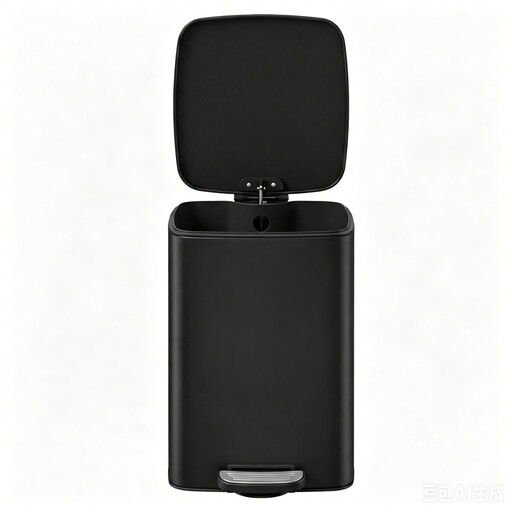
Why This Fits Their Persona: Ideal for singles or couples in flats or homes with smaller kitchens. The 20L capacity is perfect for less waste and the rectangular shape fits neatly against a wall or at the end of a cabinet run, saving valuable floor space.
The removable inner bucket with a bag holder makes liner changes straightforward, avoiding the awkward bag-fitting issue. Its steel construction and soft-close lid address the common durability pitfalls.
Features a quiet, soft-close lid and a stay-open function for convenience. The non-slip base adds stability, preventing it from sliding or being tipped by pets.
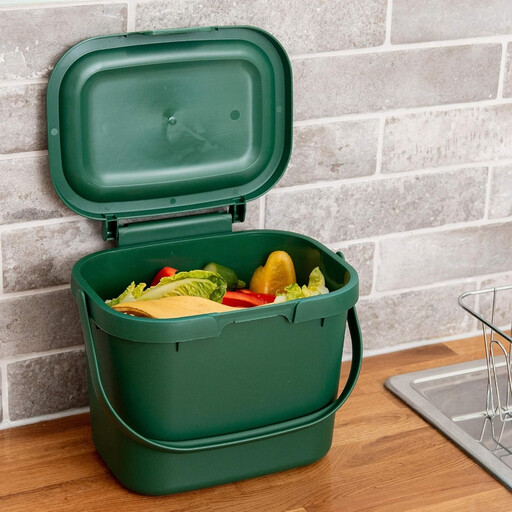
Why This Fits Their Persona: Perfect for anyone who diligently separates food scraps for council collection or home composting. Its 4.5L size is ideal for sitting on the worktop to collect peelings, tea bags and leftovers during meal prep.
As a dedicated caddy, it's designed for one job and does it well. Made from durable, easy-to-clean plastic, it avoids issues of rust or complex mechanisms. Its simplicity is its strength.
The integrated carry handle makes it easy to transport to your main compost heap or outdoor food waste bin. Its compact size keeps your worktop tidy.
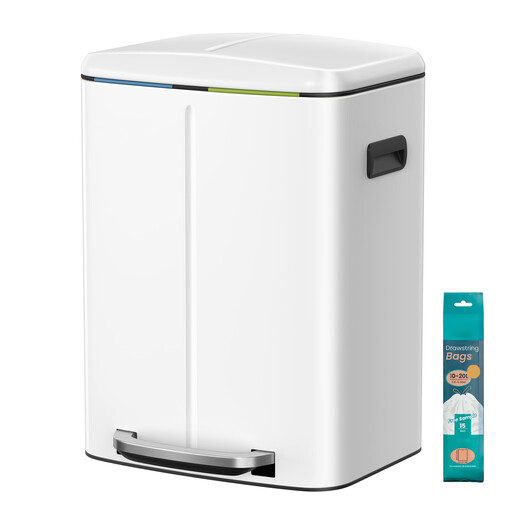
Why This Fits Their Persona: This is the ideal all-in-one recycling bin kitchen solution for a family. The 40L capacity is split into two 20L compartments, allowing you to separate general waste and recyclables within a single, tidy unit, eliminating the need for multiple bins.
This model tackles all three common pitfalls. It has a robust steel body, a reliable soft-close pedal mechanism and two separate, removable inner buckets that make bag changes and cleaning simple and hygienic.
The dual-compartment design is its greatest strength, promoting easy recycling. The soft-close lid and removable buckets add a layer of practical convenience for a busy household.
We have compiled a complete, real-time list of products that fully satisfy these strict selection criteria and UK safety regulations.
A good rule of thumb is to allow for about 10-15 litres per person. For a family of four, a bin around 40-60 litres is usually a good starting point. However, also consider your lifestyle. If you recycle a lot and have a separate food waste caddy, you might need less space for general waste. It's often better to have a slightly larger bin than one that is constantly overflowing.
It depends on your priorities. A stainless steel rubbish bin generally offers a more premium look and is very durable if you choose a quality model. They are less likely to absorb odours than some plastics. However, high-quality plastic bins are lighter, won't dent as easily and can't rust. For a functional item like a food waste caddy that needs frequent washing, plastic is often the more practical choice.
Regular cleaning is key. For bins with removable inner buckets, take the bucket out and wash it at least once a week with hot water and a mild detergent. Wipe down the exterior and the inside of the main unit. To prevent odours, ensure you are using the correct size bin liner to prevent spills and consider sprinkling a small amount of bicarbonate of soda in the bottom of the bin to absorb moisture and smells. Emptying the bin regularly, especially if it contains food waste, is the most effective way to keep your kitchen fresh.