
24/7 Customer Support

Free returns

Same-day & Next-day Delivery

Quality Guaranteed

Unlock Your Welcome Offers: FREE Delivery | Up to 80% OFF | Free 30-day JoyPlus trial
Download the APP
A kitchen bin might seem like a simple purchase, but choosing the wrong one can lead to daily frustration. From lids that slam shut to materials that look worn after a few weeks, the market is filled with options that promise much but deliver little. As a Joybuy Product Recommendation Officer, my role is to help you see past the marketing and focus on the features that genuinely make a difference in a busy UK home. This guide will walk you through the common pitfalls and highlight the key factors to consider, ensuring your next rubbish bin is a lasting and practical addition to your kitchen.
Before you start browsing, be aware of these frequent issues that can turn a new purchase into a regret.
To find a bin that works for your household, focus on these core parameters.
The size of your bin should match your household's waste output. A bin that is too small requires constant emptying, while one that is too large can lead to lingering odours as bags sit for too long.
The way a bin opens and the materials it's made from are crucial for convenience and longevity.
With many UK councils operating specific recycling schemes, a bin that simplifies waste separation is invaluable. A dual compartment bin provides separate sections for general waste and recyclables in one neat unit. This removes the need for multiple containers, saving space and making it easier for everyone in the household to recycle correctly. Some models even offer three compartments for food waste, recycling and general rubbish.
Based on these practical considerations, here are a few options matched to different household needs.
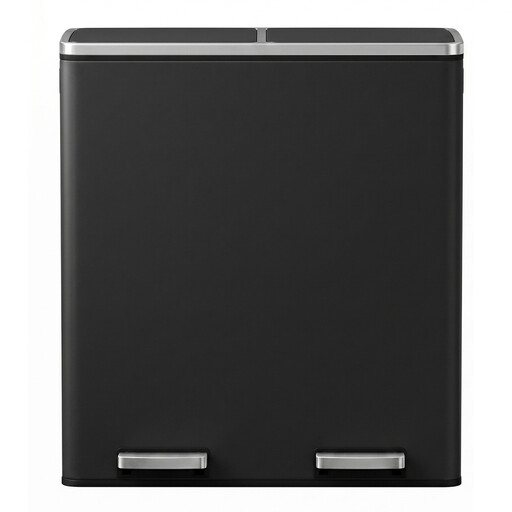
Why This Fits Their Persona: This bin is ideal for households looking to streamline their recycling routine. The two 30L compartments provide ample space for both general waste and recyclables, all within a single, space-efficient unit that fits neatly into a modern kitchen.
It features two independent steel pedals and soft-close lids, reducing strain on a single mechanism. The airtight lids are designed to contain odours effectively from both compartments.
The main advantage is its integrated waste-sorting system. The removable inner buckets with handles make emptying each section simple and hygienic.
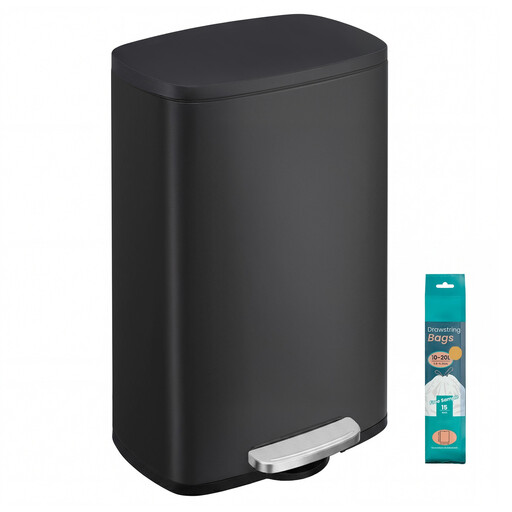
Why This Fits Their Persona: With its generous 50L capacity, this bin is well-suited for a family of 3-4. It handles a good volume of waste, reducing the frequency of emptying. Its sleek design fits well in contemporary kitchens without being obtrusive.
The body is made from rust-resistant steel that is easy to wipe clean, avoiding the smudge-prone finish of lesser models. The sturdy foot pedal is designed for durability in a high-traffic family kitchen.
The combination of a quiet, soft-closing lid and a large, single compartment makes for simple, no-fuss waste disposal. A bag hole in the inner bucket keeps liners tidy and out of sight.
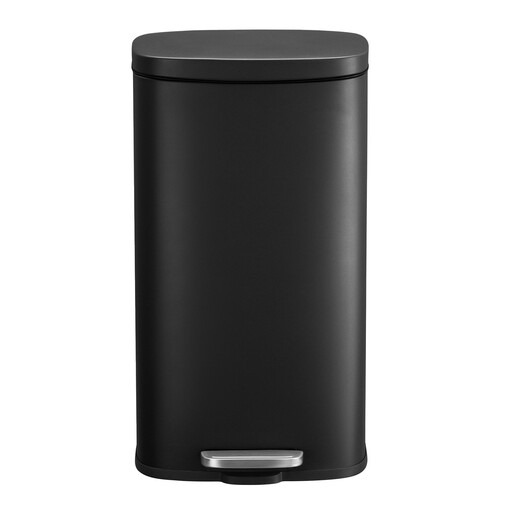
Why This Fits Their Persona: This 30L bin is an excellent all-rounder for smaller kitchens, flats or couples. Its compact form fits into tighter spaces, yet it provides enough capacity for daily waste without requiring constant emptying.
It features a quiet, soft-closing lid that seals in odours effectively. The high-quality steel construction is designed to resist rust and is easy to maintain, avoiding the pitfalls of lower-grade materials.
Its versatility is a key benefit. You can use the foot pedal for quick disposals or lift the lid manually to keep it open for longer tasks. A convenient back handle makes it easy to move for cleaning.
We have compiled a complete, real-time list of products that fully satisfy these strict selection criteria and UK safety regulations.
For a typical family of four in the UK, a 50L bin is generally a good starting point. This capacity is large enough to hold several days of non-recyclable waste, meaning you won't have to empty it constantly. If you have a robust recycling system and generate less general waste, you might find a dual compartment bin with two 30L sections (60L total) to be even more practical.
The first step is a bin with a well-fitting, tight-sealing lid. Beyond that, regular cleaning of the inner bucket with soap and water is essential. You can also sprinkle a small amount of bicarbonate of soda in the bottom of the bin liner to help absorb odours. Finally, avoid letting waste, particularly food scraps, sit for too long, especially in warmer weather.
This depends on the quality of the finish. Bins with a fingerprint-proof coating are significantly easier to maintain and require only a quick wipe with a soft, damp cloth. Lower-quality stainless steel without this coating will show smudges and water marks more easily. To clean, use a microfibre cloth and a small amount of gentle cleaner, wiping in the direction of the steel's grain.