
24/7 Customer Support

Free returns

Same-day & Next-day Delivery

Quality Guaranteed

Unlock Your Welcome Offers: FREE Delivery | Up to 80% OFF | Free 30-day JoyPlus trial
Download the APP
Choosing a new kitchen bin should be a simple task, but it often ends in frustration. Many of us have been tempted by a sleek design, only to find it impractical for daily life. A flimsy pedal that snaps after a few months, a lid that doesn’t contain odours or a "space-saving" shape that’s too awkward to fit a standard liner are common complaints. These seemingly small issues can make a daily chore feel unnecessarily difficult.
The market is filled with options, but not all are created equal. Before you buy, it’s worth understanding the three most common pitfalls that lead to a poor purchase:
To avoid these issues, focus on a few core parameters that determine a bin’s long-term value and usability. Analysing these details will help you find a reliable rubbish bin that suits your household's needs.
The right capacity depends on your household size and your local council's collection schedule. A bin that’s too large can lead to lingering odours, while one that’s too small requires constant emptying.
The material of your bin affects its longevity, appearance and how easy it is to clean.
Consider how the bin will fit into your kitchen's layout and your waste management routine.
We've matched some practical options to common household needs, focusing on designs that solve the problems mentioned earlier.
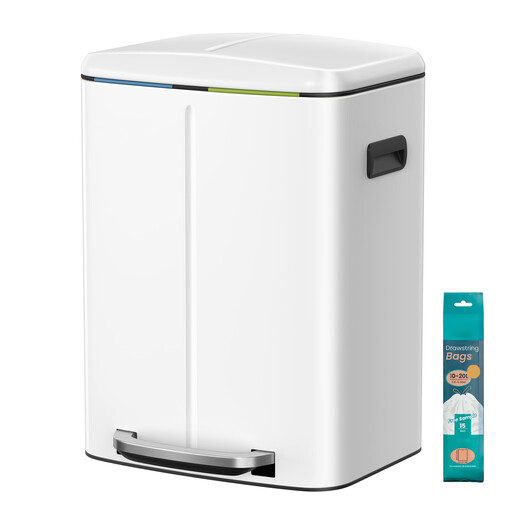
Why This Fits Their Persona: This dual compartment bin is ideal for families who need to separate general waste from recyclables. The 40L total capacity (20L per side) is well-suited for a family of 3-4, consolidating waste management into one neat unit.
The two removable inner buckets make bag changes and cleaning simple, avoiding the issue of awkward shapes that trap dirt. The steel pedal is designed for durability and the soft-close lid prevents noisy slamming.
Efficient waste separation in a single unit. The rust-resistant steel body is easy to clean and doesn't retain odours.

Why This Fits Their Persona: For those in flats or with compact kitchens, floor space is precious. This in-cupboard bin tucks waste away neatly, freeing up the kitchen floor and keeping rubbish out of sight.
It solves the problem of bulky bins cluttering small kitchens. The heavy-duty steel frame provides a secure mount, avoiding the instability of some cheaper hanging bins. The plastic bucket is removable for easy cleaning.
Maximises floor space by using cabinet storage. The sturdy steel frame can be hooked over the door or screwed in for a permanent fit.
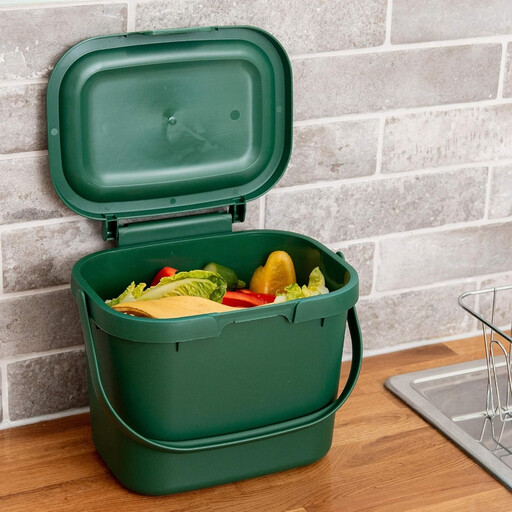
Why This Fits Their Persona: Anyone who cooks regularly knows the hassle of trips back and forth to the main bin with vegetable peelings and offcuts. This compact caddy sits on the countertop, providing a convenient spot for food scraps during meal prep.
It prevents the main kitchen bin from becoming smelly with food waste. Made from durable, easy-to-clean plastic, it doesn't retain odours like cheaper alternatives. The carry handle makes it simple to empty without mess.
Improves kitchen hygiene and workflow. Its compact size is perfect for countertops and the durable plastic is simple to maintain.
We have compiled a complete, real-time list of products that fully satisfy these strict selection criteria and UK safety regulations.
For a family of four, a kitchen bin with a capacity between 40 and 50 litres is generally recommended. This size is usually large enough to hold several days' worth of general waste, fitting well with the typical fortnightly or weekly council collections in the UK. If you produce a lot of recyclable materials, consider a dual compartment bin to manage everything efficiently.
The most effective method is to separate food waste. Use a dedicated food waste caddy for all organic scraps and empty it every 1-2 days. Additionally, ensure your main bin has a well-fitting lid. Regularly wiping the inside of your bin with a mild detergent and allowing it to dry completely will also prevent the build-up of odour-causing bacteria.
For most households, yes. A dual compartment bin simplifies recycling by providing dedicated sections for general waste and recyclables in one place. This eliminates the need for multiple separate bins or bags cluttering your kitchen, creating a more organised and efficient system for waste separation. It's a practical investment for keeping up with council recycling requirements.