
24/7 Customer Support

Free returns

Same-day & Next-day Delivery

Quality Guaranteed

Unlock Your Welcome Offers: FREE Delivery | Up to 80% OFF | Free 30-day JoyPlus trial
Download the APP
A kitchen bin might seem like a straightforward purchase, but choosing the wrong one can lead to daily frustration. From lingering odours to broken mechanisms and liners that never quite fit, the small details make a big difference. As a Product Recommendation Officer at Joybuy, I see where people often go wrong, lured in by features that sound great but fail in practice.
Before you buy, it pays to be aware of the common pitfalls. Many households end up replacing their bin far sooner than expected because of a few recurring design flaws that are easy to overlook.
To find a kitchen bin that will serve you well for years, focus on these core parameters rather than marketing hype.
The size of your bin should match your household's waste output. Constantly emptying a bin that's too small is a chore, while leaving waste for too long in an oversized bin can lead to unpleasant smells.
Remember to also consider a separate food waste caddy. These small containers, typically 4-7 litres, are perfect for collecting peelings and scraps as you cook, keeping your main bin cleaner and odour-free.
The material of your bin affects its durability, hygiene and appearance.
For any kitchen pedal bin, pay close attention to the mechanism. A robust steel pedal and a soft-close lid are indicators of a well-made product designed for longevity.
With council recycling collections becoming more specific, an effective separation system is essential. A dual compartment bin is an excellent all-in-one solution, allowing you to separate general waste from recyclables in a single, organised unit.
For those with limited floor space, an in-cupboard bin or an under sink bin can be a game-changer. These keep waste hidden from view and free up your kitchen floor. Just be sure to measure your cupboard space carefully before purchasing.
Based on designs that address common frustrations, here are a few options suited to different UK households.
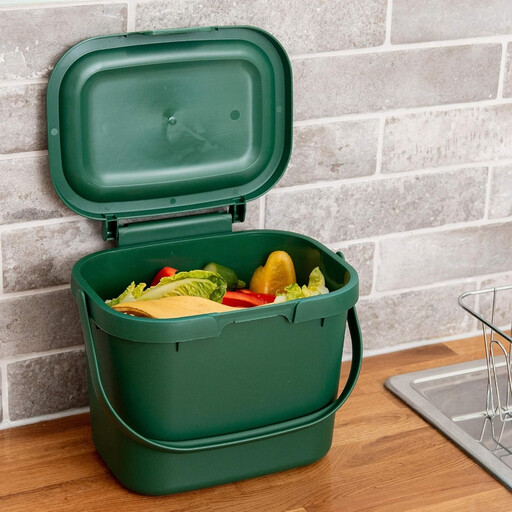
Why This Fits Their Persona: This is a straightforward and effective tool for anyone who participates in council food waste schemes or has a home compost heap. It sits neatly on the worktop, making it easy to collect scraps during meal prep and keeping the main bin free from smelly organic waste.
It avoids the "impractical space-saver" flaw by being perfectly designed for its specific job. Its 4.5L capacity is ideal for daily scraps and the simple, durable plastic build has no complex mechanisms to break.
Features a sturdy carry handle for easy transport to your outdoor bin or compost. The durable, wipe-clean plastic construction is built for long-lasting daily use.
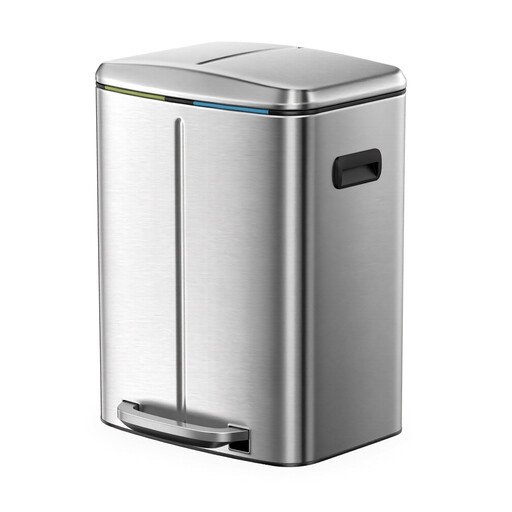
Why This Fits Their Persona: This dual compartment recycling bin is ideal for households that need a streamlined system for separating waste. It combines general waste and recycling into one sleek unit, eliminating the need for multiple containers and keeping the kitchen tidy.
It directly counters the "flimsy pedal" flaw with a sturdy steel construction and a quiet, soft-close lid mechanism designed for repeated use. The removable inner buckets also make it highly practical to empty and clean.
Efficient sorting with two 20L inner buckets. The rust-resistant steel body is durable and easy to maintain, while the soft-close lid ensures quiet operation.
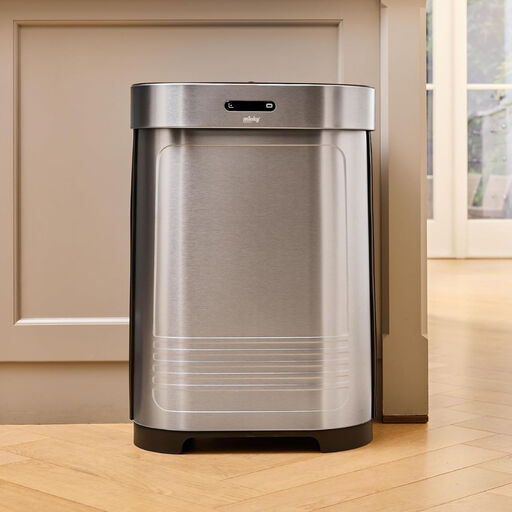
Why This Fits Their Persona: For a high-traffic family kitchen, hygiene and capacity are paramount. The large 55L size reduces the number of trips to the outside bin, while the touch-free sensor is perfect for when your hands are full or messy from cooking.
This model avoids the "unreliable sensor" trap by including a manual override function. This means you can keep the lid open for longer tasks and the bin remains fully functional even if the batteries run out unexpectedly.
A generous 55-litre capacity is ideal for families. The fingerprint-resistant stainless steel finish is both hygienic and easy to keep clean.
We have compiled a complete, real-time list of products that fully satisfy these strict selection criteria and UK safety regulations.
For many, yes. They offer a genuine improvement in kitchen hygiene, as you never have to touch the bin lid. This is particularly useful when handling raw meat or if you have young children. The key is to choose a model from a reputable brand with good reviews on sensor reliability and a manual override option for flexibility.
For best results, wipe down the interior of your bin with a disinfectant cleaner each time you change the bag. A deeper clean with hot, soapy water once a month will help prevent the build-up of grime and bacteria. Using a separate compost caddy for food waste is also one of the most effective ways to reduce odours in your main bin.
If floor space is at a premium, an in-cupboard bin is an excellent solution. Models that attach to the inside of a cupboard door, like the Simplehuman 10L In-Cabinet Bin, keep the bin completely out of sight. Alternatively, look for slimline bins designed to fit into narrow gaps or consider a wall-mountable option like the Plastic Kitchen Wall Mountable Trash Can to free up the floor entirely.