
24/7 Customer Support

Free returns

Same-day & Next-day Delivery

Quality Guaranteed

Unlock Your Welcome Offers: FREE Delivery | Up to 80% OFF | Free 30-day JoyPlus trial
Download the APP
A kitchen bin might seem like a simple purchase, but choosing the wrong one can lead to daily frustration. From lids that won’t close to bags that constantly slip, a poorly chosen bin can make a simple task messy and unhygienic. As a Joybuy Product Recommendation Officer, my role is to help you navigate the options and find a practical solution that genuinely works for your home, without falling for common marketing gimmicks.
Before you buy, it’s worth knowing the three most common pitfalls that lead to disappointment:
To avoid these issues, focus on a few core parameters that determine a bin’s long-term performance and suitability for your household.
The size of your bin dictates how often you’ll be taking out the rubbish. Choosing the right capacity prevents overflow and unnecessary trips to the wheelie bin.
Don’t forget to account for recycling. Many UK councils require waste separation, so a double kitchen bin or a separate food waste caddy can be essential for an organised system.
The opening mechanism impacts hygiene and convenience.
The material affects a bin’s durability, appearance and ease of cleaning.
Instead of a one-size-fits-all approach, we’ve matched a few standout options to specific household needs.
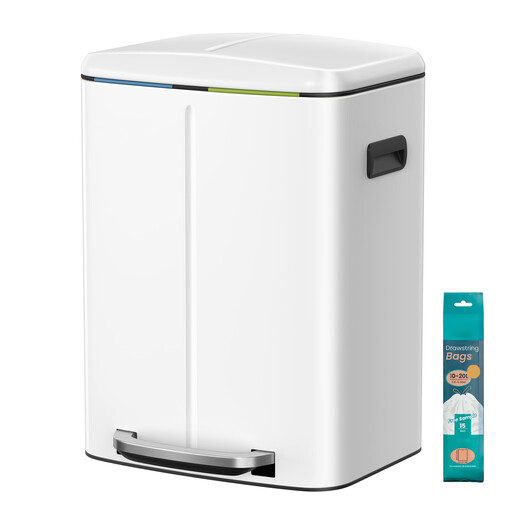
Why This Fits Their Persona: This dual-compartment bin makes separating general waste and recycling effortless, aligning perfectly with UK council collection schemes. It consolidates two bins into one sleek unit, saving space while promoting good habits.
The two removable inner buckets are a standard rectangular shape, making it easy to fit liners. A rear bag hole helps secure the liner, preventing the dreaded bag-slip issue.
Efficient 2-in-1 sorting saves floor space. The soft-close lid prevents noise and the steel construction is durable and easy to clean.

Why This Fits Their Persona: For those in flats or with compact kitchens, floor space is precious. This bin hooks over a cabinet door or screws in permanently, hiding waste and keeping the kitchen looking uncluttered.
By design, it has no complex mechanism to fail. The heavy-duty steel frame provides a stable mount, avoiding the wobbles and instability of freestanding bins in a tight space.
Completely frees up floor space. The plastic bucket is removable for easy cleaning and keeps the inside of your cabinet clean from spills.
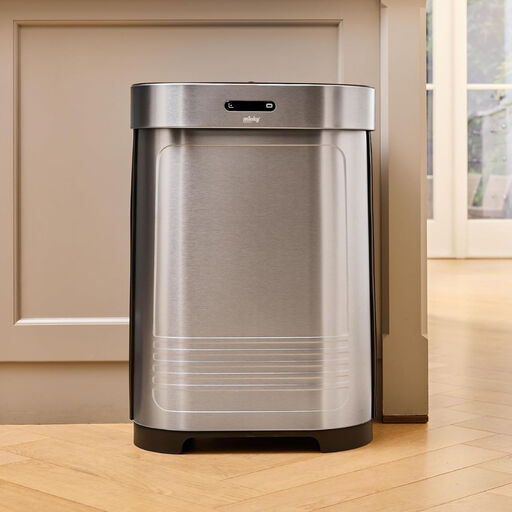
Why This Fits Their Persona: The large 55L capacity is perfect for a busy family, reducing the number of times the bin needs emptying. The touch-free sensor is a major plus for hygiene, especially when cooking or dealing with messy hands.
It addresses the "unreliable sensor" trap by including a manual control option, allowing you to keep the lid open when needed. This provides a reliable backup and adds practical flexibility.
Excellent hygiene with touch-free operation. The fingerprint and stain-resistant stainless steel exterior stays looking cleaner for longer in a high-traffic kitchen.
We have compiled a complete, real-time list of products that fully satisfy these strict selection criteria and UK safety regulations.
There are several effective methods. Firstly, use a separate, lidded food waste caddy like the Addis Everyday Kitchen Caddy for all food scraps and empty it frequently. Secondly, clean the main bin and inner bucket regularly with a disinfectant spray. Finally, some modern bins, such as the JOYFURNOS 68L Kitchen Bin, come with integrated carbon filters that help neutralise odours.
For a typical family of four in the UK, a 40L kitchen bin or a 50L model is generally a good starting point. This size provides enough capacity to last a few days without overflowing, but isn't so large that it becomes difficult to manage. The Addis Eco 40L Pedal Bin is a representative example in this category.
It depends on your priorities. A stainless steel kitchen bin typically offers superior durability and odour resistance compared to plastic. Models like the JOYFURNOS Pedal Trash Can often have a more premium appearance and a sturdier feel. While the initial cost is higher, their longevity and ease of maintenance can make them a worthwhile investment for a high-use item in the heart of the home.