
24/7 Customer Support

Free returns

Same-day & Next-day Delivery

Quality Guaranteed

Unlock Your Welcome Offers: FREE Delivery | Up to 80% OFF | Free 30-day JoyPlus trial
Download the APP
A kitchen bin might seem like a simple purchase, but choosing the wrong one can lead to daily frustration. From lids that slam shut to bin liners that constantly slip, a poorly designed rubbish bin can make a simple task feel like a chore. As a Joybuy Product Recommendation Officer, my role is to help you see past the marketing claims and focus on what truly makes a kitchen bin practical, hygienic and built to last.
Many of us have been caught out by common design flaws. Before you buy, be aware of these three frequent pitfalls:
To avoid these issues, focus on a few core parameters that determine a bin's real-world performance.
The first step is to match the bin's size to your household's needs and your kitchen's space.
Before you decide, measure the height, width and depth of the intended space. Remember to account for clearance, especially for the lid mechanism—some lids flip up, while others lift straight, requiring extra vertical space.
The material affects not only the bin's appearance but also its longevity and ease of cleaning.
How you use the bin day-to-day is crucial.
Here are a few options that align with different household needs, chosen for their practical design and features that address common pain points.
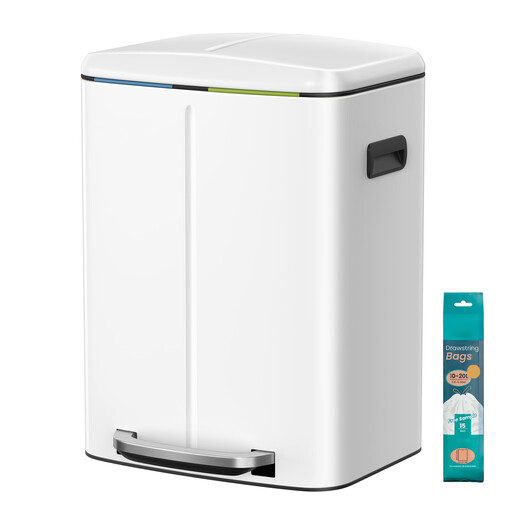
Why This Fits Their Persona: This double kitchen bin is ideal for environmentally-conscious households in the UK who need to separate general waste from recycling. It combines two functions into one sleek unit, saving floor space.
The two removable inner buckets make emptying recyclables and changing bin liners straightforward, avoiding the mess of a single, unorganised bin.
Features a quiet, soft-close lid and a durable steel pedal. The dual 20L compartments offer a practical capacity for daily sorting.
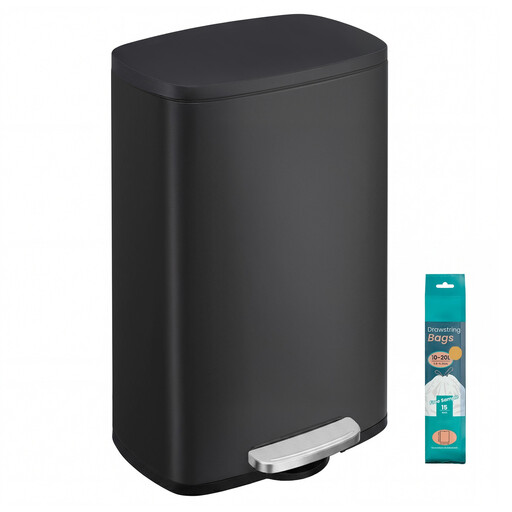
Why This Fits Their Persona: With its 50L capacity, this bin is perfectly sized for a family, handling daily waste without needing to be emptied constantly. The hands-free pedal and soft-close lid are ideal for a busy, high-traffic kitchen.
It tackles the awkward bag change issue with a bag hole on the inner bucket, which secures the liner and keeps it hidden from view.
The rust-resistant steel construction is durable and easy to wipe down. Its combination of large capacity and a slim profile saves valuable floor space.
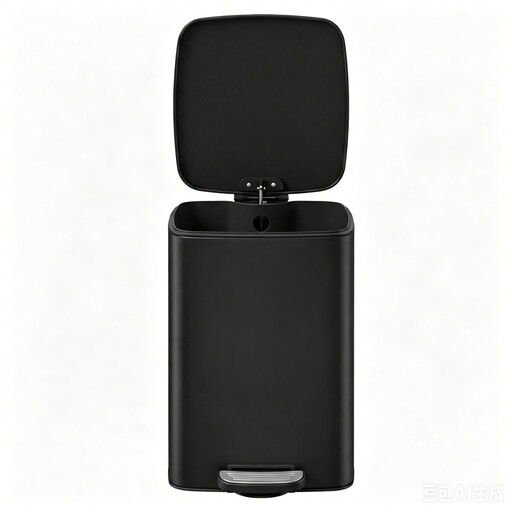
Why This Fits Their Persona: Perfect for flats, smaller kitchens or utility rooms. The 20L capacity is ample for one or two people, and its rectangular shape allows it to fit snugly against a wall or in a narrow gap.
Unlike bulky round bins, its space-saving design is genuinely practical for tight spaces. The non-slip base also prevents it from tipping over easily, a common issue with smaller, lightweight bins.
It includes premium features like a soft-close lid and a stay-open function, which are often missing in bins of this size.
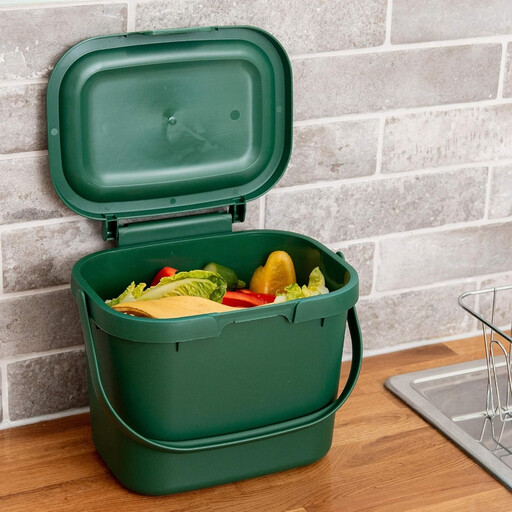
Why This Fits Their Persona: This compact food waste caddy is a must-have for anyone who cooks regularly. It sits neatly on the countertop, allowing for easy disposal of peelings and food scraps, keeping work surfaces clear and organised.
Its simple, durable plastic design avoids complex mechanisms that can fail. The integrated handle makes it easy to carry to an outdoor compost heap or council food waste bin without fuss.
The 4.5L capacity is large enough for daily scraps but small enough to encourage regular emptying. It's also easy to wipe clean.
We have compiled a complete, real-time list of products that fully satisfy these strict selection criteria and UK safety regulations.
For a typical family of four, a 50L kitchen bin is generally a suitable size. It provides enough capacity to hold several days' worth of waste without overflowing, yet it's not so large that it becomes difficult to manage or takes up excessive floor space. If your family recycles diligently, you might find a 40L general waste bin combined with a separate recycling system also works well.
Neither is definitively "better"—it depends on your priorities. A stainless steel bin offers a premium, modern aesthetic and is very durable. However, it can be heavier and may show fingerprints if not properly coated. A high-quality plastic rubbish bin is lightweight, rust-proof and easy to clean, often at a more accessible price point. The choice comes down to your budget, style preference and how you prioritise durability versus weight.
To maintain hygiene and prevent odours, it's good practice to wipe down the interior and exterior of your kitchen bin at least once a week with a damp cloth and a mild detergent. The removable inner bucket should be washed out every time you change the bin liners or more frequently if there have been any spills. For a food waste caddy, daily rinsing is recommended.