
24/7 Customer Support

Free returns

Same-day & Next-day Delivery

Quality Guaranteed

Unlock Your Welcome Offers: FREE Delivery | Up to 80% OFF | Free 30-day JoyPlus trial
Download the APP
A kitchen bin might seem like a simple purchase, but choosing the wrong one can lead to daily frustrations. From lids that slam shut with a crash to odours that escape into your kitchen, a poorly designed rubbish bin can be a constant source of annoyance. Many are drawn in by sleek photos, only to find their new bin has a flimsy pedal that breaks in months or an awkward design that makes changing the bag a chore.
As the Joybuy Product Recommendation Officer, my role is to help you see past the marketing and focus on the features that genuinely make a difference. Before you buy, be aware of these common pitfalls:
To avoid these issues, focus on a few core specifications. Getting these right will ensure your new kitchen bin is a practical and long-lasting addition to your home.
The size of your bin should match your household's needs and the space you have available.
Before deciding, always measure the height, width and depth of the space where the bin will go, remembering to account for the extra height needed when the lid is open.
The way a bin opens and closes has a big impact on convenience and cleanliness.
The material affects both the bin's durability and its appearance.
Based on these practical considerations, here are a few options suited to different UK households.
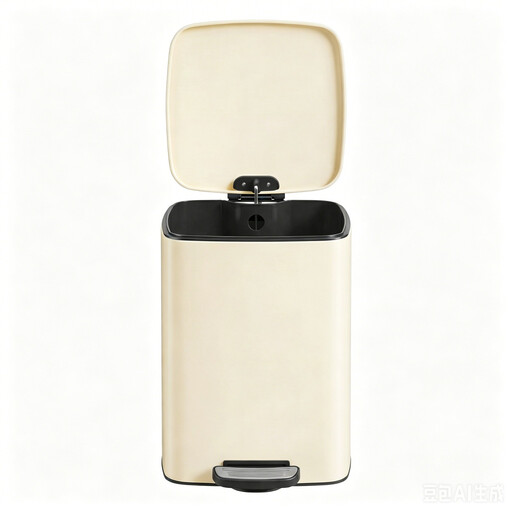
Why This Fits Their Persona: Ideal for those in flats or with smaller kitchens, its 20L capacity and rectangular shape fit neatly against a wall or in a corner, saving valuable floor space without sacrificing functionality.
The removable inner bucket includes a dedicated holder to secure the bin liner, preventing it from slipping down inside—a common frustration with smaller bins.
Features a soft-close lid for quiet operation and non-slip pads on the base to keep it stable, even in busy areas or with curious pets.
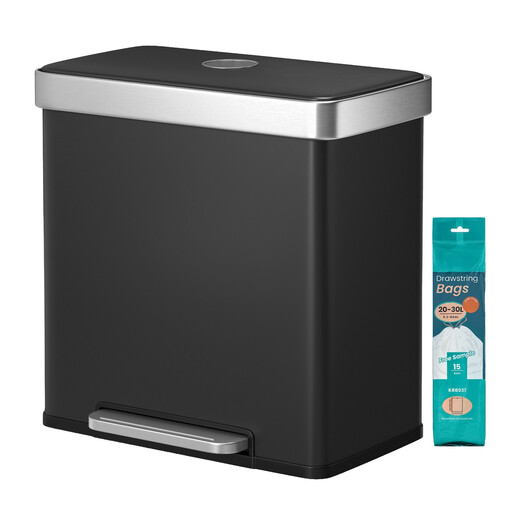
Why This Fits Their Persona: With a total capacity of 60L split across two compartments, this bin is built for busy family life. It makes separating general waste and recycling effortless, helping to manage household waste efficiently.
The robust pedal mechanism is designed for frequent, hands-free use. The two separate inner buckets have handles, making them easy to lift out and empty without a struggle.
The stainless steel body is durable and easy to wipe clean. The soft-close lids prevent noise and help contain odours from both compartments.
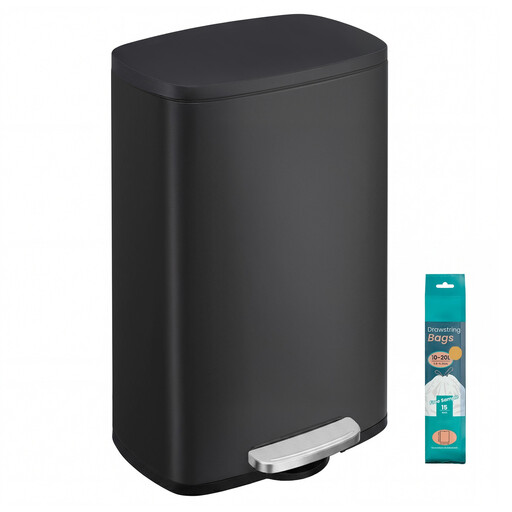
Why This Fits Their Persona: For those who see a bin as part of their kitchen's décor, this model's sleek black steel finish and clean lines offer a sophisticated look. The large 50L capacity is housed in a slim profile that doesn't overwhelm the space.
The soft-close lid ensures it operates as quietly and elegantly as it looks, avoiding the jarring noise of a slamming lid that would disrupt a calm, modern kitchen.
The rust-resistant steel is simple to wipe clean, maintaining its smart appearance. A bag hole in the inner bucket keeps the liner tidy and out of sight.
We have compiled a complete, real-time list of products that fully satisfy these strict selection criteria and UK safety regulations.
This is a common problem caused by a poor inner bucket design. Look for a bin where the inner bucket has a small hole or a clasp feature. This allows you to tuck the excess edge of the bin liner through it, holding the bag securely in place and preventing it from falling in, even when heavy.
For a family of four, a 50L bin is usually a suitable size for general kitchen waste. It's large enough to avoid needing to be emptied multiple times a day. If your family is active in recycling, a dual compartment bin with a combined capacity of around 60L (e.g., 2 x 30L) is an even more practical choice, as it helps you manage both waste streams in one convenient unit.
To keep a stainless steel kitchen bin looking its best, wipe it down regularly with a soft, damp microfibre cloth. For more stubborn fingerprints or smudges, use a small amount of a pH-neutral cleaning solution and wipe in the direction of the steel's grain. Always dry it with a clean cloth afterwards to prevent water spots. Avoid using abrasive scourers or harsh chemical cleaners, as these can scratch the surface.