
24/7 Customer Support

Free returns

Same-day & Next-day Delivery

Quality Guaranteed

Unlock Your Welcome Offers: FREE Delivery | Up to 80% OFF | Free 30-day JoyPlus trial
Download the APP
A kitchen bin seems like a straightforward purchase, but it can quickly become a daily source of frustration. A lid that slams shut, a pedal that snaps or a finish that’s constantly covered in smudges can make you regret your choice. Many of us have been caught out by marketing promises that don’t hold up in a real, busy UK home.
Before you buy another rubbish bin that’s destined for the kerb itself, let’s look at the common pitfalls to avoid:
To find a waste bin that works for you, focus on these core practical features rather than just the appearance.
The first step is matching the bin’s size to your household’s needs and your kitchen’s layout.
The material of your kitchen bin affects its longevity, ease of cleaning and overall appearance.
How you open your bin matters more than you might think.
Instead of a one-size-fits-all approach, we’ve matched some practical options to different household needs.

Why This Fits Their Persona: This dual-compartment recycling bin is ideal for households that need to separate general waste from recyclables. The two 30L sections make it easy to comply with local council recycling schemes without needing multiple separate bins cluttering the kitchen.
It features two independent, high-density stainless steel pedals, one for each compartment. This robust design is far less likely to fail than a single, complex mechanism operating two lids.
A total 60L capacity and separate inner buckets with handles make sorting and emptying straightforward. The soft-close lids add a quiet, premium feel.
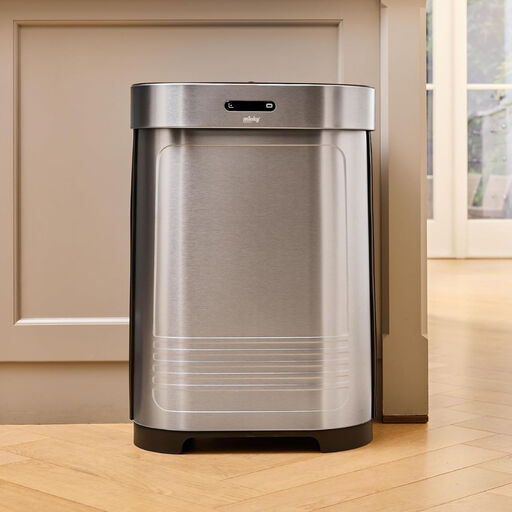
Why This Fits Their Persona: For a busy family, a large capacity and hygienic operation are paramount. This 55L sensor bin means fewer trips to the outside bins and touch-free disposal, which is ideal when your hands are full or you're concerned about germs.
It directly addresses the unreliable sensor pitfall by including a manual control option. This allows you to keep the lid open when needed, preventing the frustration of a sensor closing mid-task.
The fingerprint-resistant stainless steel finish genuinely helps reduce smudges and the large 55L capacity is perfect for family life. It also features a soft-close lid.
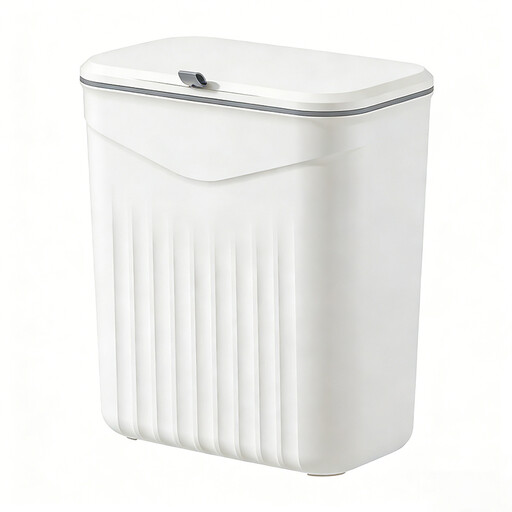
Why This Fits Their Persona: This is less of a main bin and more of a dedicated food waste caddy. For those who cook frequently, it solves the problem of dripping vegetable peelings across the floor. It mounts directly onto a cabinet door, so you can sweep scraps straight from the worktop.
By focusing on one specific job, it avoids the common pitfalls of larger, multi-purpose bins. Its simple flip-top lid and durable PP plastic construction are built for function, not fragile mechanisms.
Its key benefit is convenience. The hook-mounted design means no bending down and it keeps food waste separate and contained, helping to reduce odours in your main kitchen bin.
We have compiled a complete, real-time list of products that fully satisfy these strict selection criteria and UK safety regulations.
For a family of four, a 50L bin is generally a good starting point. This size is large enough to handle the daily waste of a busy household without needing to be emptied constantly. If you generate a lot of recycling, consider a dual-compartment model with a total capacity of 60L or more.
They can be, but it depends on the quality of the finish. Lower-end stainless steel shows every fingerprint and water spot. However, many modern bins now feature an oleophobic (oil-repellent) or fingerprint-resistant coating that makes them much easier to wipe clean with a simple microfibre cloth.
This varies by model and usage, but with good quality alkaline batteries (usually C or D size), you can expect them to last anywhere from 6 to 12 months in a typical family kitchen. Using the manual override function for extended periods can help prolong battery life.