
24/7 Customer Support

Free returns

Same-day & Next-day Delivery

Quality Guaranteed

Unlock Your Welcome Offers: FREE Delivery | Up to 80% OFF | Free 30-day JoyPlus trial
Download the APP
A kitchen bin has a surprisingly demanding job. It needs to fit your available floor space, handle daily food packaging and household waste, remain easy to clean and work reliably every time you use it. Yet product listings can make a simple purchase confusing, particularly when phrases such as “odour control”, “large capacity” and “premium steel” do not explain how the bin will perform in an ordinary UK kitchen.
Before choosing a kitchen bin, watch for three common pitfalls:
For many UK homes, a 30L bin provides a practical balance between footprint and daily capacity. The 30L steel pedal bins listed in the range measure approximately 34.8 x 29.7 x 63.3cm, making them suitable for kitchens, utility rooms and home offices where floor space is limited.
A 50L bin offers more room for families or households that prefer fewer trips to the outside rubbish bin. Typical dimensions in this range are around 43.2 x 37.1 x 63.2cm. Check the available floor area carefully, especially in galley kitchens or beside integrated appliances.
For larger households, a 68L bin can hold more waste between emptying days. However, its dimensions of approximately 40.5 x 38.1 x 77.1cm make it taller than many standard kitchen units. Measure the space from floor to ceiling and allow room behind the bin where specified.
The lid-open height is also important. Some 30L models reach approximately 85.5cm when open, while larger designs may need more than 90cm of clearance.
A stainless steel bin or other steel kitchen bin can offer a wipe-clean exterior and a more structured feel than a lightweight plastic rubbish bin. Rust-resistant steel is useful in kitchens, but it still needs sensible care. Wipe the exterior with a soft, damp cloth and mild detergent, and avoid abrasive cleaners or steel wool that could mark the finish.
The removable inner bucket is equally important. A PP plastic removable inner bucket makes it easier to change liners and deal with accidental leaks without lifting the entire metal kitchen bin. Features such as a rear bag-securing hole or handle can also help keep the liner edges tidy.
A pedal bin allows hands-free opening, which is useful when preparing food or when your hands are wet. Look for a pedal with a stable base and a mechanism that can also support manual opening or a stay-open position for larger clear-outs.
A soft-close bin is designed to lower the lid gradually rather than allowing it to slam. This can reduce noise in open-plan kitchens, but avoid forcing the lid closed by hand, as this may affect the mechanism.
An odour-sealing lid can help contain smells between emptying times. Some larger models include a carbon filter. This is a feature intended to help neutralise odours, rather than a guarantee that all smells will disappear. Regular emptying and cleaning remain necessary, particularly for food waste.
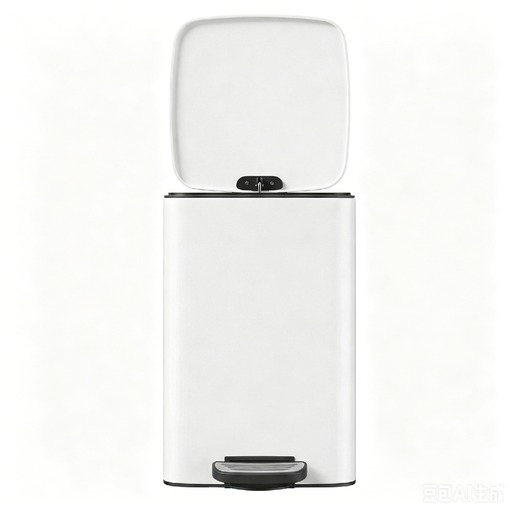
Why This Fits Their Persona: A compact option for renters, kitchens with a small footprint, bedrooms or home offices where a full-size rubbish bin would occupy too much space.
Its 20L capacity is clearly stated, helping prevent overbuying for a low-waste or space-limited household.
Measures 34.1 x 28.6 x 40.5cm; includes a soft-close, stay-open lid and removable inner bucket.
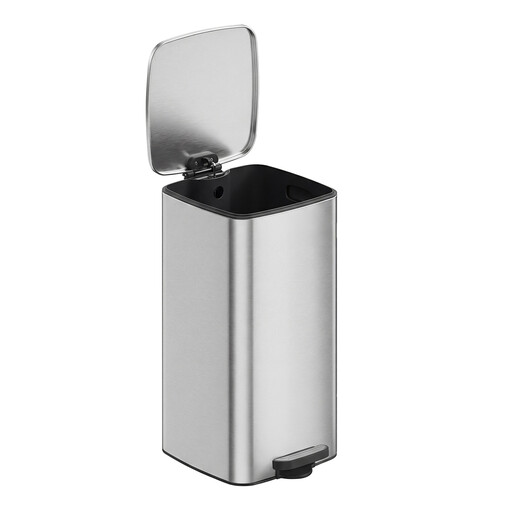
Why This Fits Their Persona: Suits homeowners seeking a neat stainless steel finish, quiet operation and straightforward liner changes in a visible kitchen position.
The listing gives full dimensions and specifies a removable PP plastic inner bucket, rather than focusing only on the exterior finish.
34 x 28.5 x 54.4cm footprint; soft-close lid, stay-open function, non-slip pads and inner-bucket handles.
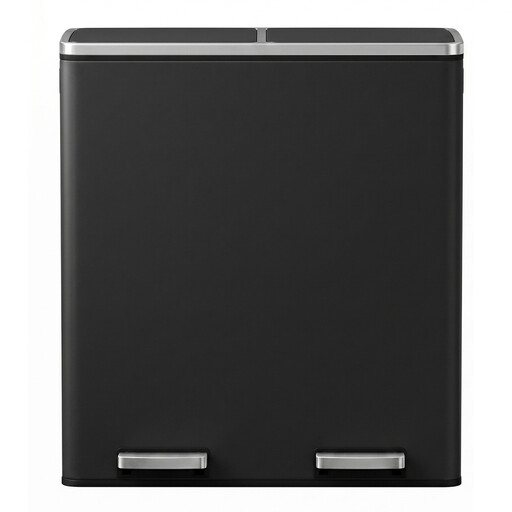
Why This Fits Their Persona: Designed for busy family kitchens and households that want general waste and recycling separated at the point of disposal.
The two separate 30L compartments make the sorting function tangible, while removable buckets support cleaning and liner replacement.
Two compartments, pedal-operated soft-close lids, handles on the inner buckets and 15 included liners.
A large kitchen rubbish bin is not always the right place for peelings, coffee grounds and other food scraps. A food waste caddy can sit on a worktop or under the sink, allowing you to empty it regularly into a council food-waste container or home composting system, subject to local guidance.
The Addis Everyday Kitchen Food Waste Compost Caddy has a 4.5L capacity, a carry handle and dimensions of 18 x 25 x 19cm. Its sage green plastic body is designed to be wiped clean and can also be used for small utility items. Keeping food scraps separate may help prevent the main kitchen bin from filling as quickly, although collection rules vary between UK councils.
We have compiled a complete, real-time list of products that fully satisfy these strict selection criteria and UK safety regulations.
A 30L bin may suit a smaller household or one that separates recycling and food waste. Families producing more general waste may prefer a 50L bin, while a 68L model is intended for households wanting greater capacity between emptying days. Measure the space before choosing.
A pedal bin enables hands-free opening, reducing the need to touch the lid during food preparation. Hygiene still depends on regular emptying, liner changes and cleaning the inner bucket and pedal area.
Use a well-fitting liner, empty food waste regularly and wipe the inner bucket when necessary. An odour-sealing lid or carbon filter may help contain smells, but neither replaces routine cleaning and suitable waste separation.