
24/7 Customer Support

Free returns

Same-day & Next-day Delivery

Quality Guaranteed

Unlock Your Welcome Offers: FREE Delivery | Up to 80% OFF | Free 30-day JoyPlus trial
Download the APP
A kitchen bin might seem like a simple purchase, but it's one of the most frequently used items in any home. Choosing the wrong one can lead to daily frustrations, from unpleasant odours to messy clean-ups. Many of us have been tempted by a sleek design, only to find it impractical within months. Before you buy, it's worth knowing about the common pitfalls that can turn a seemingly good purchase into a source of regret.
The most frequent complaints often stem from a few key areas:
By paying attention to a few core details, you can easily sidestep these issues and find a kitchen waste bin that is both stylish and practical for your UK home.
Navigating the market for a new kitchen bin means looking beyond just the colour and shape. Focusing on these three parameters will help you make a much more informed decision.
The first step is matching the bin's capacity to your household's needs. A bin that's too small requires constant emptying, while one that's too large can take up valuable floor space and may lead to odours if not filled quickly enough.
Consider the bin's footprint. A tall, slim model can offer a large capacity without a wide base, making it ideal for tighter spaces.
The bin's construction directly impacts its durability and ease of use. A robust kitchen pedal bin is a must for hands-free operation. Look for pedals made from steel rather than plastic for better longevity.
Another feature that significantly improves the user experience is a soft close bin mechanism. This prevents the lid from slamming shut, reducing noise and wear and tear on the hinge. A well-designed waste bin with lid should also offer a stay-open function, which is incredibly useful when you're peeling vegetables or clearing plates.
For material, a stainless steel rubbish bin is a popular choice for good reason. It's durable, easy to wipe clean and its non-porous surface is more hygienic than plastic. Many modern steel bins also feature fingerprint-proof coatings to keep them looking smart.
With local councils encouraging more recycling, a single-compartment bin is often no longer enough. A dual compartment bin provides a streamlined solution for separating recyclables from general waste. Some models even offer a third, smaller section for food caddy waste. This integrated approach keeps your kitchen tidy and makes recycling a far simpler task than juggling multiple bags and boxes.
We've filtered through the options to match different household needs with models that address the common pitfalls.
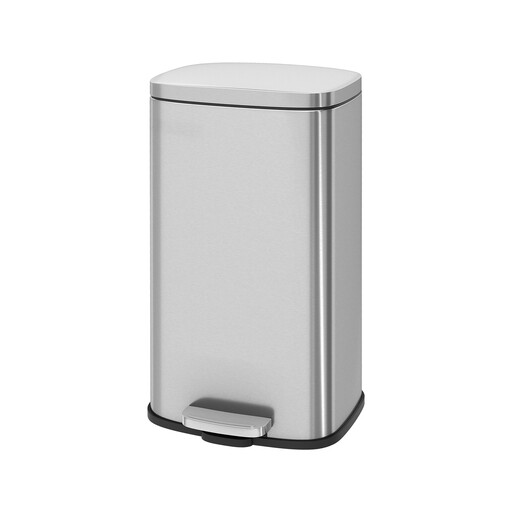
Why This Fits Their Persona: Ideal for singles or couples in a modern flat. The 30L capacity is just right for smaller households, and the sleek silver steel finish complements contemporary kitchen appliances without occupying too much space.
The steel pedal is built for durability, avoiding the common 'flimsy pedal' issue. Its inner bucket design helps secure bin liners neatly, preventing them from slipping down inside.
Features a quiet, soft-close lid that seals in odours effectively. The removable inner bucket makes emptying and cleaning straightforward.

Why This Fits Their Persona: The generous 50L capacity is perfect for a family, reducing the frequency of trips to the outdoor bins. Its durable steel construction is designed to withstand the demands of a busy kitchen.
This model features a sturdy pedal for reliable hands-free use. The inner bucket includes a bag hole to tuck away and secure the liner, preventing messy slips and tears during removal.
Balances a large capacity with a relatively slim profile. The soft-close lid ensures quiet operation, a welcome feature in a bustling family home.
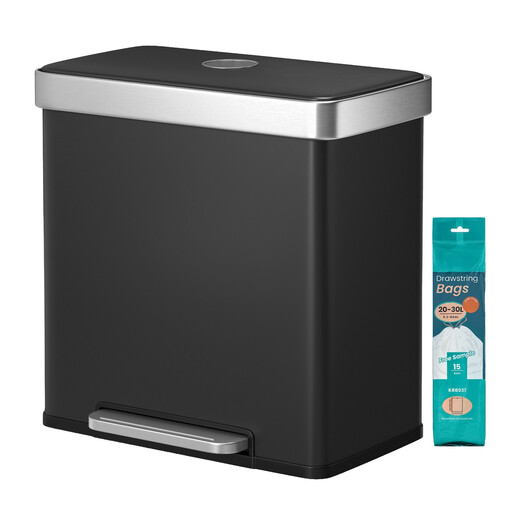
Why This Fits Their Persona: For the household committed to recycling, this dual compartment bin is a game-changer. It provides an all-in-one station to separate general waste and recyclables, keeping the kitchen organised and making sorting effortless.
It eliminates the need for separate, often messy, recycling bags or boxes. The two inner buckets are easy to lift out, so you won't struggle with overflowing, makeshift containers.
Offers efficient, integrated waste sorting with a hygienic, hands-free pedal. The stainless steel finish is rust-resistant and easy to maintain.
We have compiled a complete, real-time list of products that fully satisfy these strict selection criteria and UK safety regulations.
There are a few effective methods. Firstly, clean your bin regularly—at least once a month—with warm, soapy water or an antibacterial spray, ensuring you dry it completely. Using high-quality, correctly sized bin liners helps prevent leaks. For persistent odours, sprinkling a small amount of bicarbonate of soda in the bottom of the bin can help absorb smells. Finally, choosing a model with a tight-fitting lid is crucial.
For a typical family of four in the UK, a 50L kitchen bin is often a suitable size for general waste. However, this depends on your lifestyle. If your family is diligent with recycling and food waste composting, you might find a smaller general waste bin (like a 30L or 40L) is sufficient, especially if paired with a dedicated recycling bin.
The key to a streak-free finish on stainless steel is to wipe in the direction of the metal's grain. Use a soft microfibre cloth dampened with water and a small amount of mild washing-up liquid. For tougher marks, a specialised stainless steel cleaner can be used. After cleaning, it's important to wipe it dry with a separate, clean microfibre cloth to prevent water spots and streaks from forming.