
24/7 Customer Support

Free returns

Same-day & Next-day Delivery

Quality Guaranteed

Unlock Your Welcome Offers: FREE Delivery | Up to 80% OFF | Free 30-day JoyPlus trial
Download the APP
A kitchen bin might seem like a simple purchase, but choosing the wrong one can lead to daily frustration. From lids that slam shut to finishes that look permanently smudged, a poorly designed rubbish bin can quickly become a nuisance. As a Joybuy Product Recommendation Officer, my role is to help you see past the marketing claims and focus on the features that deliver genuine, long-term value for your home.
Before you buy, be aware of these common pitfalls that often catch UK shoppers out:
To ensure your new kitchen bin is an asset, not an annoyance, focus on these three core parameters.
The most popular choice for a modern kitchen is a stainless steel kitchen bin, prized for its sleek look and durability. However, not all stainless steel is created equal. Look for a bin with a substantial feel and a smooth, well-applied coating. A quality fingerprint-resistant finish should feel silky to the touch and allow you to wipe away marks with a simple damp cloth, without leaving streaks. Avoid bins with a finish that feels tacky or looks uneven, as these are more likely to stain and scratch.
Whether you opt for a pedal or sensor model, the opening mechanism is critical. For a pedal bin, the mechanism should feel solid and responsive underfoot. A robust steel pedal is a good indicator of longevity. Equally important is the lid's closing action. A soft close bin uses a dampened hinge to lower the lid gently and silently, preventing loud bangs and reducing wear and tear. Many models also include a stay-open function, which is invaluable when you're peeling vegetables or clearing plates and need the rubbish bin with lid to remain open.
Choosing the right size is essential. A small bin in a large family home means constant trips to the outside bins. As a general guide:
For households that recycle, a dual compartment bin is an efficient solution. These units contain two or more separate inner buckets, allowing you to sort recyclables from general waste within a single, tidy footprint. This makes a dedicated recycling bin an integrated part of your kitchen workflow.
Instead of a one-size-fits-all approach, we've matched a few standout options to different household needs.
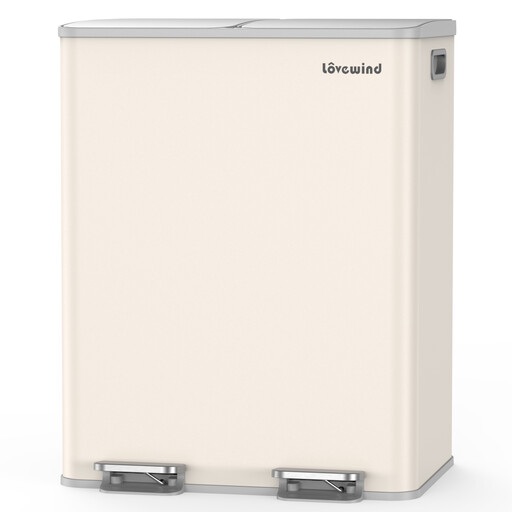
Why This Fits Their Persona: With two large 30L compartments, this bin makes it simple for a busy family to separate general waste from recyclables without needing two separate bins cluttering the kitchen floor.
It features two independent, high-density stainless steel pedals, one for each compartment. This design distributes wear and avoids the single-point-of-failure issue common in flimsy, single-pedal dual bins.
The dual 30L inner buckets are removable and include bag-fixing rings to prevent liners from slipping. The soft-close lids ensure quiet operation.
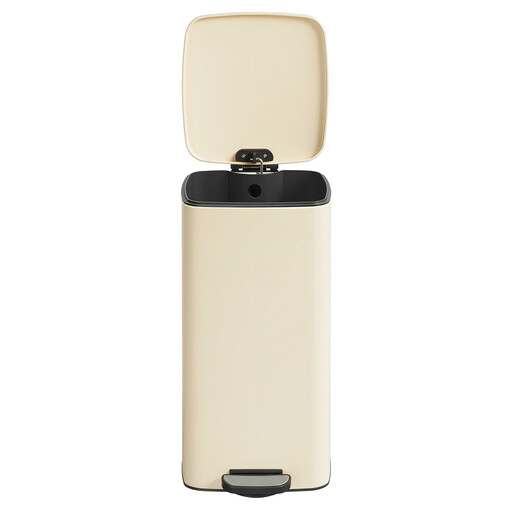
Why This Fits Their Persona: For those who see a bin as part of their kitchen decor, this model's unique Sand Beige colour and sleek rectangular profile offer a sophisticated alternative to standard silver or black.
The rust-resistant steel body has a high-quality finish that is genuinely easy to wipe clean, avoiding the smudgy appearance of lower-grade "fingerprint-proof" bins. Its non-slip base also prevents it from sliding or tipping.
It combines a quiet, soft-close lid with a convenient stay-open feature. The compact design is ideal for fitting into tighter spaces without sacrificing its 30L capacity.
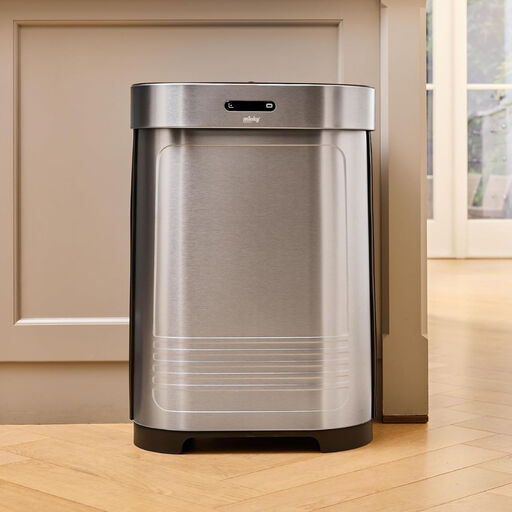
Why This Fits Their Persona: This bin offers completely touch-free operation, making it an excellent choice for households with young children or anyone focused on minimising contact with germs during food preparation.
It counters the 'unreliable sensor' pitfall by including a manual control option. This allows you to keep the lid open for longer tasks like cleaning, providing a practical backup if the sensor is not needed.
The generous 55-litre capacity is ideal for busy families, reducing the need for frequent emptying. The fingerprint-resistant stainless steel exterior helps maintain a clean appearance.
We have compiled a complete, real-time list of products that fully satisfy these strict selection criteria and UK safety regulations.
This is a common frustration caused by poorly designed bins. To prevent it, look for a model that has a removable inner bucket with a built-in feature to secure the liner. This is often a metal ring, a handle that folds over the bag or a dedicated hole (sometimes called a "bag fixer") designed to tuck the excess liner into, keeping it taut and out of sight.
A good rule of thumb is to allow for about 10-15 litres of capacity per person. For a household of one or two, a 30L bin is usually sufficient. A family of four will likely find a 50L kitchen bin more practical. For larger families or those who generate a lot of packaging waste, a 60L or larger dual compartment bin is often the most efficient choice.
For hygiene-conscious individuals, a sensor bin can be a worthwhile investment. They eliminate the need to touch the bin lid, which is ideal when your hands are full or dirty from cooking. Modern sensor technology has become more reliable and many units are energy-efficient, with batteries lasting for several months. To get the most value, choose a model that also includes a manual override button, giving you the flexibility to keep the lid open when needed.