
24/7 Customer Support

Free returns

Same-day & Next-day Delivery

Quality Guaranteed

Unlock Your Welcome Offers: FREE Delivery | Up to 80% OFF | Free 30-day JoyPlus trial
Download the APP
A kitchen bin might seem like a simple purchase, but choosing the wrong one can lead to daily frustrations. From lids that break to bags that slip and odours that escape, a poorly chosen rubbish bin can disrupt the flow of the busiest room in your home. As the Joybuy Product Recommendation Officer, my role is to help you navigate the options and find a practical solution that genuinely suits your household, without falling for common marketing gimmicks.
This guide cuts through the clutter, focusing on the essential features to look for and the pitfalls to avoid, ensuring your new kitchen bin is a help, not a hindrance.
Many bins look great on the shelf but fail in practice. Here are three frequent issues that UK buyers encounter:
To avoid these issues, focus on a few key parameters that determine a bin's long-term performance and suitability for your home.
The capacity of a kitchen bin is measured in litres, and matching it to your household size is crucial.
Before you decide, measure the intended space. Ensure your chosen bin won't obstruct a walkway or cupboard door and check if it will fit neatly under a worktop if desired.
The material affects not only the look but also the durability and maintenance of your bin.
The opening mechanism is a key part of the user experience.
Instead of a one-size-fits-all approach, we've matched a few well-designed products to specific household needs.
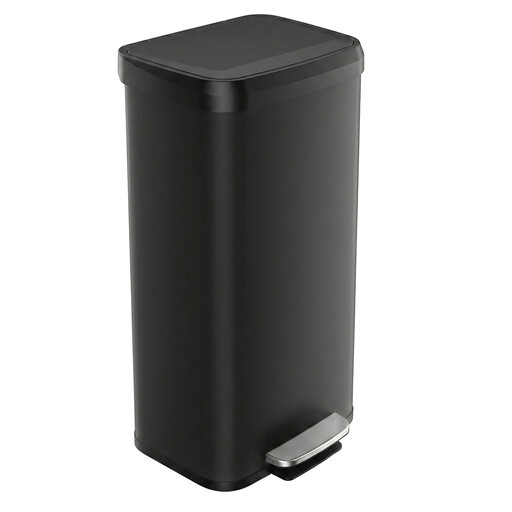
Why This Fits Their Persona: For a large, active family, a standard bin fills up too quickly. This 68L bin's generous capacity means fewer trips to the wheelie bin and a kitchen that stays tidier for longer, even during busy meal times or after a party.
It features a wide, durable steel pedal designed for longevity, directly addressing the flimsy pedal issue. The soft-close lid also prevents wear and tear from slamming.
Its main advantage is the extra-large 68L capacity. It also includes a carbon filter for odour control and a stay-open function for easier clean-ups.

Why This Fits Their Persona: For those diligent about separating waste for council collections, this double bin is the perfect all-in-one solution. It keeps general waste and recycling neatly contained in one unit, eliminating the need for multiple separate bins cluttering the kitchen.
It has two separate, removable inner buckets, making bag changes and cleaning simple. Each bucket has a fixing ring to hold the liner securely, preventing the untidy overhang issue.
The dual-compartment design with independent pedals is its core strength. The fingerprint-resistant stainless steel finish and soft-close lids add to its practical, high-quality feel.
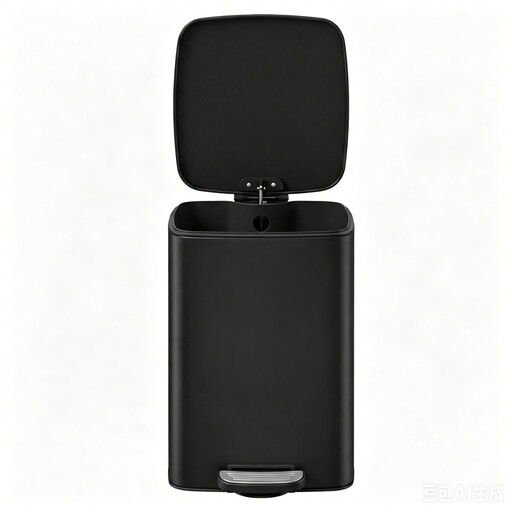
Why This Fits Their Persona: Ideal for smaller kitchens, flats or 1-2 person households where a large bin would be excessive and take up valuable floor space. Its smart rectangular shape fits neatly against a wall or at the end of a cabinet run, providing enough capacity without being intrusive.
This model includes a removable inner bucket with a secure bag holder, solving the 'inner bucket struggle' by making bag changes clean and ensuring the liner is hidden from view.
Its space-saving rectangular design is the main benefit. It also features a soft-close lid and a non-slip base to prevent it from sliding or being tipped by pets.
We have compiled a complete, real-time list of products that fully satisfy these strict selection criteria and UK safety regulations.
There are several effective methods. Firstly, choose a bin with a well-fitting lid. Models with integrated carbon filters can also help neutralise odours. Secondly, ensure you are using the correct size bin liners to prevent spills inside the bin. Finally, regular cleaning is key. Wipe down the interior of the bin and the inner bucket with a disinfectant cleaner each time you change the bag. For food waste, using a separate, smaller food waste caddy that is emptied daily is highly effective.
For a typical family of four in the UK, a 50L kitchen bin is generally considered the sweet spot. It's large enough to handle a few days' worth of non-recyclable waste without overflowing, yet it's not so large that it dominates the kitchen. If your family produces a lot of waste or you prefer to empty the bin less frequently, stepping up to a 60L or larger model could be beneficial.
The reliability of sensor bins has improved significantly in recent years. High-quality models now feature more accurate sensors that are less prone to accidental opening. Many also include a manual override function, which is useful for longer tasks. Whether one is 'worth it' depends on your priorities. If hands-free, hygienic operation is important to you, especially when handling raw meat or messy food prep, then a good quality sensor bin can be a worthwhile convenience. Always check for models that allow you to keep the lid open manually and have good user feedback regarding battery life.