
24/7 Customer Support

Free returns

Same-day & Next-day Delivery

Quality Guaranteed

Unlock Your Welcome Offers: FREE Delivery | Up to 80% OFF | Free 30-day JoyPlus trial
Download the APP
A kitchen bin might seem like a straightforward purchase, but choosing the wrong one can lead to daily frustration. From flimsy pedals that snap to so-called "smart" features that fail, the market is filled with options that promise convenience but often deliver disappointment. As a Joybuy Product Recommendation Officer, my role is to help you navigate these choices and find a practical, reliable solution for your home or business. This guide breaks down the common pitfalls and essential features to consider before you buy.
Many rubbish bins look great online but fail to perform in a real-world kitchen. Here are three frequent issues UK buyers encounter:
To ensure your new bin is an asset, not an annoyance, focus on these key parameters.
The right capacity depends on your household size and local council collection frequency.
Crucially, check the bin's dimensions (its footprint) to ensure it fits your intended space without obstructing walkways or cupboards.
The opening mechanism and construction material directly impact a bin's longevity and ease of use.
We have matched some practical options to different household needs, focusing on designs that address the common pitfalls.

Why This Fits Their Persona: This double kitchen bin is ideal for UK households that need to separate general waste from recyclables. Its 60L total capacity is contained within a single, organised unit, simplifying waste management.
It features two independent, sturdy pedals, reducing the strain on a single mechanism. The stainless steel exterior is described as fingerprint-resistant, directly addressing the "messy steel" pitfall.
Features two 30L removable inner buckets for easy emptying and cleaning. The soft-close lids prevent slamming and add a touch of quality.
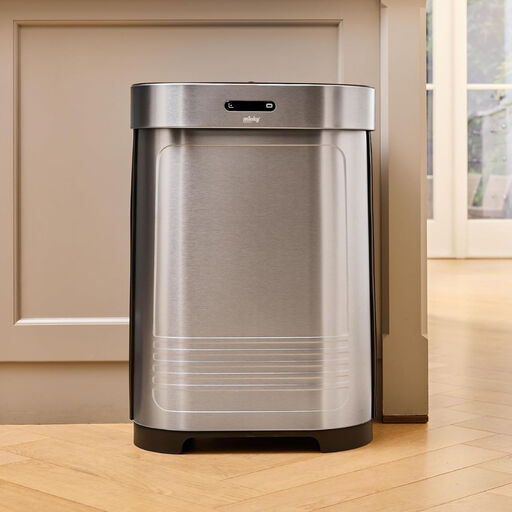
Why This Fits Their Persona: With a large 55L capacity, this bin is built for busy family life, reducing the frequency of emptying. The touch-free sensor operation is a significant hygiene benefit in a kitchen used by multiple people, including children.
It includes a manual control option, providing a reliable backup if the sensor fails or you need the lid to stay open. The stainless steel is fingerprint and stain-resistant, tackling the messy surface problem.
Offers genuine hands-free convenience for better hygiene. The large capacity is a practical benefit for families, and the soft-close lid prevents noise.
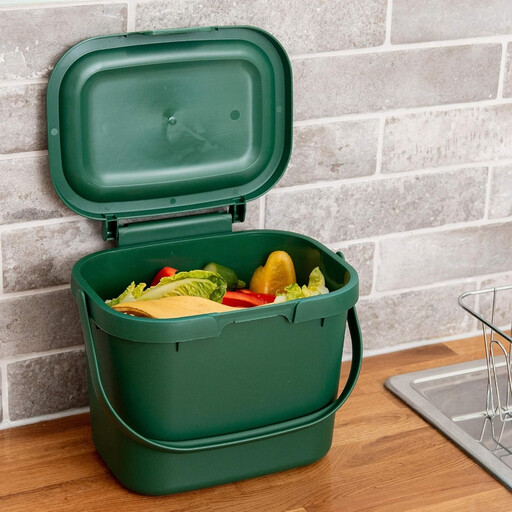
Why This Fits Their Persona: This compact caddy is perfect for collecting daily food scraps on the countertop, especially for those using council food waste schemes or a home compost bin. It saves space and keeps food waste separate and manageable.
Its strength is its simplicity. Made from durable, easy-to-clean plastic, it has no complex mechanisms like pedals or sensors that can break. It is a purely functional tool designed for a specific job.
Features a small footprint ideal for countertops and an integrated handle for easy carrying to an outdoor bin. Its multi-purpose design also makes it useful as a small cleaning caddy.
We have compiled a complete, real-time list of products that fully satisfy these strict selection criteria and UK safety regulations.
For a main kitchen bin, a full clean once a month is a good rule of thumb. Use a disinfectant spray and wipe it dry. For a food waste caddy, it is advisable to rinse it out every time you empty it to prevent the build-up of residue and smells. Using bin liners will also significantly help with cleanliness.
A good quality sensor bin can be worth it for the hygiene and convenience it offers, especially in a busy family kitchen. However, it's important to choose a model with a good reputation and a manual override feature. If you prefer simplicity and guaranteed reliability, a well-made pedal bin is often a more dependable long-term choice.
For a family of four, a bin with a capacity between 40 and 60 litres is generally recommended. This size is usually large enough to hold several days' worth of non-recyclable waste, fitting in with typical fortnightly council collections without overflowing. If you produce a lot of recycling, consider a large double-compartment bin.