
24/7 Customer Support

Free returns

Same-day & Next-day Delivery

Quality Guaranteed

Unlock Your Welcome Offers: FREE Delivery | Up to 80% OFF | Free 30-day JoyPlus trial
Download the APP
A kitchen bin might seem like a straightforward purchase, but choosing the wrong one can lead to daily frustration. From lids that slam shut to materials that stain and hold odours, a poorly chosen rubbish bin can quickly become a nuisance. As a Joybuy Product Recommendation Officer, my role is to help you navigate the market and find a solution that is practical, durable and fits your home perfectly. Before you buy, be aware of these common pitfalls that often catch UK shoppers out.
space saving bin, but their narrow openings or awkward internal shapes make them difficult to use. They often require specific, hard-to-find bin liners and fill up so quickly that you are constantly taking out the rubbish.pedal bin mechanism is often the first thing to fail. After a few months of use, the pedal can snap or the connection to the lid can break, leaving you with a bin that no longer opens hands-free. Similarly, a "soft-close" feature that stops working results in a lid that clangs shut.stainless steel can still be prone to rust and fingerprints if it's low-grade, while some plastics can absorb odours and become permanently stained, no matter how often you clean them.To avoid these issues, focus on a few core parameters that determine a bin's long-term value and usability.
The size of your bin should match the size of your household and the space you have available.
The opening mechanism is crucial for hygiene and convenience.
pedal bin allows for hands-free operation, which is essential when your hands are full or dirty from food preparation. Check for a wide, sturdy pedal that feels robust.refuse sacks and cleaning the bin far easier. It contains any leaks and can be lifted out and washed, preventing odours from building up in the main body of the bin.The bin is only half the solution. The right liner prevents mess and makes disposal simple. Drawstring bin bags are often easier to tie and carry than standard flush-top liners. For food waste, consider using separate compostable caddy liners in a smaller caddy to keep your main bin cleaner and reduce odours.
Instead of a one-size-fits-all approach, we match products to specific needs. Here are some recommendations based on common UK household profiles.
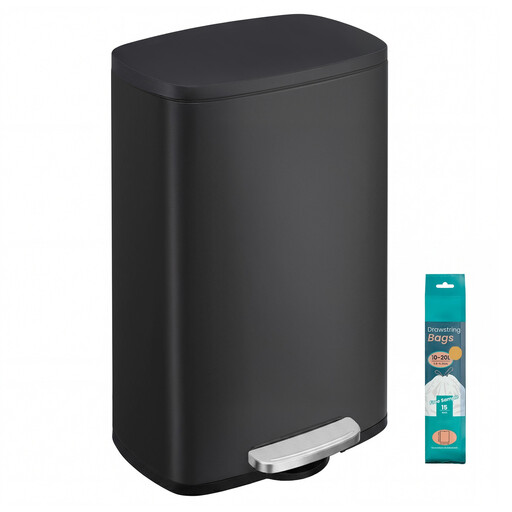
Why This Fits Their Persona: This 50L bin is ideal for a family, offering enough capacity to handle daily waste without constant emptying. Its hands-free pedal and quiet soft-close lid are perfect for a busy, high-traffic kitchen.
The robust steel pedal and soft-close mechanism are built for longevity, avoiding the flimsy mechanism flaw. The rust-resistant steel body is easy to clean and durable, countering the material myth.
Features a removable inner bucket with a bag-securing hole, which keeps the liner tidy and hidden. The large capacity is balanced with a relatively slim profile.
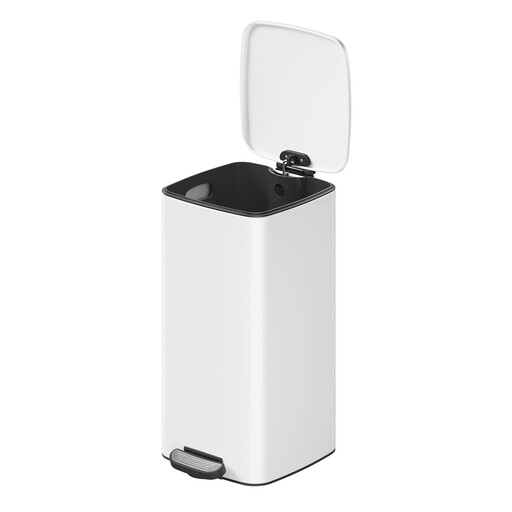
Why This Fits Their Persona: Perfect for couples or small flats, this 30L bin offers a sleek, minimalist design that complements modern interiors. Its rectangular shape fits neatly into tight spaces without sacrificing capacity.
This bin is genuinely space-efficient, avoiding the trap of impractical "space-saving" designs. The high-quality steel body and soft-close lid ensure it is both durable and quiet, sidestepping common material and mechanism flaws.
Features a stay-open lid function for longer tasks and non-slip pads on the base to keep it stable. The removable inner bucket simplifies bag changes.

Why This Fits Their Persona: This user understands that a good bin is useless without a reliable liner. They prioritise strength and convenience to prevent leaks and spills, making waste disposal as clean and efficient as possible.
These bags directly solve the problem of flimsy, unreliable liners that split. Their reinforced, tear-resistant material and leak-proof base provide peace of mind, while the drawstring closure is far more convenient than a basic flush-top.
Made from 100% recycled plastic, offering a more sustainable choice. The large 75L capacity is suitable for big bins or heavy-duty clear-outs.
We have compiled a complete, real-time list of products that fully satisfy these strict selection criteria and UK safety regulations.
The key is a combination of the right bin and good habits. Choose a bin with a well-fitting lid to contain odours. If your bin has an inner bucket, wash it regularly with soap and water. For persistent smells, a bin with a built-in carbon filter can help neutralise odours. Finally, consider separating food waste into a smaller, lidded caddy with compostable caddy liners that you empty more frequently.
For a typical family of four, a 50l kitchen bin is generally the most suitable size. It provides a good balance, holding several days' worth of waste without taking up an excessive amount of floor space. If you recycle diligently and have a separate food waste caddy, you might find a 30l bin is sufficient, but 50L is a safer starting point for most families.
A good quality stainless steel bin is often a worthwhile investment. They are generally more durable than plastic, less likely to absorb odours and easier to clean. While the initial cost is higher, their longevity means you are less likely to need a replacement in a few years. Look for models with a fingerprint-proof or rust-resistant coating for easier maintenance.