
24/7 Customer Support

Free returns

Same-day & Next-day Delivery

Quality Guaranteed

Unlock Your Welcome Offers: FREE Delivery | Up to 80% OFF | Free 30-day JoyPlus trial
Download the APP
A kitchen bin might seem like a simple purchase, but choosing the wrong one can lead to daily frustration. From lids that slam shut to flimsy pedals that snap, the small details make a big difference. Many of us have been caught out by bins that look great online but fail in practice. This guide cuts through the clutter to focus on what truly matters for a clean, functional and stylish UK home.
Before you buy, be aware of these common pitfalls:
To avoid these issues, focus on a few core parameters. Getting these right ensures your new bin will be a helpful addition to your home, not a source of irritation.
The capacity of your kitchen bin, measured in litres (L), is the first decision to make.
Always measure your available space before committing, leaving a few centimetres behind the bin for air circulation and lid clearance.
The material of your bin affects its durability, appearance and ease of cleaning.
Functionality is just as important as looks. These features make daily use much more pleasant.
We've matched some practical options to different household needs, focusing on designs that solve common problems.
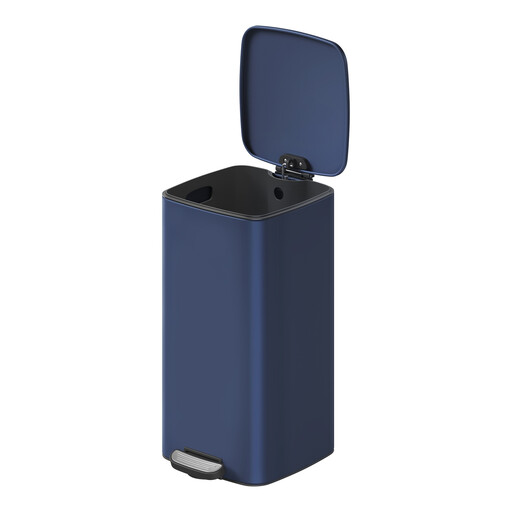
Why This Fits Their Persona: This 30L bin is ideal for style-conscious individuals or couples. The sleek midnight blue steel body adds a touch of colour without being overpowering and its rectangular shape fits neatly against a wall or at the end of a cabinet run, saving valuable floor space in modern UK kitchens.
It features a removable inner bucket with a dedicated hole to tuck the bin liner into, preventing ugly overhang and ensuring standard 30L bags fit securely. This sidesteps the "custom-fit" liner trap.
Includes a quiet, soft-close lid and a sturdy steel foot pedal designed for longevity, addressing the common points of failure in cheaper models.
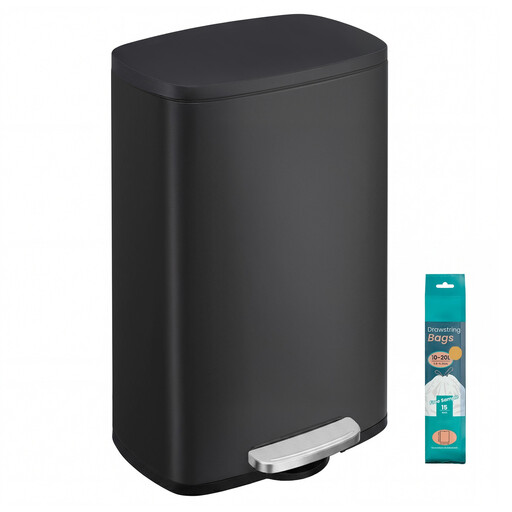
Why This Fits Their Persona: With a generous 50-litre capacity, this bin is built for the demands of a busy family home. It reduces the frequency of emptying and the durable steel construction can withstand the knocks and bumps of a high-traffic kitchen. The black finish is practical for hiding minor scuffs.
The robust steel pedal is designed for repeated, heavy use, directly countering the flimsy pedal problem. The removable inner bucket makes cleaning up spills from children's food packets or leaky containers quick and simple.
The large capacity is its main benefit, but it also includes a soft-close lid and a stay-open function, which is very useful for longer food prep sessions or when clearing plates after a family meal.
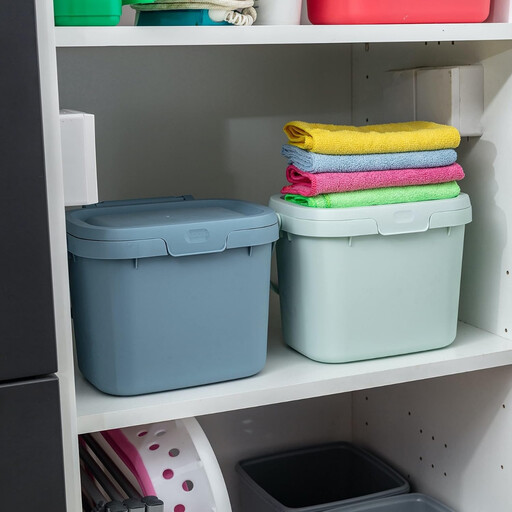
Why This Fits Their Persona: For those separating food waste for council collection or a home compost bin, this 4.5L food waste caddy is the perfect countertop companion. It's small enough to not get in the way but large enough for a day's worth of vegetable peelings, tea bags and coffee grounds.
It avoids the "hard to clean" trap with its simple, smooth plastic construction. There are no complex mechanisms or crevices for food residue to get trapped in, and it can be easily washed out at the sink.
Its primary advantage is its simplicity and convenience. The integrated carry handle makes it easy to transport to your main compost bin, and its durable plastic build is designed for daily use.
We have compiled a complete, real-time list of products that fully satisfy these strict selection criteria and UK safety regulations.
Check your bin's capacity in litres (e.g., 30L, 50L) and buy liners that match. If your bin has a removable inner bucket, you can also measure its height and circumference to find a good fit. It's often better to buy a liner that is slightly too big than one that is too small, as a small liner is more likely to slip down into the bin.
A food waste caddy is a small container, typically 4-7 litres, kept in the kitchen to collect daily food scraps. An outdoor compost bin is a much larger container, often 200L or more, that is kept in the garden. You empty the contents of your caddy into the larger compost bin, where the organic material breaks down over several months to create nutrient-rich compost for your garden.
Regular emptying is the first step. Ensure you are using a bin with a well-fitting lid. Sprinkling a small amount of bicarbonate of soda in the bottom of the bin can help absorb odours. Also, regularly cleaning the bin and the inner bucket with a disinfectant spray is crucial. Some modern bins even come with an integrated carbon filter in the lid to help neutralise smells.