
24/7 Customer Support

Free returns

Same-day & Next-day Delivery

Quality Guaranteed

Unlock Your Welcome Offers: FREE Delivery | Up to 80% OFF | Free 30-day JoyPlus trial
Download the APP
A kitchen bin is used several times a day, yet it is easy to choose one based only on colour or appearance. The wrong size can overflow before collection day, a poorly designed lid can spread smells and a recycling bin may not match your local council’s collection system.
This guide explains the practical details worth checking before buying kitchen bins, followed by recommendations matched to different UK household needs.
A 50L kitchen bin may hold more rubbish than a 30L model, but it also needs additional floor space and clearance for the lid. Tall bins can be awkward beneath wall cabinets, while wide dual-compartment bins may restrict access to cupboards or appliances.
Check the product’s width, depth, overall height and height with the lid open. Also allow space behind the bin where the manufacturer requires it. Several models in this guide need approximately 5cm between the back of the bin and the wall.
A soft-close bin is designed to lower the lid quietly, but forcing the lid shut by hand can damage the mechanism. Pedal bins also need a stable, flat surface so the foot pedal operates correctly.
Look for clear instructions, a robust pedal and a lid that can remain open for longer jobs such as emptying food scraps or cleaning the fridge. Avoid placing heavy items on the lid.
An odour-sealing lid or carbon filter may help contain smells, but it does not replace regular emptying and cleaning. Food waste should ideally be kept separate from general rubbish, particularly if your local authority provides a food-waste collection service.
A dedicated food waste caddy can make this routine easier. The 4.5L Addis caddy listed below is suitable for peelings, coffee grounds, tea bags and other daily scraps.
Use capacity as a starting point rather than a guarantee of how long a bin will last between collections:
Capacity is usually divided between recycling and general waste in a dual-compartment bin, so a 2 x 30L model provides two separate 30L sections rather than one 60L cavity.
A stainless steel bin or painted steel outer body is easy to wipe clean and can suit contemporary kitchens. Check whether the inner bucket is made from PP plastic, as this can be removed for liner changes and cleaning.
Use a soft, damp cloth and mild detergent where specified. Abrasive cleaners and steel wool may scratch the outer surface. Keep pedal mechanisms dry and deal with spills promptly.
A removable inner bucket makes it easier to fit and remove liners without lifting the entire outer bin. Some buckets include a rear bag hole that secures the liner edge and helps conceal excess material.
For busy kitchens, consider:
Before ordering, compare the listed dimensions with your available space and check whether compatible liners are readily available.
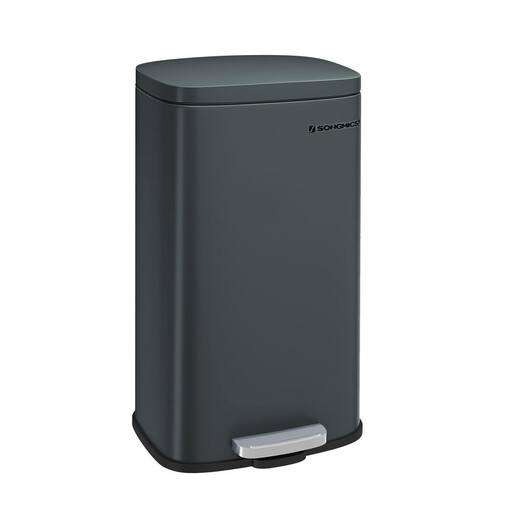
Why This Fits Their Persona: Its 30L capacity and 34.8 x 29.7 x 63.3cm footprint suit smaller UK kitchens, flats and households that prefer frequent emptying.
The listed dimensions make space planning straightforward, while the removable bucket avoids the inconvenience of changing a liner inside a fixed cavity.
Steel outer body, PP plastic removable inner bucket, soft-close lid and pedal operation.
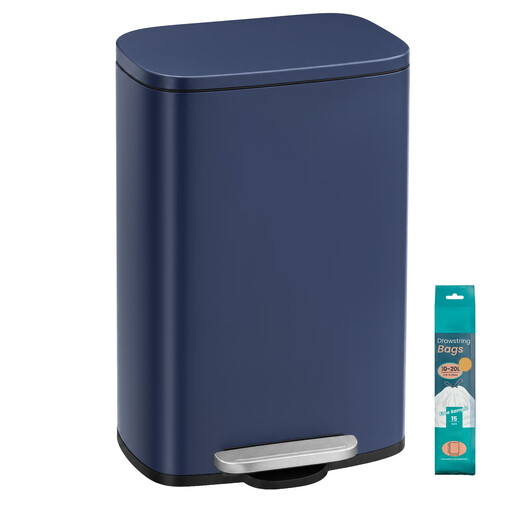
Why This Fits Their Persona: This option suits homeowners wanting a substantial rubbish bin with a coordinated colour finish and features for quieter daily use.
The 43.2 x 37.1 x 63.2cm dimensions clarify its space requirement, and the removable bucket makes liner changes less awkward.
50L capacity, stainless steel construction, soft-close lid, step-on pedal and bag-securing inner bucket.
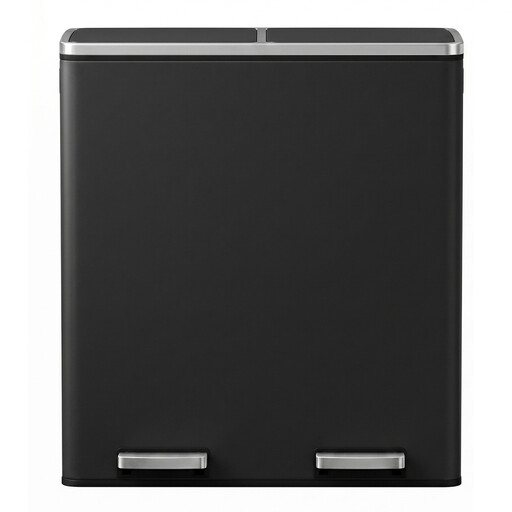
Why This Fits Their Persona: A practical match for families and environmentally conscious households that want to separate general waste and recycling at the point of disposal.
It provides two clearly separated 30L compartments, rather than relying on one oversized section that still requires sorting later.
Dual removable buckets, pedal-operated soft-close lids, steel outer body and 15 included liners.
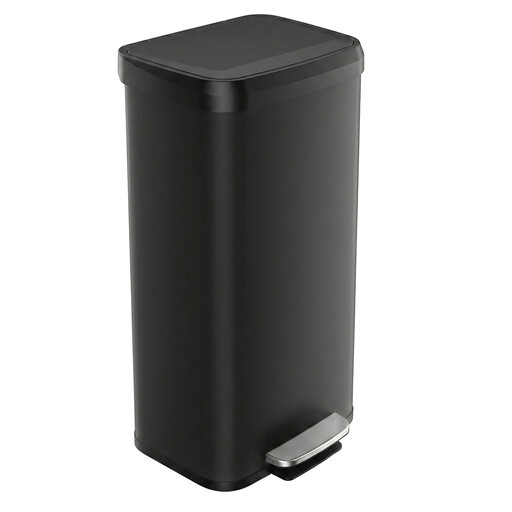
Why This Fits Their Persona: The large capacity is suited to busy family kitchens where a 30L kitchen bin may need emptying too often.
Its stated 68L volume and 40.5 x 38.1 x 77.1cm dimensions help buyers judge whether the tall format fits their kitchen.
Wide steel pedal, soft-close lid, stay-open function, carbon filter and 15 included bin bags.
We have compiled a complete, real-time list of products that fully satisfy these strict selection criteria and UK safety regulations.
A large kitchen rubbish bin is not always the right place for peelings and food scraps. The Addis Everyday Kitchen Food Waste Compost Caddy, 4.5L, has a compact 18 x 25 x 19cm format, a carry handle and a wipe-clean plastic construction. It can sit on a worktop or under the sink and be emptied regularly into a compost heap or council food-waste container.
Its smaller capacity is deliberate: food waste should not usually be left sitting for extended periods. Always follow your local authority’s guidance on accepted materials, liners and collection arrangements.
A 50L kitchen bin is a practical starting point for many families, while a 68L kitchen bin may be more suitable for larger households or homes with less frequent rubbish collections. Consider how much food waste and recycling is separated before selecting a size.
A pedal bin allows hands-free access, which can reduce the need to touch the lid during cooking. However, hygiene still depends on regular liner changes, cleaning the inner bucket and washing hands after handling waste.
Lifespan depends on the quality of the pedal and lid mechanism, frequency of use and cleaning routine. To help preserve a soft-close mechanism, do not force the lid shut. Keep the bin indoors, avoid overloading it and clean the exterior with a non-abrasive cloth.