
24/7 Customer Support

Free returns

Same-day & Next-day Delivery

Quality Guaranteed

Unlock Your Welcome Offers: FREE Delivery | Up to 80% OFF | Free 30-day JoyPlus trial
Download the APP
Choosing between kitchen bins can seem straightforward until the lid is awkward to use, the inner bucket is difficult to clean or the capacity does not suit your household. A low price may also hide ongoing costs, such as unusual liner sizes, replacement batteries or filters.
This guide explains the practical details worth checking before buying, from a compact 30-litre bin to a 60-litre bin or larger sensor model.
A larger bin is not automatically more convenient. A 65-litre bin may reduce emptying for a busy family, but it also takes up more floor space and can become heavy when full. A smaller 30-litre model may work better in a flat, compact kitchen or household that separates waste frequently.
Check the bin’s external dimensions as well as its stated capacity. A tall, narrow design may fit beside a worktop, while a wider square model could be more suitable under or alongside a kitchen island.
Sensor bins offer touch-free opening, but they require batteries and need enough clearance for the lid to operate. Sensors can also be triggered accidentally if positioned too close to a busy walkway. Look for practical controls, such as a manual open function, when you regularly prepare food or need the lid to stay open.
A soft-touch bin avoids battery changes, although it still requires light contact with the lid. For many households, this is a useful balance between convenience, reliability and running costs.
A stylish exterior does not compensate for a liner that slips, a lid that traps residue or an inner bucket that cannot be removed. Prioritise a wide opening, accessible surfaces and a removable inner container. These details matter particularly when disposing of food packaging, peelings or liquid-containing waste.
Use the following as a practical starting point:
Always compare the stated capacity with the bin’s height and width. For example, a tall 30-litre model can occupy less floor area than a shorter but wider design.
A soft-touch opening system needs a light press and does not depend on batteries. It can be convenient when your hands are occupied, although it still involves contact.
Automatic kitchen bins use an infrared sensor to open the lid when a hand approaches. This supports touch-free disposal, but remember to check battery type, whether batteries are included and whether the lid offers a manual mode. A soft-close feature can also reduce noise in open-plan kitchens.
Stainless steel bins are popular because they offer a durable, wipe-clean exterior. A fingerprint-resistant or coated finish may help the surface retain a neater appearance, but it still needs regular cleaning with a damp cloth and suitable mild cleaner.
Look for a removable plastic inner bucket, secure liner retention and a protective base or rim. Ventilation holes in an inner bucket may help with moisture management, while odour control features should be treated as maintenance aids rather than a replacement for regular emptying and cleaning.
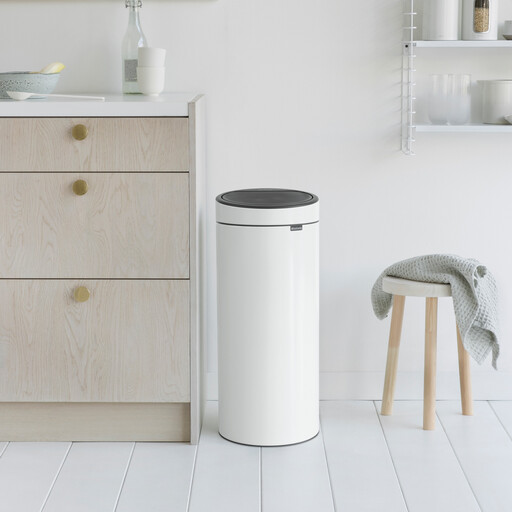
Why This Fits Their Persona: A compact option for renters, couples and smaller UK kitchens where floor space matters. Its 30-litre capacity is manageable for regular emptying.
The removable plastic inner bucket supports easier cleaning, while the large opening reduces spills when disposing of waste.
Soft-touch opening, removable inner bucket, sturdy back grip and a supplied sample pack of PerfectFit code G liners.
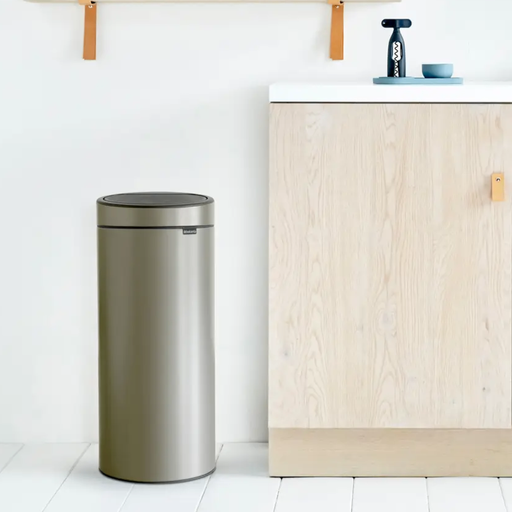
Why This Fits Their Persona: Designed for shoppers who want a coordinated kitchen appearance alongside practical daily handling and straightforward maintenance.
The removable inner bucket and ventilation holes address common cleaning and moisture concerns better than a fixed interior.
Matt platinum finish, soft-touch lid, protective base and stated 10-year guarantee.
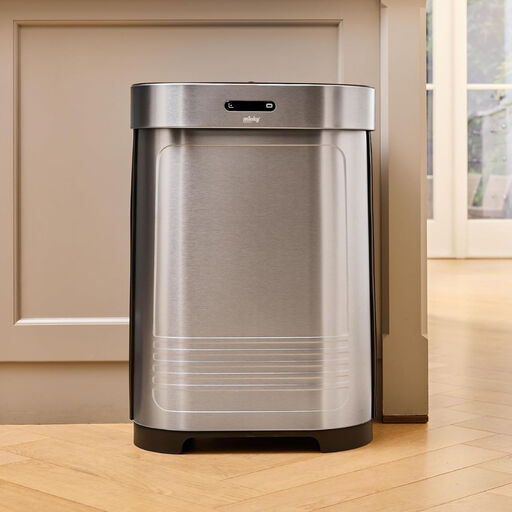
Why This Fits Their Persona: A practical match for families and busy home cooks who want a larger bin and touch-free disposal during food preparation.
Manual controls allow the lid to remain open for longer tasks, helping avoid repeated sensor activation while cooking.
55-litre capacity, stainless steel exterior, soft-close lid, manual mode and 20 supplied bin liners.
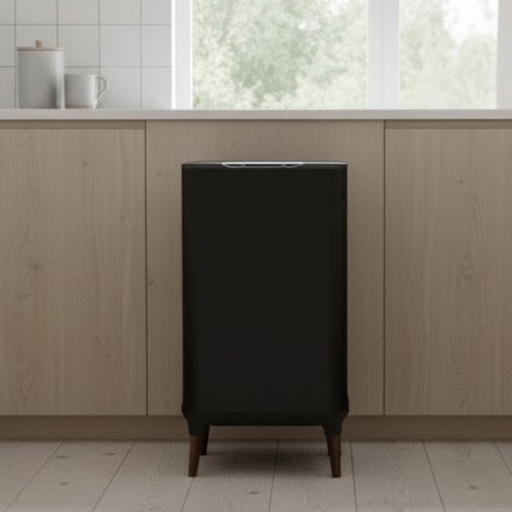
Why This Fits Their Persona: Its 65-litre capacity suits households that produce considerable waste, while the raised design can complement a contemporary kitchen layout.
The product listing specifies ozone and carbon filters for odour management, with filter replacement recommended every three months.
65-litre capacity, infrared sensor, manual button, black stainless steel body and wooden legs.
We have compiled a complete, real-time list of products that fully satisfy these strict selection criteria and UK safety regulations.
They can be useful if you regularly handle food, packaging or cleaning materials and prefer not to touch the lid. However, factor in battery replacement and available clearance. A touch-free bin with a manual mode offers greater flexibility for longer kitchen tasks.
A 42-litre, 55-litre or 60-litre bin may suit a family better than a compact model, depending on how often waste is emptied and whether recycling is separated. Larger capacities reduce emptying frequency but need more floor space and can become heavier when full.
Empty food waste regularly, clean the inner bucket and wipe the lid and rim where residue can collect. An odour control bin with replaceable carbon or other specified filters may provide an additional maintenance feature, but it does not remove the need for hygienic cleaning and appropriate waste disposal.