
24/7 Customer Support

Free returns

Same-day & Next-day Delivery

Quality Guaranteed

Unlock Your Welcome Offers: FREE Delivery | Up to 80% OFF | Free 30-day JoyPlus trial
Download the APP
A kitchen bin has a demanding job: it needs to handle daily food packaging, remain stable during use and fit neatly into the available space. Yet shopping by appearance alone can lead to an unsuitable purchase. A tall bin may not fit beneath wall units, while a large capacity can become inconvenient if liners are difficult to replace.
This guide explains the main pitfalls to avoid and compares practical options for UK kitchens, flats, family homes and food-waste routines.
A 50L kitchen bin may suit a family, but capacity does not tell you whether it will fit beside a cupboard or under a worktop. Always check the full width, depth and height, as well as the clearance needed when the lid opens.
For example, a bin measuring approximately 43.2 × 37.1 × 63.2cm may need more vertical and side space than expected. If it sits against a wall, check whether the manufacturer recommends leaving a gap behind it.
A pedal or step-on bin offers hands-free opening, which is useful when preparing food. However, the pedal mechanism, lid clearance and base stability affect everyday use. A lid that bangs shut can be disruptive, particularly in open-plan homes, while a narrow pedal may be awkward to operate with slippers or limited floor space.
Look for clearly listed features such as a soft-close lid, non-slip feet and a lid that can stay open during longer tasks.
A removable inner bucket can make bag changes and cleaning easier, but not all internal designs handle liners neatly. A rubbish bin with a bag-fixing ring, handles or a dedicated liner hole can reduce slipping and keep excess bag material hidden.
Also check whether the inner bucket is plastic, whether it can be lifted out comfortably when full and whether the bin comes with custom-fit bags. These details can matter more than decorative finishes over time.
Capacity should reflect both household size and collection frequency.
A large single compartment is not automatically suitable if your local council requires separate food or recycling collections. In those cases, consider a dual compartment kitchen bin or combine a general bin with a separate food waste caddy or compost caddy.
Measure the intended position, including:
A rectangular bin can make better use of a narrow wall, while a round model may be easier to position in an open corner. Leave enough room to operate the pedal fully and remove the liner without scraping nearby surfaces.
A stainless steel kitchen bin or coated steel body is easy to wipe down and can complement modern kitchen fittings. Look for a smudge-resistant finish if the bin will be used frequently. Plastic inner buckets should ideally have handles or a bag-fixing feature for cleaner removal.
Do not use abrasive cleaners or steel wool on coated or polished surfaces unless the care instructions specifically allow it. For hygiene, empty waste regularly, wipe the exterior with a damp cloth and use mild detergent where appropriate. A soft-close mechanism should not be forced shut by hand.
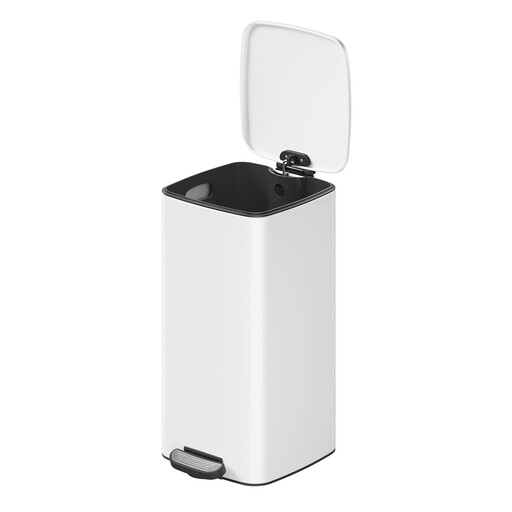
Why This Suits Their Persona: Its 30L capacity and 34 × 28.5 × 54.4cm dimensions suit smaller kitchens, rented flats and households that empty rubbish regularly.
The stated dimensions make it easier to check fit before buying, while the removable inner bucket helps avoid awkward liner changes.
Steel body, soft-close lid, stay-open function and non-slip pads.
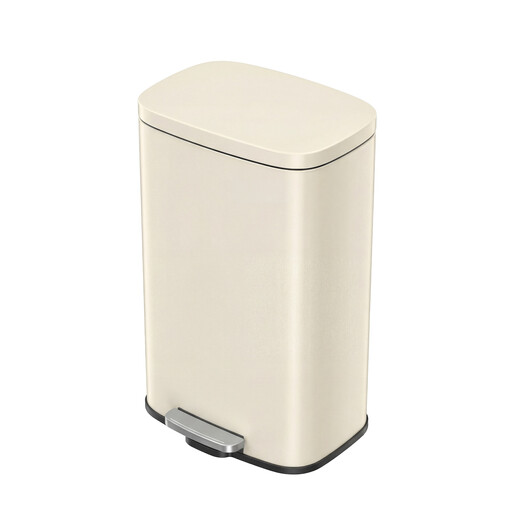
Why This Suits Their Persona: A 50L capacity balances everyday family use with a relatively slim 43.2 × 37.1 × 63.2cm profile, while the sand beige colour offers an alternative to metallic finishes.
The listing provides full measurements and specifies a removable plastic inner bucket, helping shoppers assess both fit and maintenance.
Stainless steel body, pedal operation, soft-close lid and rear bag hole.
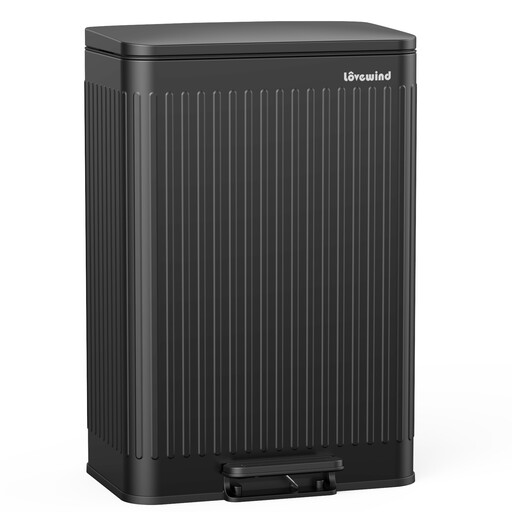
Why This Suits Their Persona: The 60L single-body design is intended for households of three to six people that need substantial general-waste capacity.
The listing identifies two removable inner buckets with handles and bag fixers, rather than relying only on a stated capacity.
60L capacity, reinforced stainless steel pedal, soft-close lid and 90-degree stay-open function.
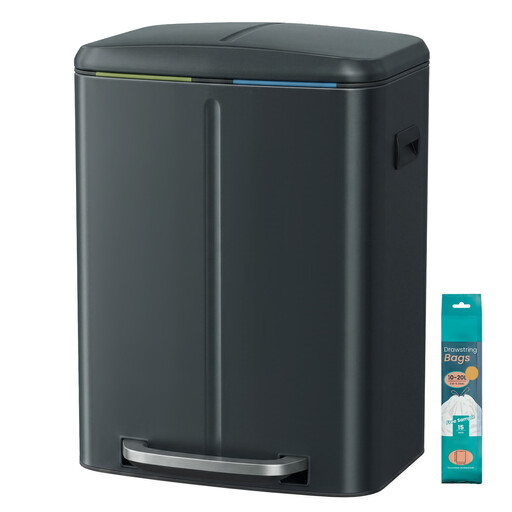
Why This Suits Their Persona: Two 20L sections give households a dedicated way to separate general rubbish and recyclable items in one floor-standing unit.
The separate compartments remove the need to balance two loose bins, while removable buckets address cleaning and liner replacement.
Dual 20L compartments, two inner buckets, soft-close lids and supplied custom-fit bags.
A main kitchen waste bin is not designed for every type of disposal. The 4.5L Addis Everyday Kitchen Food Waste Compost Caddy has a compact 18 × 25 × 19cm footprint, a carry handle and a wipe-clean plastic construction. It can sit on a worktop or under a sink for daily scraps before being emptied into a council food-waste container or home composting system.
Check your local council’s accepted materials before using any compost caddy, particularly if food-waste collections have specific liner or contamination rules.
We have compiled a complete, real-time list of products that fully satisfy these strict selection criteria and UK safety regulations.
They can be, provided the closed dimensions and pedal position fit the available floor space. Measure the area beside cupboards and allow clearance for the lid. A 30L model may be easier to position than a 50L or 60L kitchen bin.
This depends on capacity, household size, food content and council collection arrangements. Food scraps should generally be emptied regularly rather than left in a main rubbish bin. A separate food waste caddy can help reduce the amount of organic waste sitting in the larger bin.
A soft-close lid primarily reduces noise and controlled closing. A closed lid may help contain odours temporarily, but it does not replace regular emptying, suitable liners and cleaning. For stronger odour control, look for a listed odour-sealing bin feature and keep the inner bucket free from leaks and residue.