
24/7 Customer Support

Free returns

Same-day & Next-day Delivery

Quality Guaranteed

Unlock Your Welcome Offers: FREE Delivery | Up to 80% OFF | Free 30-day JoyPlus trial
Download the APP
A kitchen bin has a surprisingly large effect on daily routines. The wrong one may not fit beneath a worktop, hold enough rubbish for a busy household or keep food odours contained. Before buying, it is worth looking beyond colour and headline capacity.
This guide explains the practical details that matter when comparing kitchen bins, from a compact pedal bin to a large stainless steel bin, recycling bin or food waste caddy.
A 50L or 68L bin may sound suitable for a family, but its external measurements can make it difficult to position. Check the width, depth and height, as well as the height with the lid open. A tall bin may fit beside a cabinet but collide with an overhead shelf when opened.
Capacity is also divided differently between products. A dual-compartment bin might offer two 20L sections, while another recycling bin may provide two 30L compartments. Compare the usable compartments rather than relying only on the total figure.
An odour-sealing lid can help reduce smells escaping, but it does not replace regular emptying and cleaning. Food residue inside a liner, a dirty inner bucket or a loose-fitting bag can still cause unpleasant odours.
For kitchens where food waste is separated, a dedicated food waste caddy can reduce the amount of organic waste sitting in the main rubbish bin.
A removable inner bucket makes it easier to change bags and clean spills. Some models also include a rear hole or slot to secure the liner and conceal excess material. Without this feature, bags may slip into the bin or hang visibly over the rim.
Also check whether standard liners are suitable. A specialist liner system may provide a neater fit, but can increase ongoing costs if replacement bags are not widely available.
Use these capacities as practical starting points rather than fixed rules:
A 4.5L food waste caddy is designed for countertop or under-sink use rather than replacing a full-size rubbish bin. Emptying it regularly can help keep food scraps from accumulating.
A steel kitchen bin or stainless steel bin offers a wipe-clean outer surface and a structured appearance. Look for a plastic or PP removable inner bucket, as this can be lifted out for liner changes and cleaning. Steel surfaces should generally be cleaned with a soft, damp cloth and mild detergent; abrasive products may mark the finish.
Plastic bins can be lighter and practical for offices, utility rooms and commercial spaces. An open-top plastic recycling bin is particularly convenient in high-traffic areas where users need quick access.
A pedal bin supports hands-free opening, which is useful when cooking or handling packaging. A soft-close bin reduces lid noise, while a stay-open function can help when cleaning out a fridge or carrying several items.
Measure the clearance required for the lid. Some bins need several centimetres between the back and the wall, while tall models may require more than 80cm of vertical space when fully open.
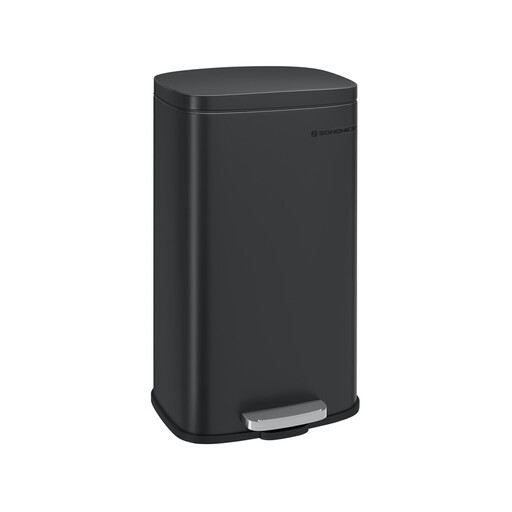
Why This Fits Their Persona: A practical 30L pedal bin for renters, students and smaller kitchens where floor space matters. Its 34.8 x 29.7cm footprint is relatively easy to position beside cabinets or appliances.
The listed dimensions and 85.5cm open-lid height make clearance easier to plan before purchase. A removable bucket also addresses loose liners and spill clean-up.
Steel exterior, soft-close odour-sealing lid, foot pedal and PP removable inner bucket.
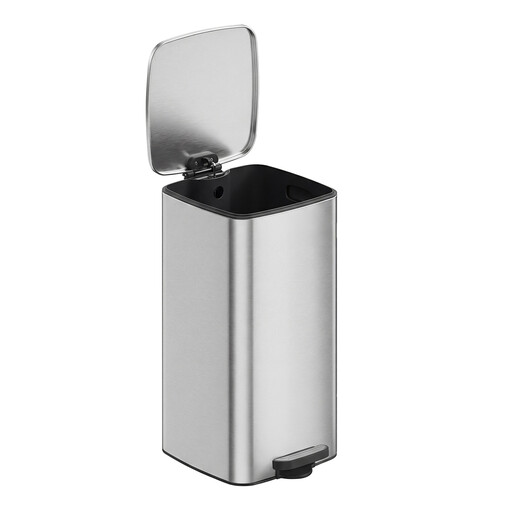
Why This Fits Their Persona: Suitable for households wanting a neat silver finish and a structured bin for everyday kitchen use without moving to a very large capacity.
The inner bucket has handles and a secure bag hole, while non-slip pads help keep the bin stable on a flat indoor floor.
Stainless steel body, soft-close lid, stay-open function and removable PP inner bucket.
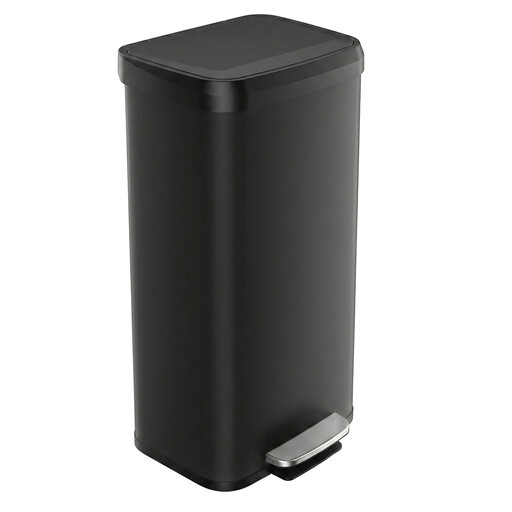
Why This Fits Their Persona: Designed for larger households and busy kitchens where a smaller bin may need emptying several times a day.
Its 40.5 x 38.1 x 77.1cm dimensions are clearly listed, helping buyers check floor and overhead space. A carbon filter is included for odour management.
68L capacity, steel pedal, soft-close lid, stay-open function and 15 included rubbish bags.
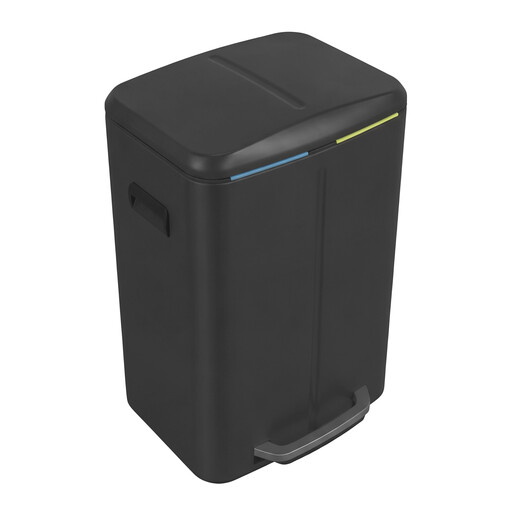
Why This Fits Their Persona: A suitable format for households, offices and shared accommodation that need waste and recycling separated in one footprint.
Two removable buckets make spills easier to deal with, while the two-compartment layout avoids relying on a single mixed-waste container.
40L total capacity, soft-close lid, two plastic inner buckets, rear bag holes and 15 included bags.
We have compiled a complete, real-time list of products that fully satisfy these strict selection criteria and UK safety regulations.
A 30L bin may suit a flat, couple or smaller kitchen, while 40L–50L is often more practical for a family. A 68L bin can reduce emptying frequency but needs more floor and vertical space. Measure the intended location before selecting capacity.
A pedal bin allows hands-free opening, which can be convenient when preparing food. An open recycling bin is quicker to access in offices and high-traffic areas, but it leaves contents more exposed. The suitable choice depends on the location, waste type and cleaning routine.
Use a well-fitting liner, empty organic waste regularly and clean the removable inner bucket after leaks. An odour-sealing bin or a model with a carbon filter may help limit smells escaping, but no lid removes the need for routine cleaning and responsible waste disposal.