
24/7 Customer Support

Free returns

Same-day & Next-day Delivery

Quality Guaranteed

Unlock Your Welcome Offers: FREE Delivery | Up to 80% OFF | Free 30-day JoyPlus trial
Download the APP
A kitchen bin needs to fit your space, your household’s waste habits and the way you actually cook. Yet many buying decisions are based on appearance or capacity alone. The result can be a bin that is awkward to open, difficult to clean or simply too large for the available floor space.
Before choosing from the wide range of kitchen bins, watch out for these common pitfalls:
Capacity is useful only when considered alongside collection frequency and available space.
Do not measure only the floor footprint. Check the full height, the space needed for the lid to open and the recommended gap behind the bin. For example, the 50L JOYFURNOS models measure 43.2 x 37.1 x 63.2cm and require clearance behind the unit during use.
The outer material affects both appearance and maintenance. Stainless steel bin bodies are easy to wipe clean and can complement modern kitchens, while plastic caddies are lighter and convenient to carry. Material alone does not determine how long a product will last, so also check the pedal, hinges, base and inner bucket design.
A pedal bin or step-on bin allows hands-free opening, which is useful when preparing food. Look for:
For households with pets or young children, stability and controlled access may be more useful than decorative features. Always place the bin on a stable, level surface and follow the product’s indoor-use and cleaning instructions.
A food waste caddy is designed for peelings, tea bags, coffee grounds and other daily scraps. A compact model can sit on a worktop, beneath a sink or in a utility area. Emptying it regularly helps prevent waste from sitting in the kitchen for too long.
The 4.5L Addis caddy measures 18 x 25 x 19cm, includes a carry handle and has a wipe-clean plastic construction. It can be used with home composting, a local council food-waste collection or as a general small utility caddy. Check your local council’s accepted materials before placing food waste outside for collection.
For recycling, a dual compartment bin can simplify separation at the point where waste is created. However, compartment sizes may be smaller than the total advertised capacity. Check whether the split is even and whether each inner bucket can be removed independently.
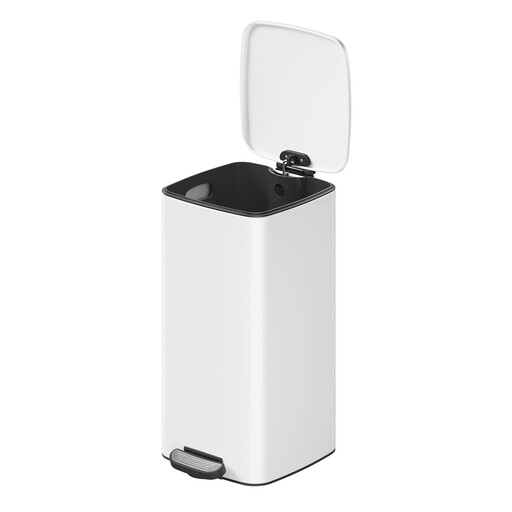
Why This Fits Their Persona: The 30L capacity and 34 x 28.5 x 54.4cm dimensions suit students, renters and smaller UK kitchens where floor space is limited.
It provides a defined capacity and compact footprint rather than relying on vague space-saving wording.
Steel body, soft-close lid, non-slip pads and removable inner bucket with handles.
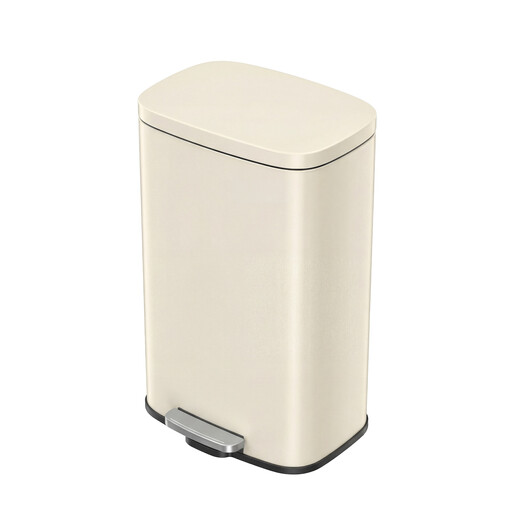
Why This Fits Their Persona: Families wanting generous capacity with a coordinated finish may value this 50L step-on design for a main kitchen rubbish bin.
Its listed dimensions make it easier to check cabinet and wall clearance before purchase.
Steel outer body, soft-close lid, pedal operation and removable plastic inner bucket.
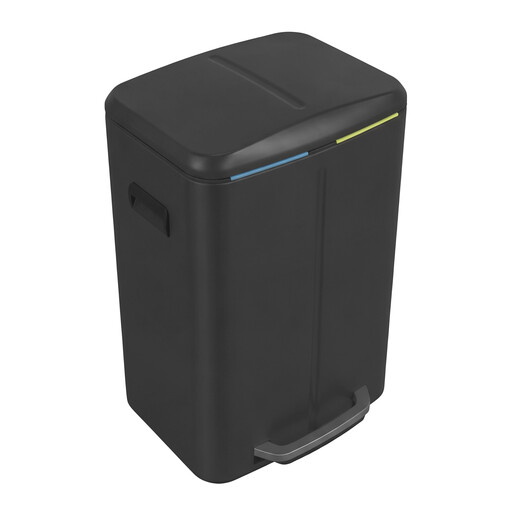
Why This Fits Their Persona: Households managing general waste and recycling in one location can use the two compartments to sort materials as they go.
The two inner buckets provide physical separation instead of requiring sorting after disposal.
40L total capacity, soft-close lid, removable buckets and 15 custom-fit rubbish bags included.
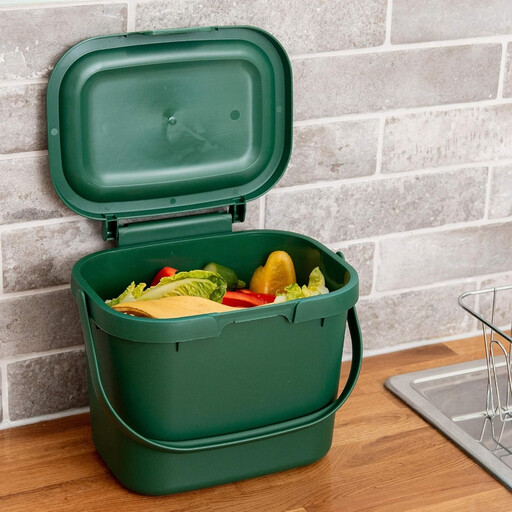
Why This Fits Their Persona: A compact food waste caddy suits households that compost at home or use a council food-waste service and want scraps contained during meal preparation.
Its modest 4.5L size encourages regular emptying rather than allowing food waste to accumulate for extended periods.
Carry handle, wipe-clean plastic and a compact 18 x 25 x 19cm footprint.
We have compiled a complete, real-time list of products that fully satisfy these strict selection criteria and UK safety regulations.
Position a pedal bin where the foot mechanism is easy to reach without blocking a cupboard or walkway. Leave the manufacturer-recommended space behind the bin and measure the lid’s open height before placing it beneath shelves.
Use liners that fit the inner bucket rather than forcing an oversized bag around the rim. Empty food waste frequently, wipe spills promptly and clean steel surfaces with a soft damp cloth and mild detergent. Avoid abrasive cleaners where the product instructions advise against them.
A 50L kitchen bin may suit a larger household that produces substantial general waste, while a 30L or 40L model can be more practical for smaller families or homes with frequent council collections. Measure the available area before deciding.
They can be useful when you want to separate two waste streams at the point of disposal. Check the capacity of each compartment, the size of the opening and whether the internal buckets are removable. Local council recycling rules still apply.
No. A standard soft-close kitchen bin uses a mechanical hinge or damper rather than mains power. It operates manually through a pedal or hand opening, so there is no electrical running cost.