
24/7 Customer Support

Free returns

Same-day & Next-day Delivery

Quality Guaranteed

Unlock Your Welcome Offers: FREE Delivery | Up to 80% OFF | Free 30-day JoyPlus trial
Download the APP
A kitchen bin can look stylish online yet prove awkward once it is installed beside a worktop, filled with household waste or used during a busy cooking session. The most common mistakes are not always obvious from product photos. A lid may need more clearance than expected, a sensor may rely on batteries, and a large capacity may not suit the available floor space.
This guide compares the practical features that matter when choosing kitchen bins, including touch bins, sensor bins and stainless steel kitchen bin designs.
A 30 litre kitchen bin may suit a flat, couple or smaller kitchen, while a 42 litre kitchen bin can offer more space for a family without becoming excessively wide. Larger models, such as a 55 litre kitchen bin or 60 litre kitchen bin, reduce emptying frequency but can take up considerable floor area.
Capacity alone does not tell you whether a bin will fit. Check:
A tall bin may fit under a worktop but still be unsuitable if its lid cannot open fully.
Sensor bins open when a hand moves near the sensor, which can reduce the need to touch the lid. However, they usually require batteries and may need the sensor area kept clear of obstructions. Check the battery type, whether batteries are included and whether the bin also offers a manual open function.
A soft-touch bin has a different mechanism. It opens when the lid is pressed lightly, so it does not require batteries, but it is not a fully touchless bin. Understanding this difference helps prevent paying for features that do not match your routine.
A polished or matt finish can complement a kitchen, but the internal design affects daily convenience more than appearance. Look for a removable inner bucket, retaining ring or compatible liner size. Without a secure liner arrangement, bags may slip into the bin or become difficult to remove when full.
A wide opening is also useful for emptying a dustpan, while ventilation holes in a removable inner bucket may help manage moisture between cleanings. These features support easier maintenance, but no kitchen bin removes the need for regular cleaning and responsible waste handling.
As a practical guide, a 30-litre model often works for smaller households or kitchens where waste is emptied regularly. A 42-litre model may suit a family kitchen with moderate daily waste. For larger households, frequent cooking or limited access to outdoor bins, a large household waste bin in the 55 to 60-litre range can reduce the number of trips outside.
Avoid overfilling any bin. Excess waste can interfere with the lid, strain the liner and make removal less hygienic.
For powered sensor models, check the supplied instructions, battery requirements and safety information. Where applicable, products with electrical or electronic components should display the relevant UK or European conformity information.
A stainless steel kitchen bin can provide a durable-looking exterior and is generally simple to wipe down. Coatings may reduce the appearance of fingerprints, but care instructions should still be followed to avoid damaging the finish.
Plastic inner buckets are practical because they can be removed and cleaned separately. A protective base or rim is useful when moving the bin and may help reduce contact between the bin and the floor. Always place the bin on a stable, flat surface and keep bin bags away from children.
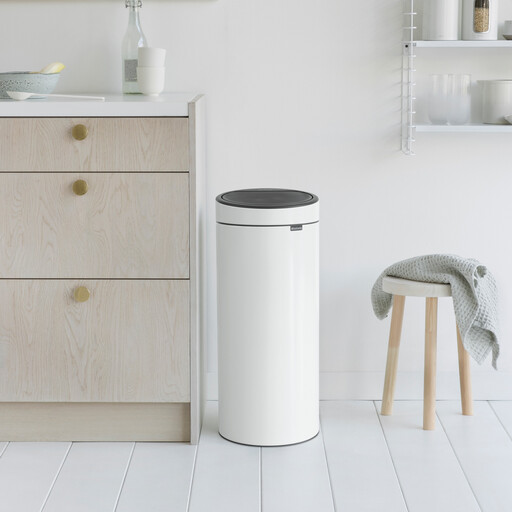
Why This Fits Their Persona: A 30-litre format is manageable for smaller kitchens, couples and households that prefer to empty waste frequently without using batteries.
The soft-touch system avoids battery replacement, while the removable plastic inner bucket provides a practical cleaning option.
30-litre capacity, removable inner bucket with ventilation holes, back grip and 10-year guarantee.
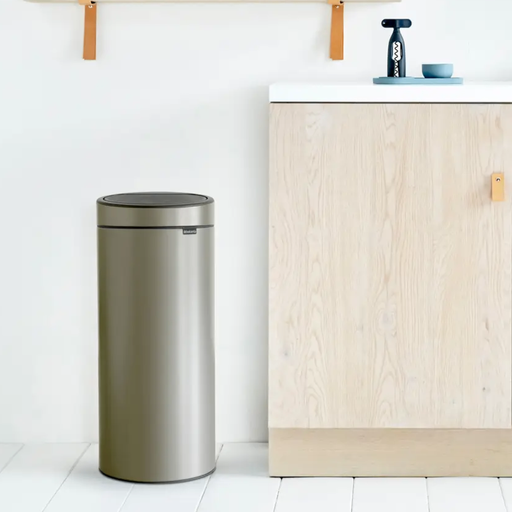
Why This Fits Their Persona: Its platinum finish suits shoppers prioritising coordinated interiors while retaining a compact capacity for everyday kitchen waste.
The removable inner bucket makes the interior accessible for cleaning, rather than relying only on an attractive exterior.
Soft-touch opening, ventilation holes, 30-litre capacity, sample PerfectFit liners and 10-year guarantee.
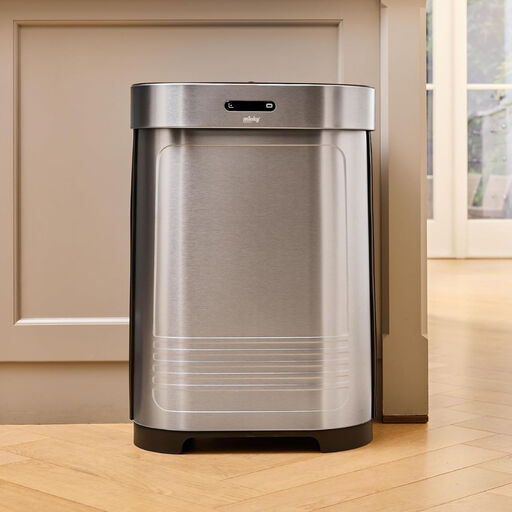
Why This Fits Their Persona: A busy family or frequent cook can benefit from 55 litres, touch-free access and a manual setting for longer food-preparation tasks.
The manual control helps when the lid needs to stay open, while the stainless steel exterior can be wiped after everyday use.
55-litre capacity, motion sensor, soft-close function, manual control and 20 included bin liners.
We have compiled a complete, real-time list of products that fully satisfy these strict selection criteria and UK safety regulations.
Sensor bins use batteries, so running costs depend on battery type, usage frequency and how often the lid is activated. Check whether batteries are included and whether the bin has a manual control option. A soft-touch model has no battery cost, but requires light physical contact with the lid.
Lifespan depends on the material, lid mechanism, cleaning routine and how carefully the bin is used. Avoid overfilling, do not force the lid and follow the manufacturer’s cleaning guidance. A stated guarantee, such as the 10-year guarantee supplied with selected Brabantia models, provides a defined period of manufacturer support but does not remove the need for correct use.
Many families begin by comparing a 42 litre kitchen bin, 55-litre model or 60-litre model. The right choice depends on household waste volume and available space. Measure the intended position first, then compare the bin’s external dimensions and liner compatibility. A larger bin is useful only if it can be positioned safely and emptied without difficulty.