
24/7 Customer Support

Free returns

Same-day & Next-day Delivery

Quality Guaranteed

Unlock Your Welcome Offers: FREE Delivery | Up to 80% OFF | Free 30-day JoyPlus trial
Download the APP
A kitchen bin is used several times a day, so a poor choice quickly becomes irritating. The lid may slam, the body may dominate a narrow walkway or the stated capacity may not suit the type of waste your household produces. Before choosing based on colour or advertised features, check how the bin will work in your actual kitchen.
A larger bin can reduce emptying frequency, but a 60L kitchen bin may be too wide for a compact flat or galley kitchen. Capacity alone does not show how much floor space the bin occupies or whether the lid can open fully beneath wall units.
Check the complete dimensions, including the clearance needed for the lid and pedal. A 30L kitchen bin is often a practical middle ground for couples, smaller families and busy home cooks, while larger households may prefer 50–65 litres.
A soft-close lid can reduce banging, but it does not necessarily make the pedal, hinges or inner bucket silent. Look for a clearly stated soft-close mechanism and consider whether the bin will sit near a dining area, bedroom or open-plan living space.
A pedal bin also needs a stable base and a mechanism that is easy to operate without excessive force. Touch-top bins can be useful where hands-free operation is not essential, but they still require clean hands or a light touch on the lid.
An “odour-proof bin” normally refers to a close-fitting lid or a design intended to help contain smells. It does not remove the need to empty food waste regularly or clean the bucket. Features such as carbon filters or tight-close lids can help contain unwanted odours, but filter replacement and routine cleaning remain important.
Also check whether the inner bucket can be removed. A fixed interior may look tidy, yet be difficult to wash after a leaking liner.
Match the volume to your household and collection routine:
Do not rely on the capacity label alone. Compare height, width and depth with the available space, then allow room to remove the inner bucket and open the lid.
A pedal bin allows hands-free opening, which is useful while preparing food. A touch-top bin uses a light press and may be more convenient where floor pedals are obstructed. A sensor bin opens automatically, but it requires batteries and may be less suitable in areas where pets or frequent movement could trigger the sensor.
For everyday convenience, look for a lid that stays open when required, particularly if you regularly empty a dustpan or scrape plates. The Brabantia Touch Bin 60L, for example, has a large opening designed to make dustpan emptying easier.
A stainless steel bin or coated steel model can provide a durable outer surface and a wipe-clean appearance. Fingerprint-resistant coatings may reduce visible marks, but abrasive cleaners and steel wool can damage finishes.
A removable inner bucket makes liner changes and washing simpler. Check whether it has handles, ventilation holes or a liner-retaining feature. Ventilation holes can help prevent suction when removing a full bag, while rear fixing holes or bag holders can reduce slipping and overhang.
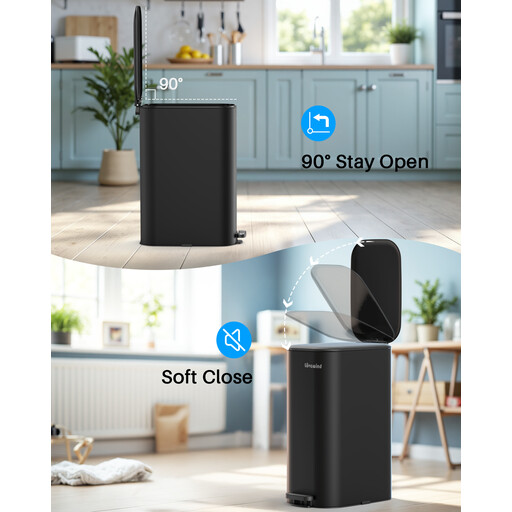
Why This Fits Their Persona: A practical 30L format for a first kitchen bin, compact household or home office where a slim profile matters.
The removable inner bucket and bag-fixing holes address difficult liner changes, while the pedal avoids touching the lid during food preparation.
30L capacity, stainless steel body, soft-close lid, 90-degree stay-open position and removable bucket with handles.
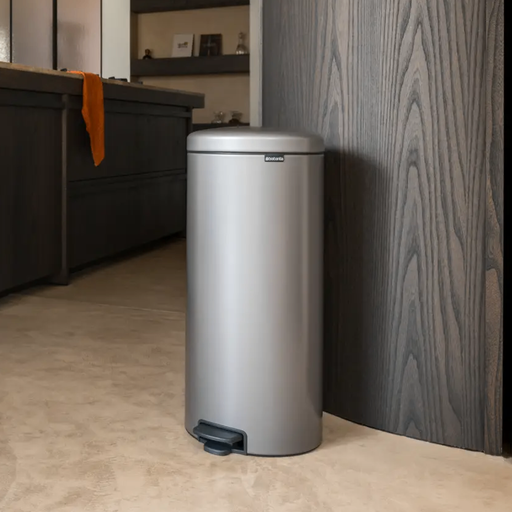
Why This Fits Their Persona: Suits households wanting a polished kitchen appearance, quiet operation and a clearly specified removable bucket.
Its product information specifies soft closure, a tight-close lid, an anti-tilt block and a removable plastic inner bucket.
30L capacity, soft-closing pedal lid, non-slip base, ventilation holes and a stated 10-year guarantee.
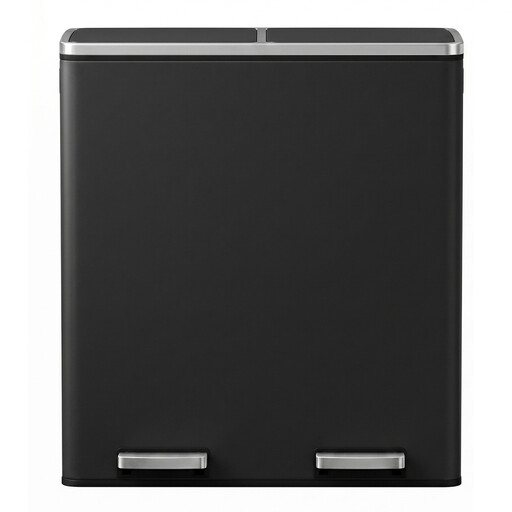
Why This Fits Their Persona: Designed for families and recycling-conscious homes that need general waste and recycling in one freestanding unit.
The two removable buckets make sorting and cleaning more manageable than using one large undivided compartment.
Two 30L sections, pedal operation, hinged soft-close lids, steel outer body and 15 starter liners.

Why This Fits Their Persona: A larger-capacity option for busy households that prefer hands-free opening and fewer emptying trips.
The 65L capacity is clearly specified, while the removable bucket supports cleaning. Remember that six AA batteries are required and not included.
Infrared opening, 65L capacity, fingerprint-proof coating, wooden legs and carbon and ozone filter features listed by the manufacturer.
We have compiled a complete, real-time list of products that fully satisfy these strict selection criteria and UK safety regulations.
For many kitchens, 30L offers a manageable balance between capacity and footprint. Families, keen home cooks or households with less frequent collections may prefer 50–65L. Measure the available space first, including lid clearance, rather than choosing by litres alone.
A sensor bin does not usually use mains electricity, but it needs battery replacements. Running cost depends on the battery type, usage frequency and sensor settings. Keep the sensor area clean and avoid placing the bin where constant movement could trigger unnecessary openings.
Avoid overfilling, keep liquids inside sealed liners and clean the removable inner bucket regularly. Wipe steel or plastic exteriors with a soft damp cloth and mild cleaner. Avoid abrasive products and keep pedals, hinges and electronic sensor areas dry. Place the bin on a flat, stable surface and follow the manufacturer’s safety instructions.