
24/7 Customer Support

Free returns

Same-day & Next-day Delivery

Quality Guaranteed

Unlock Your Welcome Offers: FREE Delivery | Up to 80% OFF | Free 30-day JoyPlus trial
Download the APP
Choosing among kitchen bins can seem straightforward until a supposedly suitable model blocks a cupboard, needs emptying every day or becomes difficult to clean. UK households, offices and catering spaces have different waste routines, so the right choice depends on more than appearance.
From the Joybuy Product Recommendation Officer, this guide explains the practical details that are easy to overlook, including capacity, lid mechanisms, materials and recycling layouts.
A 30L bin may fit a standard kitchen well, but its external width, depth and lid-opening height determine whether it works beside a worktop or under a shelf. A tall pedal bin can be compact on the floor yet require considerable clearance above it.
Similarly, a 40L bin may reduce emptying frequency but take up more floor space. Always compare the full dimensions, not just the litre rating.
A pedal bin provides hands-free operation without batteries, while a sensor bin uses motion detection to open its lid. A touchless rubbish bin can be convenient when preparing food, but it requires batteries and may open when someone passes close by.
Manual lift access can also be useful when filling a bin or changing a liner. Look for an open position or stay-open catch if you regularly need both hands.
Stainless steel and coated metal can complement a modern kitchen, but fingerprints, food residue and scratches still depend on daily care. Check whether the inner bucket or compartments can be removed, how bags are secured and whether the surface should be cleaned with non-abrasive products.
An odour-sealing bin can help contain smells when its lid closes tightly, but it still needs regular emptying and cleaning. No lid removes the need for sensible waste management.
For a smaller household, bathroom or home office, 30L can offer a practical balance between capacity and floor space. The referenced steel pedal bins measure 34.8 × 29.7 × 63.3cm, with an open-lid height of 85.5cm, so check overhead clearance before placing one beneath cabinets.
A 40L bin may suit a busy family, shared kitchen or workplace where waste accumulates quickly. However, capacity should be matched to the available liner size and the location’s emptying routine.
Choose a pedal bin when you want a straightforward, battery-free system. A soft-close lid can reduce noise, while a tight seal may help limit odour escape between emptying times.
A sensor bin is worth considering for kitchens where users want to avoid touching the lid. The Swan 42L model requires four AA batteries, not included, and uses an automatic sensor to open the lid when approached or activated near the sensor strip. Keep the sensor area clean and allow room for the lid to move freely.
For high-traffic areas, an open-top format can be faster than either a pedal or sensor mechanism. It is particularly useful where users need to dispose of items quickly, although it does not provide the same odour containment as a lidded model.
Steel or alloy-steel exteriors can provide a firm structure and a furniture-like finish. A removable PP plastic inner bucket can make liner changes and cleaning more manageable. Look for features such as a retaining ring, bag-securing hole or rear handle.
For recycling, a dual compartment bin should have clearly separated removable sections. Two 20L compartments provide a total 40L capacity, but each section holds less than a single 40L container. That distinction matters if one waste stream fills faster than the other.
Commercial users should also consider wipe-clean plastic. A commercial recycling bin with an open top may be easier to position in offices, schools, catering areas and shared buildings than a domestic-style lidded model.
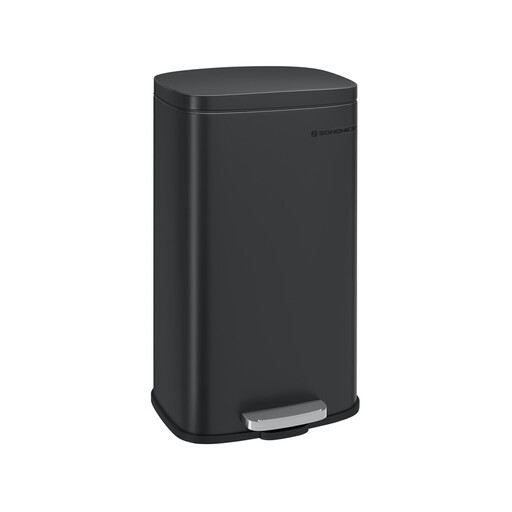
Why This Fits Their Persona: Its 30L capacity and narrow footprint suit flats, smaller kitchens, bathrooms and home offices where floor space matters.
The dimensions and open-lid height are specified, while the pedal offers battery-free hands-free use.
Steel exterior, removable PP inner bucket, soft-close odour-sealing lid and a two-year warranty.
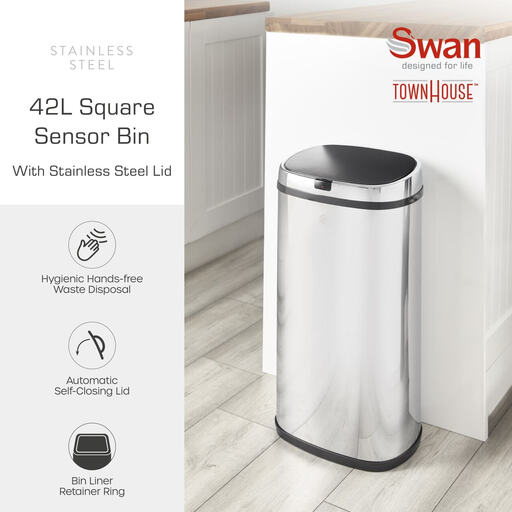
Why This Fits Their Persona: The polished stainless-steel appearance and touchless opening suit contemporary kitchens and busy households.
The 42L capacity and battery requirement are clearly stated, helping buyers plan both space and running needs.
42-litre capacity, automatic sensor opening, corrosion-resistant coating and a retaining ring for liners.
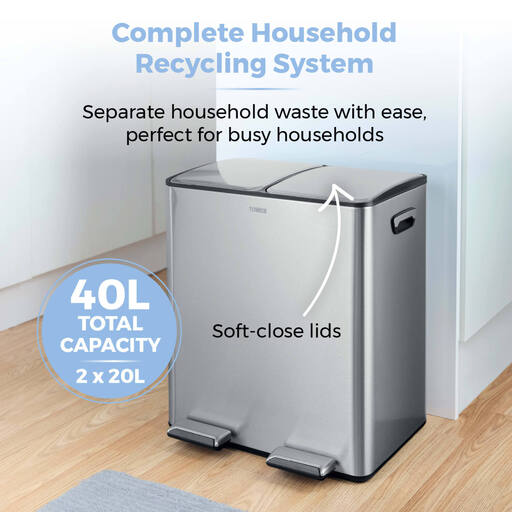
Why This Fits Their Persona: Two separate compartments make everyday household sorting more straightforward for environmentally conscious families.
The 40L total is divided into two defined 20L sections, so the usable capacity of each stream is clear.
Two removable 20L compartments, separate foot pedals and a satin-coated stainless-steel finish.
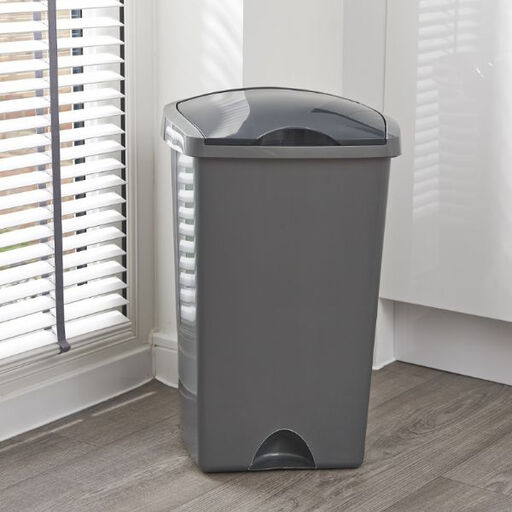
Why This Fits Their Persona: Its open-top design and wipe-clean plastic suit offices, schools, catering areas and other busy shared spaces.
The open format is suited to quick disposal, while its listed dimensions help facilities teams plan placement.
40L capacity, durable polypropylene construction, metallic grey finish and wipe-clean surface.
We have compiled a complete, real-time list of products that fully satisfy these strict selection criteria and UK safety regulations.
A 30L bin generally suits smaller households or kitchens with limited floor space. A 40L model can reduce emptying frequency for larger households, but confirm the external footprint and liner compatibility first. For recycling, remember that a 40L dual compartment bin may provide two 20L sections rather than one large container.
The main ongoing requirement is battery replacement. For example, the Swan sensor bin uses four AA batteries, which are not included. A pedal bin has no battery requirement, so it may be simpler where long-term running costs and maintenance need to be kept predictable.
Use a suitable liner, avoid overfilling, empty food waste regularly and clean the inner bucket. A tight-fitting odour-sealing bin can help contain smells between collections, but the lid seal and internal surfaces need to be kept clean. Do not place hot materials or unsuitable hazardous waste in domestic bins, and follow local council collection guidance.