
24/7 Customer Support

Free returns

Same-day & Next-day Delivery

Quality Guaranteed

Unlock Your Welcome Offers: FREE Delivery | Up to 80% OFF | Free 30-day JoyPlus trial
Download the APP
A kitchen bin has a demanding job: it needs to handle food packaging, cooking waste and daily household rubbish without becoming difficult to clean or awkward to use. Yet the most attractive design is not always the most practical choice for a UK home.
Before buying, watch for three common pitfalls:
Capacity should reflect how much waste your household produces and how often you want to empty the bin.
Do not check capacity in isolation. Measure the intended space, including clearance for the lid. For example, the Brabantia Touch Bin 60L measures 73cm high and 41.5cm wide, so it needs more vertical and floor space than many 30-litre kitchen bins. The Minky 55L Stainless Steel Kitchen Motion Sensor Bin is 66.3cm high, 26.3cm wide and 46cm long, making its narrow front profile potentially useful beside a cabinet.
A soft-touch bin opens when you press the lid lightly. This is straightforward when your hands are occupied with packaging or food preparation, and it avoids the repeated lifting associated with a basic swing-top bin. A touch bin is also less dependent on batteries.
A motion sensor kitchen bin opens when a hand passes near the sensor. This can be useful when handling raw ingredients or messy waste, as there is no need to touch the lid. However, sensor models require batteries and may need a little more care around placement. Look for a manual-open function if you regularly need the lid to remain open while peeling vegetables or cleaning up.
A stainless steel bin can complement modern kitchens and is generally simple to wipe down. A fingerprint-resistant finish may reduce visible marks, but it does not remove the need for regular cleaning. Avoid treating marketing language such as “hygienic” as a substitute for maintenance.
Check for:
For electrical sensor bins, use the specified battery type, keep the sensor area clean and follow the care instructions. Any kitchen bin should stand on a flat, stable surface and should not be overfilled.
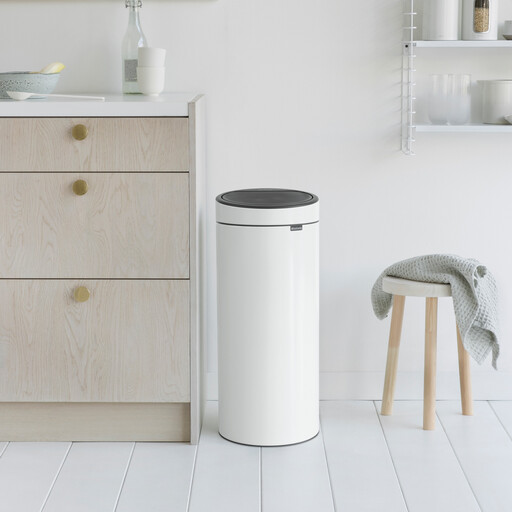
Why This Fits Their Persona: A compact 30-litre format suits smaller UK kitchens, flats and households that empty general waste regularly. Its soft-touch lid avoids battery costs associated with a sensor bin.
The removable plastic inner bucket supports more thorough cleaning, while the large opening helps reduce spills when disposing of waste.
Soft-touch opening, removable inner bucket, protective base and a stated 10-year guarantee.
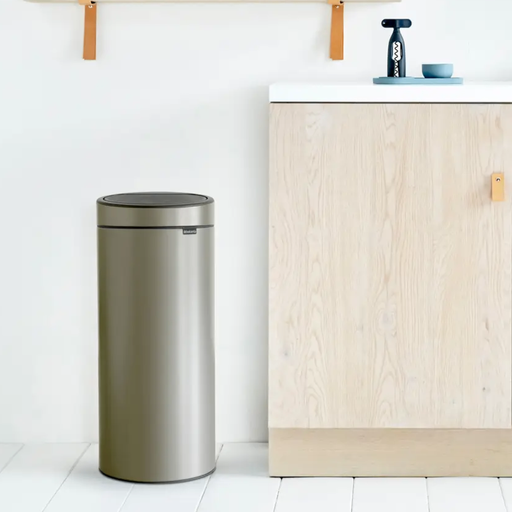
Why This Fits Their Persona: The Platinum finish provides a neutral look for coordinated kitchens, bathrooms or utility areas while retaining the practical 30-litre capacity.
Its removable inner bucket and ventilation holes address the common problem of difficult-to-clean fixed interiors.
Metal-and-plastic construction, soft-touch mechanism, back grip and sample PerfectFit code G liners.
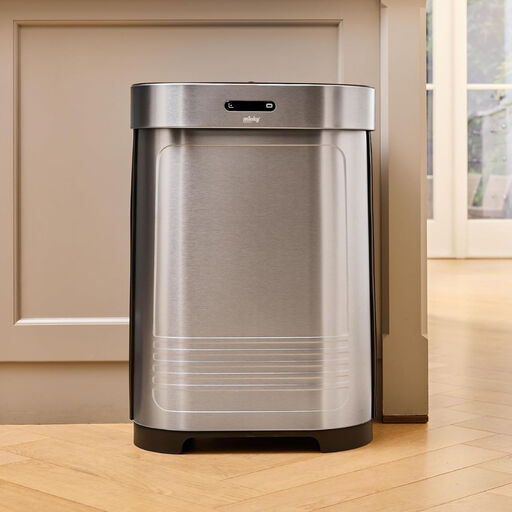
Why This Fits Their Persona: The 55-litre capacity is suited to families and busy home cooks who produce substantial waste during meal preparation.
The manual control option helps during longer tasks, so the sensor does not need to be triggered repeatedly while cooking.
Touch-free opening, soft-close function, stainless steel exterior, 55-litre capacity and 20 supplied liners.
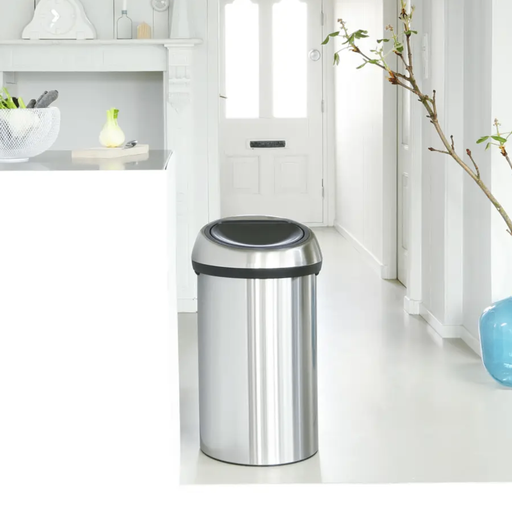
Why This Fits Their Persona: This 60-litre kitchen bin gives larger households more room for everyday rubbish and cooking waste between emptying trips.
The wide opening is designed to accommodate dustpan emptying, helping reduce the spills associated with narrow lids.
60-litre capacity, soft-touch lid, sturdy grips, protective rim and sample PerfectFit code H liners.
We have compiled a complete, real-time list of products that fully satisfy these strict selection criteria and UK safety regulations.
It depends on recycling habits and how frequently the bin is emptied. A 30-litre model can work in a family kitchen if food waste, glass, paper and packaging are separated. For larger households or frequent cooking, a 55-litre kitchen bin or 60-litre kitchen bin may reduce emptying frequency.
A sensor bin does not usually consume large amounts of power, but it requires batteries and occasional replacement. Running cost depends on battery type, usage and how often the lid is activated. A touch bin avoids battery purchases but requires light contact with the lid.
Use a correctly sized liner, avoid overfilling and wipe the exterior regularly with a damp cloth and suitable mild cleaning product. If the model has a removable inner bucket, take it out for separate cleaning and dry it fully before replacing it. Keep plastic liners and bin bags away from babies and children, and place the bin on a flat, stable surface.