
24/7 Customer Support

Free returns

Same-day & Next-day Delivery

Quality Guaranteed

Unlock Your Welcome Offers: FREE Delivery | Up to 80% OFF | Free 30-day JoyPlus trial
Download the APP
Choosing a new kitchen blender can feel overwhelming. The market is flooded with models promising to revolutionise your cooking, but many fall short, leaving you with a noisy, underpowered or difficult-to-clean gadget gathering dust. As a Joybuy Product Recommendation Officer, my role is to help you see past the marketing jargon and focus on what truly matters for your UK kitchen.
Before you spend your hard-earned money, be aware of these common purchasing pitfalls:
food processor combo that also claims to be a superior smoothie maker and ice crushing blender sounds like a space-saving dream. However, many of these multi-function units excel at nothing. You might end up with a blender that can't handle frozen fruit and a food processor that struggles to chop evenly.To make a smart choice, focus on these core features instead of just the headline power figure.
A truly powerful blender is a result of synergy between the motor and the blades. For most household tasks, including making smoothies with frozen fruit or fibrous greens, a motor between 600W and 1200W is perfectly adequate, provided it's paired with a good blade system.
Look for blenders with multi-tiered or specially angled stainless steel blades. This design creates a vortex that pulls ingredients down and through the blades continuously, ensuring a smooth, consistent texture without leaving chunks behind. This is particularly crucial for an effective ice crushing blender or for making smooth soups.
The right format depends entirely on your space and cooking habits.
hand blender is a superb space-saver. It's perfect for blending soups directly in the pot, making a single-serving smoothie maker in a beaker, or whipping up mayonnaise. Many come with chopper and whisk attachments, offering great versatility for small tasks.This is a non-negotiable factor for long-term satisfaction. Look for models that are explicitly described as an easy to clean blender. Key features include:
We've matched some models to common user needs, focusing on how they address the pitfalls and deliver on their promises.
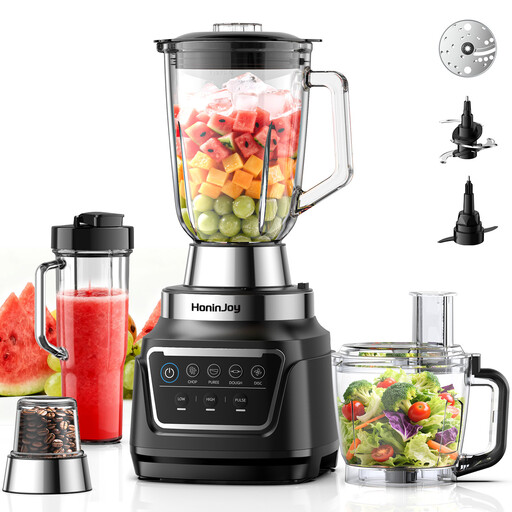
Why This Fits Their Persona: For busy households that need to chop vegetables for a stew, blend a family-sized smoothie and grind spices, this unit consolidates multiple gadgets. The 2L food processor bowl and 1.5L blender jug provide ample capacity for batch cooking.
It avoids the "all-in-one compromise" by using a powerful 1300W motor base that effectively drives both the blender and the dedicated food processor attachments, rather than trying to make one blade do everything.
Includes a comprehensive set of accessories (slicer, shredder, grinder) and features dishwasher-safe parts for straightforward cleanup.
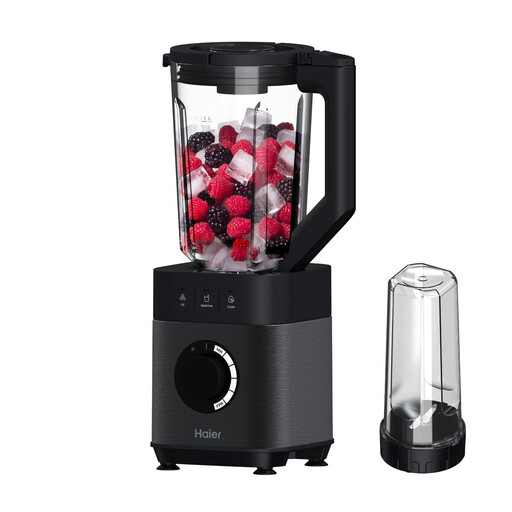
Why This Fits Their Persona: This is for the health-conscious individual who starts their day with a nutrient-packed smoothie. The powerful motor and dedicated ice-crush program handle frozen fruits, nuts and seeds with ease, while the included personal smoothie cup allows for blend-and-go convenience.
It sidesteps the "wattage myth" by combining a 1200W motor with a highly effective 6-tiered blade system, proving that performance comes from smart engineering, not just raw power.
The heavy glass jug resists odours and staining from ingredients like berries and turmeric. The auto-clean program simplifies maintenance.

Why This Fits Their Persona: Perfect for those with limited counter space in city flats or smaller kitchens. This immersion blender packs a 1000W punch and comes with attachments for chopping herbs, whisking eggs and blending in the included beaker, replacing several other tools.
It avoids the "cleaning nightmare" with its anti-splash bell design and EasyClick system. The stainless steel shaft and attachments are detachable and dishwasher-safe, making cleanup exceptionally fast.
Offers excellent control for blending soups directly in the pot. The powerful motor is surprisingly capable for a hand blender, handling tougher ingredients well.
We have compiled a complete, real-time list of products that fully satisfy these strict selection criteria and UK safety regulations.
This is a critical safety question. Blending hot liquids creates steam, which can build up pressure inside a sealed jug blender and cause the lid to fly off, leading to serious burns. If you plan to make a blender for soup, you have two safe options:
immersion blender to blend the soup directly in the cooking pot.There is no single magic number, but here is a general guide for different needs:
hand blender for simple tasks like sauces, purees and light smoothies.smoothie maker that can handle soft fruits, liquids, and some leafy greens.powerful blender that will regularly tackle tough jobs like crushing ice, grinding nuts, or blending very fibrous vegetables into a smooth liquid.For occasional use, an affordable model can suffice. However, investing more often gets you tangible benefits:
If you are a frequent user or want to make things like nut butters and fine-textured soups, the investment in a more capable machine is often justified.