
24/7 Customer Support

Free returns

Same-day & Next-day Delivery

Quality Guaranteed

Unlock Your Welcome Offers: FREE Delivery | Up to 80% OFF | Free 30-day JoyPlus trial
Download the APP
A kitchen cleaver knife can become the most versatile tool in a household kitchen, but choosing one based only on a product title or a photograph can lead to disappointing results. A thin slicing cleaver is not designed for splitting bones, while a heavy bone cleaver may feel awkward when finely chopping herbs or preparing delicate fish.
Before buying, look beyond phrases such as “professional-grade”, “razor sharp” or “all-purpose”. These descriptions do not always explain the blade thickness, intended ingredients, handle construction or care requirements. The right choice depends on how you cook, how much control you need and whether you want one multipurpose knife or separate tools for light and heavy preparation.
Cleavers vary considerably. A Chinese cleaver or Japanese cleaver with a relatively thin blade may be intended for vegetables, boneless meat, fish or stir-fry preparation. Using it on bones or frozen food can damage the edge or cause the blade to chip.
If bone cutting is a regular task, look for a product specifically described as a bone cleaver or heavy-duty chopping knife. Even then, use a suitable chopping board and controlled downward movements rather than twisting the blade.
A stainless steel cleaver generally offers useful resistance to rust and corrosion, but it still requires care. Food residue, moisture and acidic ingredients can affect the blade and handle over time. Hand washing, immediate drying and safe storage are sensible habits, particularly for knives with wooden handles.
The School of Wok cleavers, for example, specify hand washing and thorough drying. This is practical guidance rather than an indication that the blade is immune to staining or corrosion.
A substantial blade can provide useful momentum for firm ingredients, but weight is not a substitute for suitability. A heavy cleaver may increase fatigue during long preparation sessions, especially when slicing vegetables or fish. Conversely, a very small cleaver may lack the blade length and stability needed for larger ingredients.
Pay attention to the knife’s dimensions, balance and handle shape, not just the steel description.
A meat and vegetable chopping knife should match the foods you prepare most often.
A slicing cleaver is usually more appropriate for clean cuts through meat and fish, while a dedicated bone cleaver is designed for heavier preparation. Do not rely on a product being labelled “multipurpose” without checking the detailed specifications and warnings.
Blade sizes in the available range include compact 5.5-inch models, 7-inch cleavers and larger 190 mm or 280 mm designs. A small cleaver can be easier to manoeuvre in a compact UK kitchen and is useful for trimming, peeling and detailed preparation. Longer blades provide greater coverage when cutting larger vegetables or portions of meat.
One example is the 170 g Wangmazi Chinese cleaver, which may appeal to users who prefer a lighter household kitchen knife. A heavier design can feel more stable for forceful chopping, but it should remain comfortable to lift and control.
A secure, comfortable handle is important for both accuracy and safety. Look for wording that clearly identifies an ergonomic or non-slip grip, and check whether the product uses a full tang construction where stated. Wooden handles can offer a traditional feel, but they generally need careful drying and should not be left submerged in water.
For sharpening, confirm whether the blade is compatible with a steel, pull-through sharpener or another sharpening method. A kitchen knife sharpener helps maintain cutting performance, but it cannot correct major chips or structural damage.
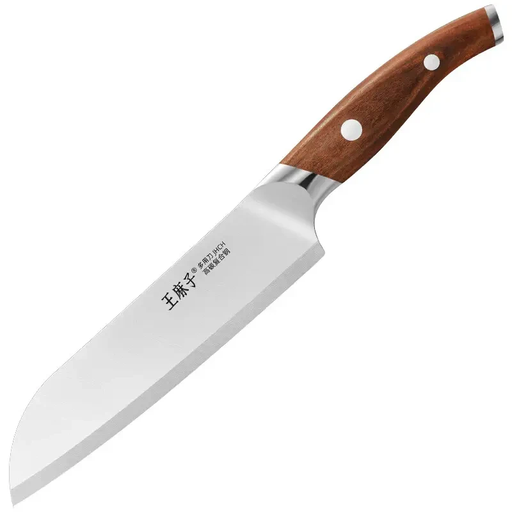
Why This Fits Their Persona: At 170 g, this compact option suits first-time cleaver buyers, smaller kitchens and cooks preparing vegetables, herbs, boneless meat or sushi-style ingredients.
Its stated lightweight design helps avoid buying an unnecessarily heavy knife for everyday prep. It should not be treated as a bone-cutting tool.
50Cr15Mov high-carbon steel, 170 g weight and full tang construction as listed in the product description.
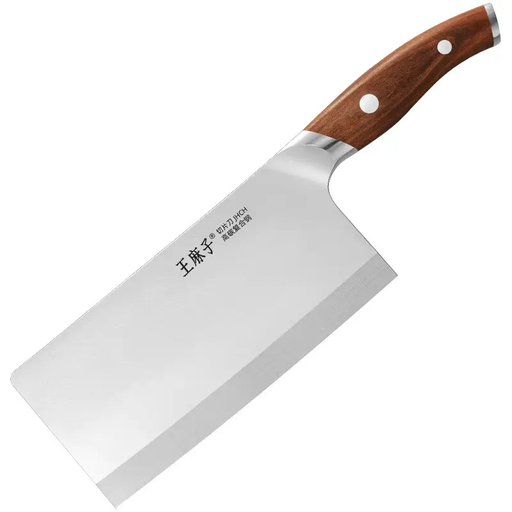
Why This Fits Their Persona: This option suits cooks who value a traditional handle feel and a substantial household knife for regular chopping, slicing and boneless meat preparation.
The product information identifies the steel type, full tang construction and handle material, giving buyers more useful detail than a generic “premium” label.
9Cr18Mov steel, full tang construction and rosewood handle are specified features.
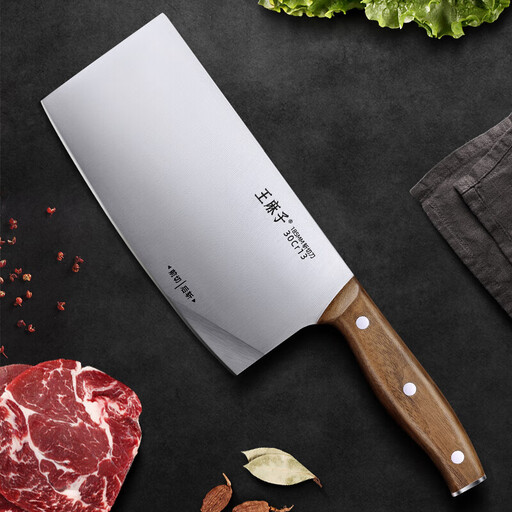
Why This Fits Their Persona: This is aimed at cooks who specifically need a heavier knife for demanding chopping rather than a lightweight vegetable cleaver.
It is clearly positioned as a bone cleaver, helping prevent the common mistake of using a thin slicing blade for heavy-duty work.
Stainless steel construction, walnut handle and stated 9.1 × 30.8 cm dimensions.
Wash a cleaver by hand with warm water and mild detergent, then dry it immediately. Avoid putting wooden-handled knives in a dishwasher unless the manufacturer specifically permits it. Store the blade in a block, sheath or other secure location away from children.
Use a kitchen knife sharpener that matches the blade and follow its instructions. Pull-through sharpeners are convenient for routine edge maintenance, while badly damaged blades may require a different service. Never test sharpness with a finger; use controlled food preparation techniques and a stable chopping board.
We have compiled a complete, real-time list of products that fully satisfy these strict selection criteria and UK safety regulations.
For many tasks, yes. A Chinese cleaver can chop vegetables, slice boneless meat and mince herbs, but its suitability depends on blade thickness and weight. It should not automatically be used for bones or frozen foods.
There is no fixed schedule. Sharpen when the knife begins to drag, crush ingredients or require noticeably more pressure. Regular honing or light sharpening can help maintain the edge, while aggressive sharpening removes more metal and should be used only when needed.
A small cleaver works well for compact worktops, detailed trimming and modest portions. If you regularly prepare large vegetables, whole cuts of meat or tougher ingredients, a longer medium-weight cleaver may provide more coverage and stability.