
24/7 Customer Support

Free returns

Same-day & Next-day Delivery

Quality Guaranteed

Unlock Your Welcome Offers: FREE Delivery | Up to 80% OFF | Free 30-day JoyPlus trial
Download the APP
A kitchen cleaver can make chopping, slicing and dicing more efficient, but choosing the wrong style may leave you with a knife that is too heavy, too delicate or uncomfortable to use. Product pages often focus on words such as “professional”, “razor-sharp” and “for all tasks” without explaining what the blade is actually designed to handle.
Before buying, watch for three common traps:
Assuming every cleaver is designed for bones
Many Chinese cleavers and vegetable cleavers have broad, relatively thin blades intended for vegetables, herbs, fish and boneless meat. Using one on bones or frozen food can damage the edge.
Treating stainless steel as a complete specification
Stainless steel describes resistance to staining and corrosion, but not necessarily hardness, flexibility or edge retention. Look for the stated steel type, construction and care instructions rather than relying on the material label alone.
Choosing weight without considering control
A heavy meat cleaver may suit poultry joints or demanding chopping, but it can be tiring for everyday vegetable preparation. Blade length, handle shape and balance are just as important as overall weight.
A meat cleaver generally has a thicker, heavier blade for forceful chopping. However, not every model is suitable for bones. Check the product warnings and intended use carefully.
A vegetable cleaver, Chinese chef’s knife or slicing cleaver usually has a thinner profile and flatter edge. These designs are more suitable for:
For a cleaver knife for meat and vegetables, prioritise a model that clearly describes both uses and explains any restrictions around frozen food or bones.
A stainless steel cleaver is convenient for regular household use because it can offer useful corrosion resistance, but it still needs prompt drying. Some listed models use named steels, such as 9Cr18Mov, while others simply specify stainless steel.
A forged kitchen cleaver is formed through a forging process rather than being cut solely from flat stock. Product descriptions may also mention full tang construction, where the metal extends through the handle. This can provide a stable feel, although handle fit and balance remain personal considerations.
Do not assume that a harder blade is automatically more practical. Harder steel may hold an edge for longer but can require more care and may be less forgiving of twisting or unsuitable chopping surfaces.
A 190 mm blade is a practical size for many home cooks, while a longer or heavier cleaver may provide more chopping leverage. Smaller 5.5-inch designs can be easier to control for peeling, trimming and detailed preparation.
Before ordering, check:
Most cleavers should be used on a suitable wooden or plastic chopping board, not glass, stone or ceramic. Keep the blade away from children and store it securely. Some listed products are restricted to buyers aged 18 or over.
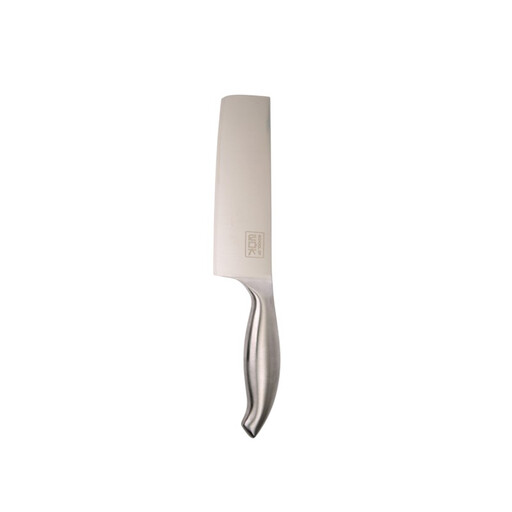
Why This Fits Their Persona: The medium 7-inch flat blade is a straightforward choice for everyday stir-fries, vegetables, fish and boneless meat in a UK household kitchen.
Its stated use and warnings make clear that it is not intended for bones or frozen food, helping new buyers avoid unsuitable forceful chopping.
Stainless steel construction, ergonomic handle and a straight 7-inch edge suitable for slicing, dicing and chopping.
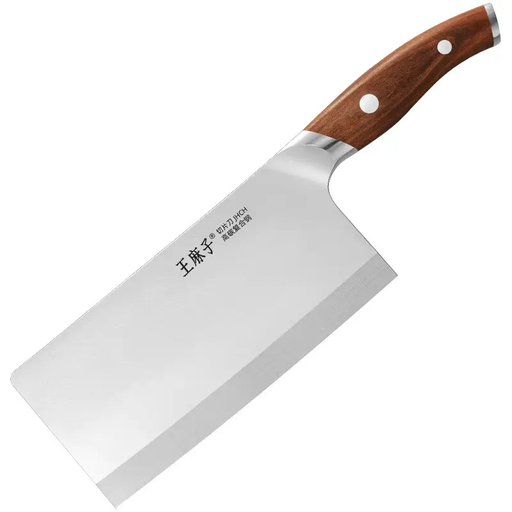
Why This Fits Their Persona: This household cleaver suits buyers who want named 9Cr18Mov steel and a natural rosewood handle for regular meat, vegetable and slicing preparation.
The steel specification gives more useful information than a generic “sharp stainless steel” description, while the handle material is clearly stated.
Named 9Cr18Mov blade steel, rosewood handle and an all-purpose format for cutting meat, vegetables and herbs.
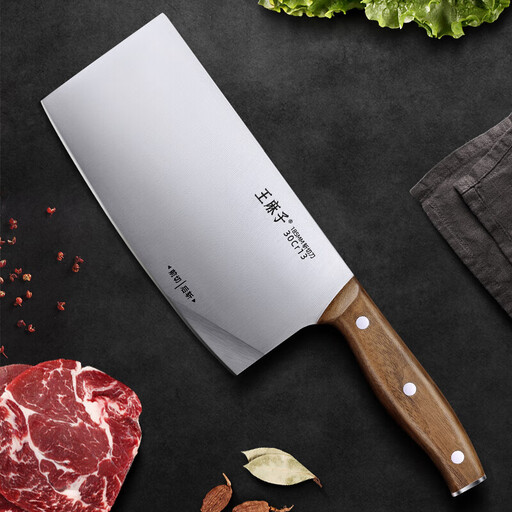
Why This Fits Their Persona: The larger dimensions and bone-cleaver format are aimed at users preparing poultry, cartilage or tougher cuts and who are comfortable handling a weightier blade.
It is specified as a bone cleaver rather than a thin vegetable model, with a stainless steel blade and full tang construction listed in the description.
9.1×30.8 cm format, walnut handle and a construction described for demanding chopping tasks.
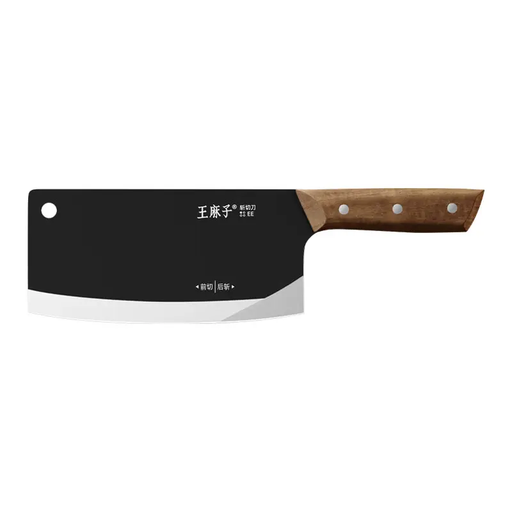
Why This Fits Their Persona: A two-knife arrangement can suit cooks who regularly switch between heavier chopping and finer slicing tasks.
Separating chopping and slicing functions reduces the temptation to force one thin blade through hard ingredients or use a heavy blade for delicate cuts.
Includes dedicated chopping and slicing knives, with wooden handles and high-carbon steel specified in the listing.
Hand-wash a cleaver with warm water and mild detergent unless the product instructions state otherwise. Dry the blade immediately to reduce staining and corrosion, particularly after cutting acidic foods. Use a suitable chopping board and avoid twisting the blade in food.
Sharpening should follow the manufacturer’s guidance. A honing steel may realign an edge, while a suitable sharpener removes material to restore sharpness. Do not use a cleaver as a scraper, pry tool or hammer. Keep it in a secure drawer, block or protective sheath where available.
We have compiled a complete, real-time list of products that fully satisfy these strict selection criteria and UK safety regulations.
Not always. Many Chinese chef’s knives are designed for vegetables, herbs, fish and boneless meat. Check the product description and warnings. A designated bone or meat cleaver is more appropriate for suitable poultry joints or cartilage, but the manufacturer’s instructions should always take priority.
Lifespan depends on steel, construction, frequency of use, sharpening and storage. Regular hand-washing, immediate drying and use on an appropriate board can help preserve the blade. An edge will naturally need maintenance over time, even when the knife remains structurally sound.
Choose according to your preparation habits. A heavier model may suit demanding chopping, while a lighter 190 mm or 7-inch cleaver can offer easier control for everyday vegetables, herbs and boneless meat. If you are unsure, prioritise a comfortable handle and a size you can control safely.