
24/7 Customer Support

Free returns

Same-day & Next-day Delivery

Quality Guaranteed

Unlock Your Welcome Offers: FREE Delivery | Up to 80% OFF | Free 30-day JoyPlus trial
Download the APP
A kitchen cleaver knife can simplify chopping, slicing, dicing and mincing, but only when its size, blade construction and intended use match your cooking habits. A large, heavy blade may suit breaking down poultry, while a lighter Chinese chef’s knife can be more practical for vegetables, herbs and boneless meat.
Marketing descriptions often use terms such as “razor sharp”, “professional-grade” and “heavy duty”. These phrases do not always tell you whether the knife will be comfortable, safe or suitable for your chopping board. Use the checks below before buying.
A meat cleaver and a vegetable cleaver are not interchangeable. Some blades are intended for vegetables, fish and boneless meat, while a thick bone cutting knife is built for more demanding work. Using a thin-edged chopping and slicing knife on poultry bones, frozen food or hard joints can damage the edge or cause the blade to chip.
Always read the product warnings. For example, the School of Wok 7" Slice and Dice Cleaver is specifically described as unsuitable for hard surfaces such as bones or frozen foods.
A longer blade is not automatically more useful. A 190 mm cleaver offers a practical balance for many household tasks, but a 313 mm model needs more storage space and may feel cumbersome on a smaller UK kitchen worktop. Weight, blade thickness and handle shape influence control just as much as length.
“Stainless steel” generally means improved resistance to staining and corrosion, not that the knife can be left wet or placed carelessly in a dishwasher. Some listings recommend hand washing and immediate drying. A damp blade, loose drawer storage or an unsuitable chopping surface can shorten the useful life of any cleaver.
For safer storage, use a knife block, blade guard or secure drawer insert. Keep the knife away from children and avoid carrying it in public without a lawful reason.
A stainless steel cleaver is convenient for regular home cooking because it is relatively straightforward to clean and maintain. Forged construction, such as that listed for several Wangmazi models and the COOKER KING cleaver, refers to how the blade is formed. It may contribute to a substantial feel, but it does not replace checking the actual blade dimensions, handle fit and care instructions.
High-carbon steel, used in the Wangmazi Chinese Chef’s Knife Set, can offer a different sharpening and maintenance experience. It may require more careful drying than corrosion-resistant stainless steel. Look for clear material information rather than relying only on phrases such as “professional quality”.
A broad, flat blade can also be useful for transferring chopped ingredients from the board to a pan. However, a wide profile may feel less nimble for small, delicate tasks.
A secure handle should feel stable without forcing you to grip tightly. Look for details such as an ergonomic profile, non-slip texture or full-tang construction where stated. Balance is personal: a heavier forward-weighted cleaver can help with chopping, while a lighter knife may be easier for extended slicing.
Use a suitable wooden or composite chopping board rather than glass, stone or ceramic. Sharpen according to the manufacturer’s guidance, and dry the blade immediately after washing.
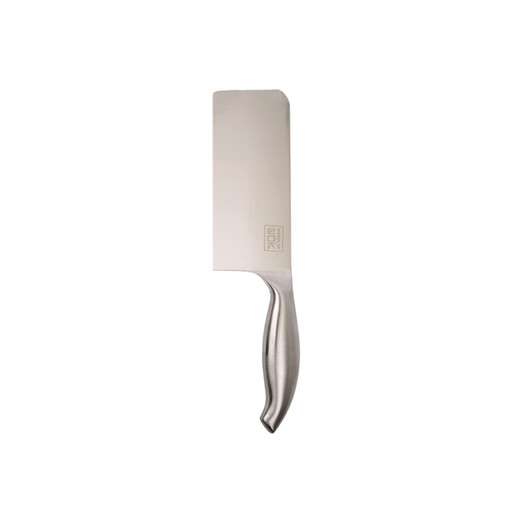
Why This Fits Their Persona: Its 7-inch straight-edged blade suits everyday stir-fry preparation, vegetables, fish and meats for cooks building a practical knife collection.
The product information clearly warns against bones and frozen foods, helping new buyers avoid using a general-purpose cleaver beyond its stated role.
Stainless steel construction; ergonomic handle; suitable for chopping, slicing and dicing.
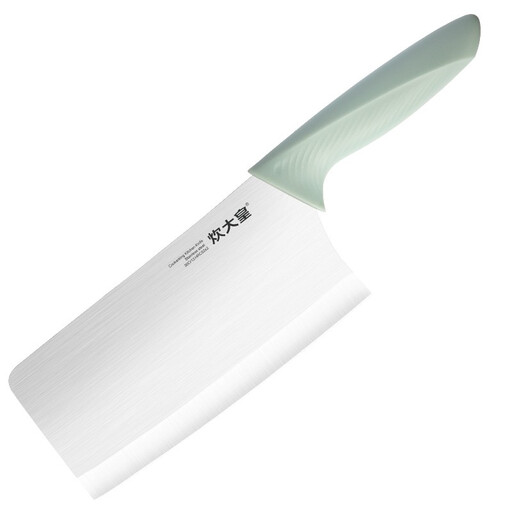
Why This Fits Their Persona: This is suited to cooks who prefer a substantial, forged stainless-steel cleaver for frequent preparation of dense vegetables, meat and herbs.
Its heavy-duty positioning is paired with stated handle and balance features; buyers can assess whether that heft suits their grip before ordering.
Forged stainless steel; described as corrosion-resistant; shaped handle intended to support a secure grip.
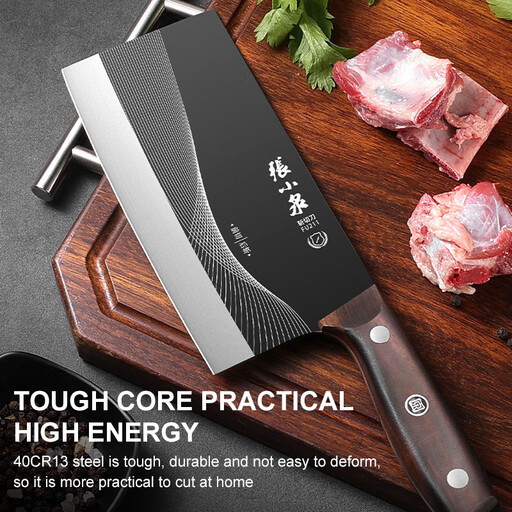
Why This Fits Their Persona: The long 313 mm format is aimed at shoppers seeking a dedicated, larger bone-cutting knife rather than a compact everyday vegetable cleaver.
The listing identifies it as a thickened bone-cutting knife, so its purpose is clearer than a generic cleaver marketed for every task.
Thickened stainless-steel design; 313 mm stated length for larger preparation tasks.
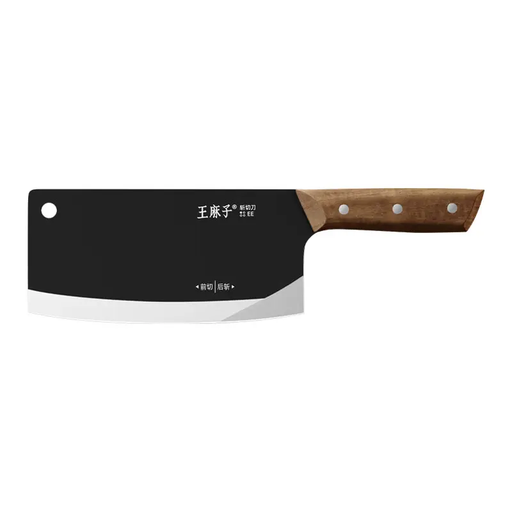
Why This Fits Their Persona: Two knives allow home cooks to use a heavier blade for robust chopping and a lighter one for slicing, dicing and fine preparation.
The dual-purpose format avoids forcing one blade to handle both heavy chopping and delicate slicing, reducing the need to compromise.
Set includes a heavier chopping knife and lighter slicing knife; high-carbon steel construction is stated.
We have compiled a complete, real-time list of products that fully satisfy these strict selection criteria and UK safety regulations.
Yes, a Chinese cleaver can be practical for vegetables, herbs, boneless meat and stir-fry preparation. Choose a moderate size, such as 190 mm, if you have limited worktop or storage space. Do not assume a Chinese chef’s knife is suitable for cutting bones unless the product specifically allows it.
There is no fixed lifespan. Frequency of use, chopping-board material, washing habits and sharpening technique all matter. A stainless steel cleaver may remain useful for many years when hand washed, dried immediately, stored safely and sharpened with an appropriate tool. Replace it if the blade develops cracks, chips that cannot be safely removed or a loose handle.
Check the individual care instructions, but hand washing is generally the safer choice for preserving the edge and handle. Wash with warm water and mild detergent, rinse thoroughly and dry straight away. Never leave a sharp knife submerged in a sink, where it can be difficult to see and handle safely.