
24/7 Customer Support

Free returns

Same-day & Next-day Delivery

Quality Guaranteed

Unlock Your Welcome Offers: FREE Delivery | Up to 80% OFF | Free 30-day JoyPlus trial
Download the APP
By the Joybuy Product Recommendation Officer
A kitchen cleaver knife can simplify food preparation, but choosing the wrong style may leave you with a blade that feels awkward, loses its edge quickly or is unsuitable for the jobs you planned. UK shoppers often compare price and sharpness first, while overlooking balance, steel type and the difference between a slicing cleaver and a heavy-duty chopping knife.
Before choosing a Chinese cleaver knife or chef’s cleaver, watch for these common buying traps.
A wide blade does not automatically mean a knife is suitable for cutting through bones. Many Chinese chef’s knives are designed for vegetables, boneless meat, herbs and slicing. Using a thin vegetable chopping knife on hard bones can damage the edge or cause the blade to chip.
For bone-cutting tasks, look for a product specifically described as a thickened bone-cutting knife or heavy-duty cleaver. Even then, check the manufacturer’s instructions and avoid twisting the blade.
Marketing descriptions frequently highlight a razor-sharp edge, but sharpness alone does not indicate how long the edge may remain usable. Blade geometry, steel composition, heat treatment and maintenance all affect performance.
A stainless steel kitchen knife may offer useful resistance to rust, while a high-carbon steel knife can require more careful drying. Neither material is automatically suitable for every cook. Consider how often you prepare food, whether you are willing to hone the blade and how quickly you can wash and dry it after use.
A heavier knife can provide momentum for chopping, but it may feel tiring during a long preparation session. A lighter 170 g multipurpose kitchen knife may be easier to control for herbs, vegetables and boneless meat.
Also check whether the handle is described as full tang, non-slip or ergonomic. These details can support control, but they do not replace a secure grip and a stable chopping board. Store the knife in a block, sheath or suitable magnetic holder rather than loose in a drawer.
Common options include stainless steel, high-carbon stainless steel and forged kitchen knife designs. Stainless steel is generally convenient for household use because it is more resistant to staining and corrosion than untreated carbon steel. However, it still needs prompt drying, particularly in a damp kitchen.
Some listings specify steel grades such as 50Cr15MoV, 9Cr18MoV or 7Cr17MoV. These labels can help you compare products, but steel grade alone does not guarantee edge retention. Look for clear information about construction, intended use and care.
A hand-forged or forged blade may have a substantial feel, although manufacturing descriptions should be considered alongside the actual dimensions and handle design.
A 170–190 mm blade is a practical range for many household kitchens, offering room for chopping without feeling excessively large. Longer 280–313 mm models may provide greater cutting coverage but can require more storage space and a larger work surface.
For daily vegetable preparation and slicing boneless meat, prioritise a manageable weight and comfortable balance. For tougher ingredients, a thicker spine and heavier build may be more relevant than a fine slicing edge.
A double-bevel edge is familiar to many Western cooks and can be easier to use consistently. A broad blade can also help transfer chopped ingredients from the board to a pan.
A full-tang construction extends the blade material through the handle and may provide a stable feel, although the rivets, grip shape and finish remain important. Wooden handles can feel warm and comfortable but usually need careful hand washing. Waterproof composite handles may be more convenient for frequent kitchen use.
Always check whether the listing states dishwasher safe. If it does not, hand wash with mild soap, dry immediately and avoid leaving the knife submerged in water.
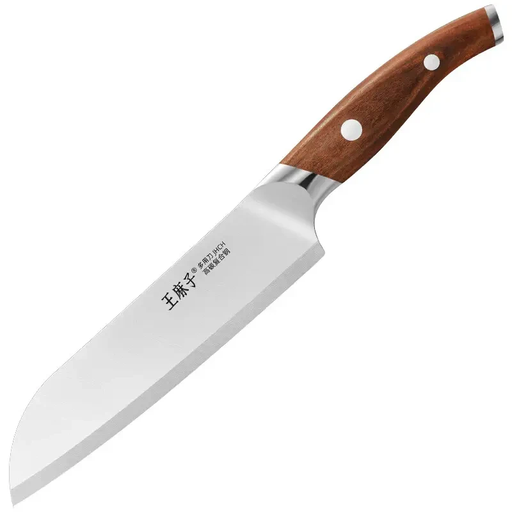
Why This Fits Their Persona: At 170 g, this compact option suits UK home cooks wanting one manageable knife for vegetables, herbs, boneless meat and fine slicing.
Its listed weight makes the balance easier to assess, while the 50Cr15MoV steel specification is clearer than an unspecified “sharp” blade.
170 g listed weight; full-tang construction; suitable for sushi, vegetables, herbs and mincing meat.
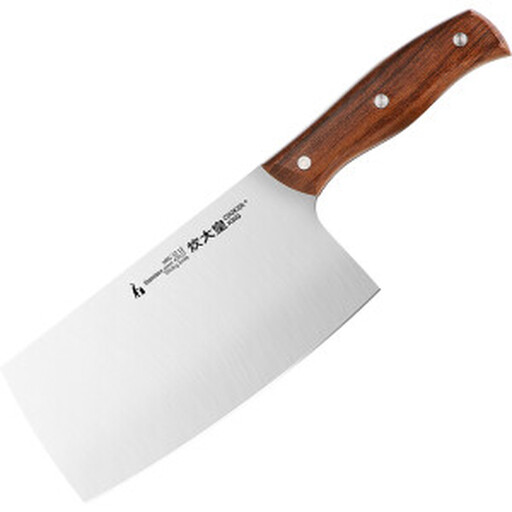
Why This Fits Their Persona: Cooks seeking a detailed specification may appreciate the stated 7Cr17MoV steel, 58±2 HRC hardness and 15° double-bevel edge.
The listing provides measurable blade information rather than relying only on broad sharpness wording. Confirm care instructions before purchase.
Full-tang triple-rivet construction; waterproof pakkawood handle; broad blade can assist with scooping prepared ingredients.
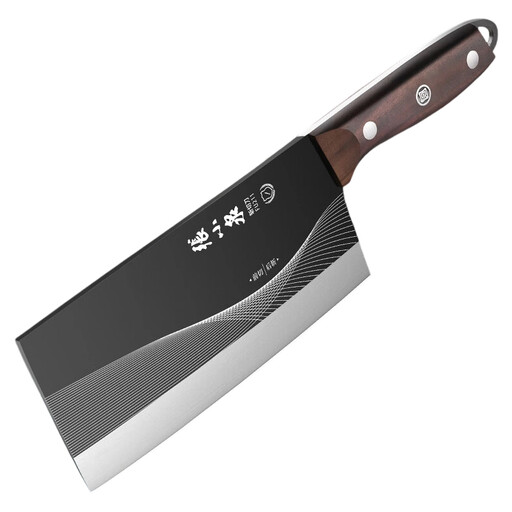
Why This Fits Their Persona: This 313 mm model is aimed at shoppers specifically seeking a larger, thickened blade for demanding household preparation.
Its product name clearly identifies a thickened bone-cutting format, helping distinguish it from a lighter slicing knife.
Stainless steel construction; 313 mm listed length; intended for a more substantial chopping format.
We have compiled a complete, real-time list of products that fully satisfy these strict selection criteria and UK safety regulations.
A kitchen knife set may suit a new household, but a single Chinese chef’s knife can be more practical if you already own a paring knife and bread knife. Match the blade to your preparation habits rather than paying for pieces that will remain unused.
Yes, many Chinese cleavers are designed for vegetables, herbs, boneless meat and slicing. They are not all intended for bones, frozen food or hard joints, so check the stated use before buying.
There is no fixed lifespan. Frequency of use, cutting-board material, food types and sharpening habits all affect edge performance. Hand washing, immediate drying and regular honing can help maintain the cutting edge.
A forged construction may offer a solid feel and balanced handling, but it should not be the only buying criterion. Compare steel information, dimensions, handle comfort, intended use and care requirements before deciding whether the price suits your kitchen.