
24/7 全天候客户支持

免费退货

当日/次日达

品质保障

开启新人专享福利: 全场免邮 | 低至 2 折 | 免费试用 30 天 JoyPlus 会员
下载 Joybuy
A clean kitchen starts with the right tools and few are as fundamental as the humble kitchen cloth. Yet, with so many options available, choosing the right one can feel surprisingly complicated. An ineffective cloth can leave behind streaks, fail to absorb spills or fall apart after just a few uses. This guide is designed to help you navigate the choices and find the perfect kitchen cloths for your daily needs, from washing up to wiping down surfaces.
We will explore what makes a good cloth, look at different materials and highlight a few standout options to help you keep your kitchen sparkling.
Before you add a pack of cloths to your basket, consider these key factors. A few moments of thought can save you from frustration and ensure you get the best performance and value.
The material of a cloth dictates its absorbency, cleaning power and durability.
Nobody wants a cloth that disintegrates after one tough cleaning session. Look for long lasting cleaning cloths that are designed for repeated use. Check if the cloths are machine washable and at what temperature. A well-made, reusable dish cloth should withstand regular washing without losing its shape or effectiveness, offering better long-term value and reducing waste.
Different tasks require different tools. For delicate surfaces like ceramic hobs or non-stick pans, a non-scratch kitchen cloth is essential to prevent damage. Many modern cloths offer dual-sided designs, with a softer side for polishing and a textured or scrubbing side for tackling stubborn, burnt-on food without being abrasive. Having a set of multipurpose surface cloths that can handle various jobs is always a practical approach.
Based on their features, materials and suitability for common household tasks, here are our recommendations to help you make an informed choice.
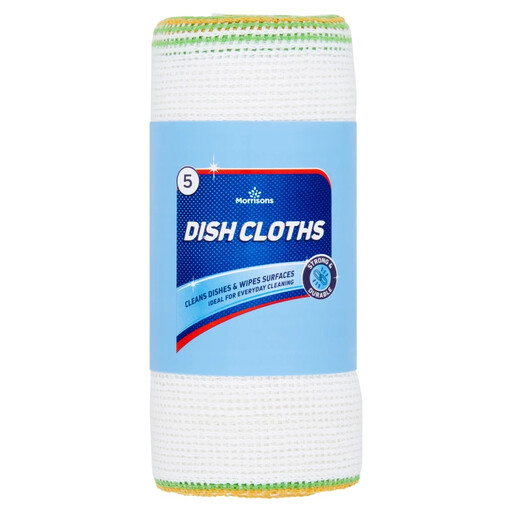
Morrisons Dish Cloths, 5 per Pack
Why It Stands Out: These cloths are a straightforward, no-fuss solution for daily kitchen chores. Their closed weave construction provides the durability needed for everything from washing up to wiping down counters. As a pack of five, they offer excellent value, ensuring you always have a fresh cloth on hand.
Pros:
Who is it for? This pack is ideal for busy households and budget-conscious shoppers who need a reliable supply of washing up cloths for everyday cleaning tasks. If you're looking for a dependable, multipurpose workhorse, this is a solid choice.
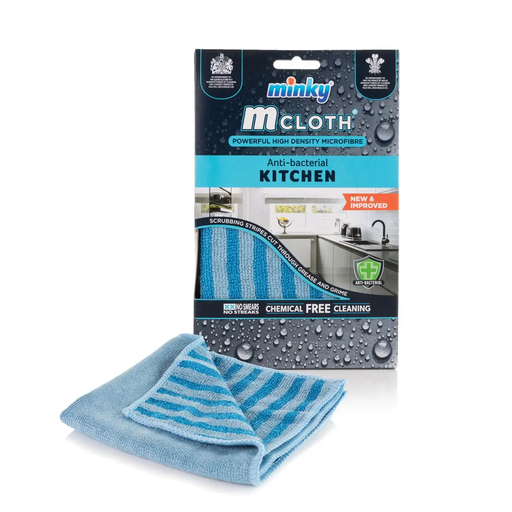
Minky MCloth Kitchen Microfibre Cleaning Cloth, 1 per Pack
Why It Stands Out: The Minky MCloth is a high-performance tool designed for versatility. Its key feature is the dual-sided design: one side has non-scratch scrubbing stripes to remove burnt-on food and tough grease, while the other soft side is perfect for polishing shiny surfaces to a streak-free finish. Its high-density fibre construction enhances its cleaning power.
Pros:
Who is it for? This cloth is for the home cook who frequently deals with tough messes but also wants to keep appliances and shiny surfaces looking pristine. If you need a single, powerful cloth that can handle both heavy-duty cleaning and delicate polishing, this is an excellent option.
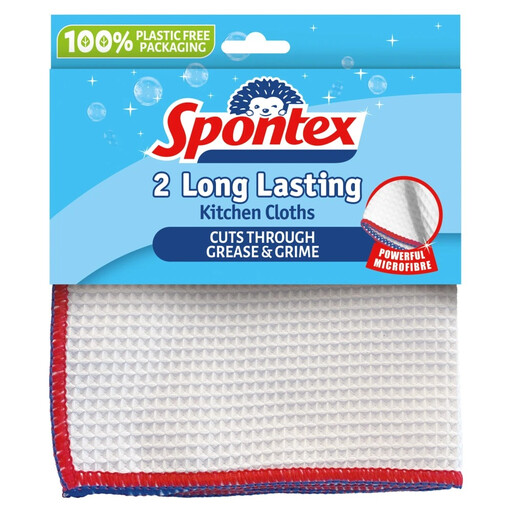
Spontex Long Lasting Kitchen Cleaning Cloths, 2 per Pack
Why It Stands Out: Spontex focuses on durability and sustainability with these cloths. The special microfibre weave is designed to be super resistant and long-lasting, maintaining its effectiveness through many washes. They are highly absorbent and cut through grease efficiently, even with just water. A notable feature is the 100% recyclable, plastic-free packaging.
Pros:
Who is it for? This is a great choice for the eco-aware consumer who prioritises sustainability without compromising on performance. If you are looking for long lasting cleaning cloths that help reduce both chemical and plastic waste, the Spontex cloths are a fitting option.
While these three cloths cover a range of common needs, the world of kitchen cleaning tools is vast. If you're looking for different materials, sizes or specialised cloths, there are many more to discover.
Explore our full range of Reusable Kitchen Towels to find the perfect match for your cleaning routine.
1. How often should you change your kitchen cloth? For hygiene, it is recommended to switch to a fresh kitchen cloth daily, especially if it's used for wiping up food spills or washing dishes. Used cloths should be washed at a high temperature (60°C or higher, if the material allows) to kill bacteria. Always allow cloths to dry completely between uses, as damp environments encourage bacterial growth.
2. What is the difference between a dish cloth and a microfibre cloth? A traditional dish cloth is typically made of cotton or a similar woven fabric and is primarily used for washing dishes with soap and water. A microfibre cleaning cloth is made from synthetic fibres (polyester and polyamide) that are much finer than cotton. This structure allows them to pick up and trap dirt, grease and moisture more effectively, often without the need for cleaning chemicals. Microfibre is generally better for polishing and achieving a streak-free finish.
3. Can you wash kitchen cloths with towels? It is generally better to wash kitchen cloths separately from bath towels. Kitchen cloths can contain food residue and high levels of bacteria, which you wouldn't want to transfer to items used for personal hygiene. Furthermore, washing microfibre cloths with cotton items like towels can cause lint to clog the microfibres, reducing their cleaning effectiveness. Washing them in a separate, hot cycle is the most hygienic practice.