
24/7 Customer Support

Free returns

Same-day & Next-day Delivery

Quality Guaranteed

Unlock Your Welcome Offers: FREE Delivery | Up to 80% OFF | Free 30-day JoyPlus trial
Download the APP
From pasta slipping through the sink to quinoa washing away, choosing the wrong draining tool can turn a simple kitchen task into a frustrating mess. A good kitchen colander is a cornerstone of any functional kitchen, yet with so many shapes, sizes and materials available, finding the right one can feel overwhelming. This guide is designed to cut through the clutter, helping you understand what to look for so you can select a tool that perfectly suits your cooking style and kitchen space.
As the Joybuy Product Recommendation Officer, my role is to provide clear, practical advice to make your shopping decisions easier. Let's explore the key features to consider and look at some standout options for your home.
Before you add a new food strainer to your basket, consider these three factors. They will help you narrow down the options and find a tool that you will reach for time and time again.
The material of your colander affects its longevity, hygiene and how you can use it. While plastic is lightweight, stainless steel strainers offer significant advantages. They are generally more durable, resistant to rust and warping and will not absorb odours or stains from foods like tomatoes or berries. Furthermore, a high-quality metal kitchen sieve can handle the heat of boiling water directly from a pot, making it an ideal pasta colander.
Colanders are not a one-size-fits-all tool. The design you choose should match your most common kitchen tasks and storage space.
The size of the perforations is critical. Large holes are fine for draining pasta and large vegetables, but smaller grains like quinoa or rice will wash straight through. For these tasks, a fine mesh sieve is essential. A good vegetable washer basket will have holes small enough to contain produce securely while allowing water and grit to drain away quickly and efficiently.
Based on functionality, material quality and user-centric design, here are some excellent options to consider for your kitchen.
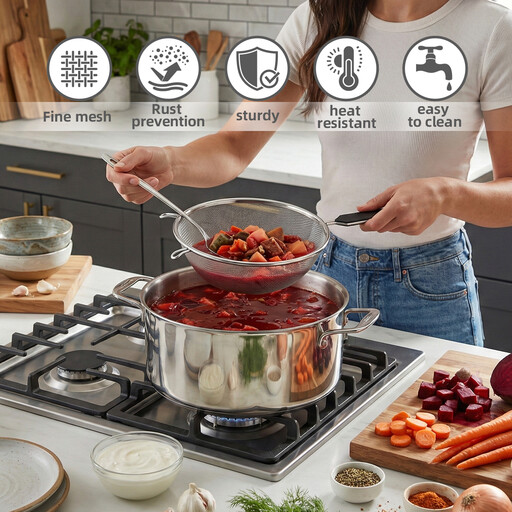
Why It Stands Out: This three-piece set is the definition of kitchen preparedness. It eliminates the guesswork by providing a tool for nearly every draining, rinsing or sifting task you might encounter.
Pros:
Who is it for? This set is ideal for anyone setting up a new kitchen, families who cook in varying quantities or home cooks who want a complete and coordinated solution.
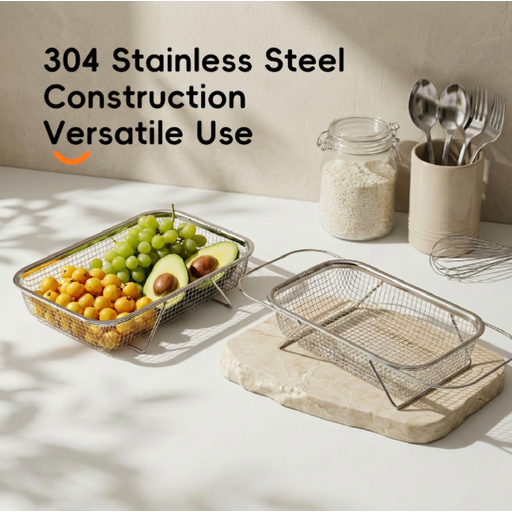
Why It Stands Out: This clever over the sink drainer maximises counter space and streamlines the food prep process. Its adjustable design makes it compatible with a wide range of sink sizes.
Pros:
Who is it for? Perfect for those living in flats, homes with smaller kitchens or anyone who values efficiency and a clutter-free workspace.
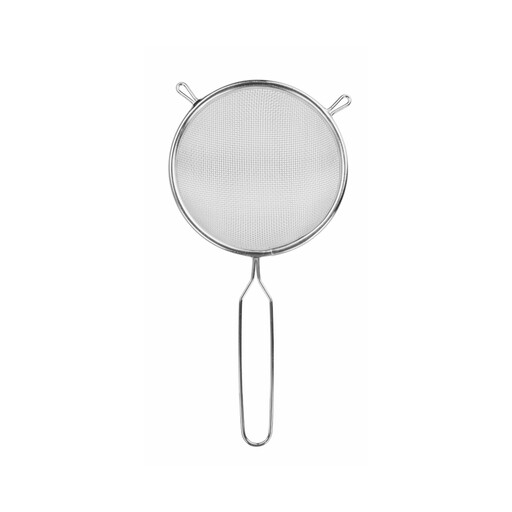
Why It Stands Out: Sometimes the simplest tools are the most useful. This long handled sieve is a no-fuss essential for precise, everyday kitchen jobs.
Pros:
Who is it for? An essential tool for bakers, cooks preparing smaller meals and anyone who needs a reliable fine mesh sieve for detailed prep work.
Having the right equipment makes cooking more efficient and enjoyable. Once your kitchen is kitted out, you can focus on creating delicious meals for yourself and your family.
For a satisfying meal that will make great use of your kitchen, why not explore our selection of high-quality ingredients? Get started with our range of RAW NATURAL Pork Ribs.
Q1: What is the difference between a colander and a sieve? While the terms are often used interchangeably, there is a technical difference. A colander typically has larger holes and is used for draining larger items like pasta or washing vegetables. A sieve, particularly a fine mesh sieve, has a woven mesh screen designed to strain very small particles, making it ideal for sifting flour, rinsing quinoa or creating smooth sauces.
Q2: Can you put a stainless steel strainer in the dishwasher? Most high-quality stainless steel colanders, including the recommendations above, are dishwasher safe. However, to maintain their finish and prevent water spots, it is always a good practice to dry them thoroughly after washing, whether by hand or in the machine. Always check the manufacturer's care instructions.
Q3: What is the best material for a pasta colander? Stainless steel is an excellent choice for a pasta colander. It is durable enough to withstand the weight of cooked pasta and the thermal shock of boiling water without warping or melting. It is also hygienic and does not retain odours or stains, ensuring your tool stays clean and ready for its next use.