
24/7 Customer Support

Free returns

Same-day & Next-day Delivery

Quality Guaranteed

Unlock Your Welcome Offers: FREE Delivery | Up to 80% OFF | Free 30-day JoyPlus trial
Download the APP
Replacing a cooker or hob is rarely just a style decision. The wrong width can leave gaps in a worktop, an unsuitable electrical connection can delay installation, and an attractive glass surface may not suit a busy household. Before comparing kitchen cookers and hobs, it is worth separating useful specifications from persuasive marketing language.
Three common buying traps deserve attention:
A standard freestanding cooker is often 60cm wide, with a typical height of approximately 90cm and depth of 60cm. Check the available width, surrounding worktops, plinths and ventilation space rather than relying on the advertised size.
A 90cm range cooker or 100cm range cooker needs additional room and may affect extraction, splashback and kitchen traffic. For example, the Belling Cookcentre 100DF measures approximately 99.6cm wide, while the Belling Farmhouse 90DF measures approximately 89.6cm wide.
For a built-in hob, check both the overall dimensions and the worktop cut-out. Several 60cm models use a cut-out close to 560mm × 490mm, but this should never be assumed. Always compare the product installation diagram with your existing worktop.
A dual fuel range cooker combines a gas hob with electric ovens. Gas provides visible, responsive flame control, while electric ovens offer functions such as fan cooking, conventional heat and grilling. This configuration can suit households that regularly use multiple cooking methods.
An electric cooker with a ceramic hob is straightforward for kitchens without a gas supply. Ceramic zones heat the glass surface beneath the pan, so they generally take longer to respond than induction and retain heat after switching off. Residual heat indicators are therefore useful.
An induction hob transfers heat directly to compatible magnetic cookware. It typically offers quick heat changes, pan detection and easy-clean black glass. However, you may need to replace aluminium, copper or non-magnetic pans. Test cookware with a magnet before ordering.
A double oven cooker can be more practical than a single large cavity if you prepare dishes at different temperatures. Compare usable litres rather than relying on descriptions such as “large” or “family-sized”.
For hobs, consider how many pans you use simultaneously. A four-zone hob suits many two- to four-person households, while a five-zone hob or bridge zone offers more flexibility for batch cooking and large griddle pans.
Electrical load is equally important. The Bosch PIE631BB5E is listed with a 7.4kW connected load and hardwired installation. The Ciarra 60cm induction hob has a listed 6,000W total power and 32A fuse requirement. Your electrician must confirm that the existing circuit, cable size and protective devices are suitable.
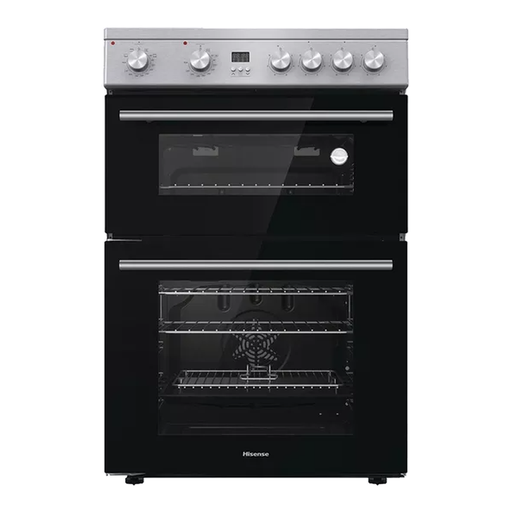
Why This Fits Their Persona: A standard-width freestanding cooker with two ovens suits tenants, first-time buyers and smaller UK kitchens needing flexible everyday cooking.
Its listed 60cm width and hardwired electric specification make the installation requirements clearer than a vague “plug-in” description.
68-litre fan oven, 31-litre top oven with grill, four-zone ceramic hob and catalytic liners.
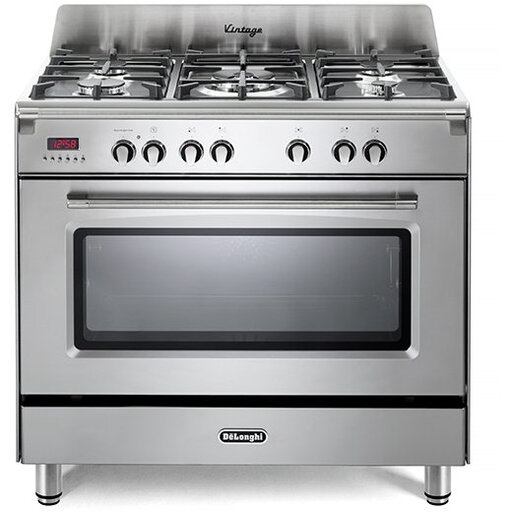
Why This Fits Their Persona: The stainless-steel finish and broad cooking surface suit homeowners planning a kitchen focal point with gas control and multifunction electric cooking.
The specification identifies five gas burners, an 87-litre electric multifunction oven, LPG conversion kit and A energy rating rather than relying only on appearance-led claims.
4kW wok burner, cast-iron supports, eight oven functions, programmable timer and removable inner door glass.
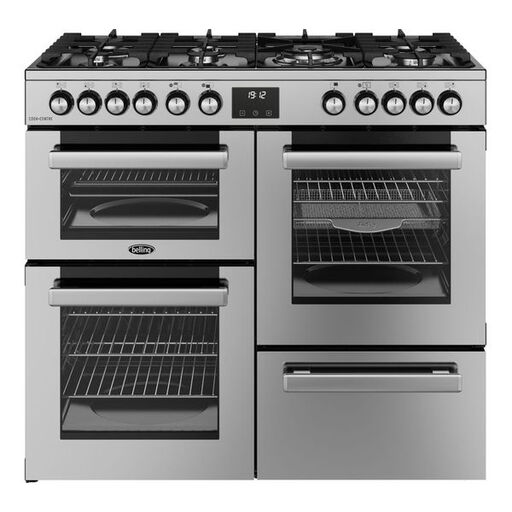
Why This Fits Their Persona: Frequent entertainers and large households can use three cooking cavities and seven gas burners for simultaneous meal preparation.
Its 99.6cm width, 157-litre stated capacity and separate grill are clearly specified, helping buyers assess whether the kitchen and cooking routine can support the appliance.
60-litre fan oven, 64-litre conventional oven, 33-litre grill and 4kW wok burner.

Why This Fits Their Persona: A renovator replacing a built-in hob can prioritise a clean black-glass finish, individual timers and rapid heat control within a standard 60cm layout.
The listed 592mm × 522mm dimensions, 560mm × 490mm installation cut-out and 7.4kW hardwired connection make compatibility checks more transparent.
Four induction zones, 17 power levels, PowerBoost, QuickStart, ReStart and individual automatic shut-off timers.
We have compiled a complete, real-time list of products that fully satisfy these strict selection criteria and UK safety regulations.
Before ordering, confirm whether the appliance is supplied with a plug or requires hardwiring. Many cookers and hobs need a dedicated circuit. Arrange an electrical assessment before delivery, particularly when replacing a gas cooker with an induction hob.
For gas appliances, use a qualified Gas Safe registered engineer. Check whether an LPG conversion kit is included if your property does not use mains natural gas. Keep the appliance level, maintain ventilation clearances and follow the manufacturer’s installation instructions.
Energy labels help compare oven efficiency, but they do not account for every household’s usage. A double oven may reduce the need to heat a large cavity for a small meal, while a larger range cooker can consume more simply because it offers more cooking space.
Induction transfers heat directly to compatible pans, which can reduce wasted heat and shorten cooking times. Actual running costs depend on electricity prices, power settings, pan size and cooking habits. Compare the connected load and use lower settings where suitable.
Most hardwired built-in hobs should be connected by a qualified electrician. The installer must confirm the circuit, fuse rating, ventilation and worktop cut-out. Do not use a damaged glass hob or operate one without following its installation instructions.
Lifespan depends on build quality, frequency of use, cleaning and maintenance. Avoid abrasive cleaners on glass, keep burners and ventilation areas clear, and replace damaged seals or controls promptly. Check the supplied warranty and retain installation records for future support.