
24/7 Customer Support

Free returns

Same-day & Next-day Delivery

Quality Guaranteed

Unlock Your Welcome Offers: FREE Delivery | Up to 80% OFF | Free 30-day JoyPlus trial
Download the APP
A tidy kitchen often starts with what you cannot see. A well-chosen kitchen cupboard bin can make all the difference, keeping waste neatly out of sight, odours contained and valuable floor space clear. However, the market is filled with options that look good online but fail in practice. As a Joybuy Product Recommendation Officer, my role is to help you see past the marketing and focus on what truly matters for a functional, long-lasting solution.
Before you add any item to your basket, be aware of a few common design flaws that can turn a promising purchase into a daily frustration.
under sink bin that is too deep will prevent the cupboard door from closing, while one that is too wide might not fit around plumbing. This is especially critical in compact spaces like flats or a motorhome bin setup.To ensure your new bin is an asset, not an annoyance, focus on these three core parameters.
The way a bin attaches to your cupboard is fundamental to its performance. Your main options are:
cupboard door bin. It requires no tools, making it ideal for renters. The key is to check the thickness and material of the hook. A wide, sturdy hook is less likely to damage your cabinet than a thin, sharp one.wall mounted kitchen bin offers a more permanent, stable solution. Adhesive mounts are great for smooth surfaces like tiles or the inside of a cabinet door, but ensure the adhesive is rated for the bin's full weight capacity. Screw-in options provide the most secure fitting, perfect for a dedicated in-cabinet bin.A bin's capacity, measured in litres, only tells half the story. You must measure the available space inside your cupboard—height, width and depth—before buying. Remember to account for any under-sink plumbing or other obstructions. For daily food preparation, a small food waste caddy of 5-7 litres might be sufficient, while a 10-litre bin is a popular size for general waste. A good space saving bin is one that maximises capacity without obstructing the door or internal workings of your cabinet.
Most cupboard bins are made from plastic, which is lightweight, affordable and easy to wipe down. For added durability, some models incorporate a steel frame. Regardless of the material, a removable inner bucket is a non-negotiable feature. It prevents spills and leaks inside your cabinet and makes taking the rubbish out and cleaning the bin itself, a much more hygienic process. This is particularly important if you plan to use it for compostable food waste.
To help you match a product to your specific needs, here are several options that address the common pitfalls by focusing on practical design.
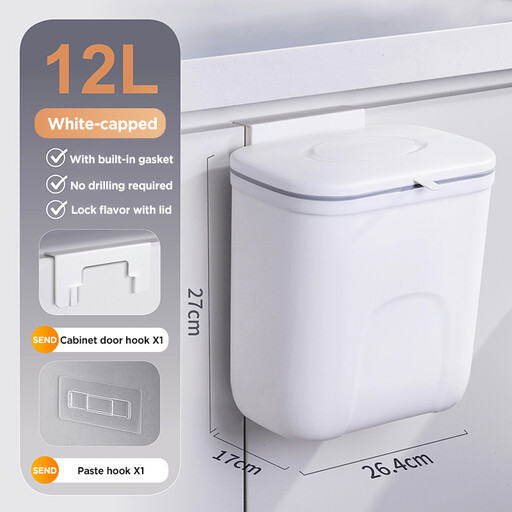
Why This Fits Their Persona: Ideal for renters, motorhome owners, or anyone in a compact flat. The dual mounting options (hanging hook or adhesive plate) provide flexibility without permanent changes and the foldable body is a clever space-saving feature for when the bin is not in full use.
It directly counters the 'flimsy hanger' flaw by providing two mounting methods. The lid is designed to be easily lifted or slid open, avoiding the 'awkward lid' problem during food prep.
The collapsible silicone body is its standout feature, reducing its depth significantly. It also includes a scraper that stores neatly in the lid.

Why This Fits Their Persona: This is for the homeowner who wants a robust, integrated and long-lasting solution. The heavy-duty steel frame is built for durability and can be screwed in for a completely stable, permanent fit that feels like part of the kitchen itself.
The solid steel frame completely eliminates the 'flimsy hanger' issue. Its design is precisely measured for standard cabinets, avoiding the 'one size fits all' problem by providing clear dimensions for a perfect fit.
Exceptional stability from the steel frame and screw-in option. The durable, removable plastic bucket makes cleaning straightforward and hygienic.
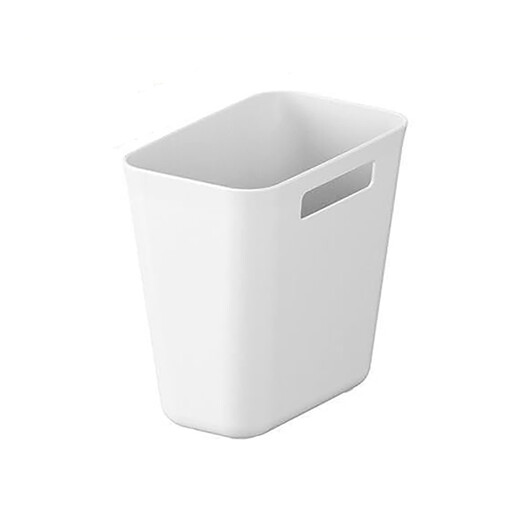
Why This Fits Their Persona: Perfect for someone who needs a small, targeted solution rather than a large bin. This multi-pack can be used as mini food waste caddies for tea bags or vegetable scraps, or as organisers for cleaning sponges and cloths, all for a low initial cost.
By being small and task-specific, it avoids the 'one size fits all' trap. Its light weight and adhesive mounting are appropriate for its size, sidestepping the structural failures common in larger, heavier hanging bins.
Excellent value with a four-pack. The self-adhesive backing allows for versatile placement on cabinet doors, tiled walls or even the side of a fridge.
We have compiled a complete, real-time list of products that fully satisfy these strict selection criteria and UK safety regulations.
To ensure a good fit, take three measurements of the clear, unobstructed space:
Their security depends entirely on the design and your usage. For light waste, a well-made plastic hook can be sufficient. For heavier loads or more frequent use, look for models with a wider, more robust hook made of metal or thick plastic. For maximum security, a model that combines a hook with an adhesive pad or offers a screw-in option is preferable.
Yes, many people use a cupboard door bin as a convenient food waste caddy. If this is your plan, prioritise a model with a tight-fitting lid to contain odours and prevent pests. A removable inner bucket is also essential for easy emptying into your main compost bin or council food waste collection.